










By Laura Harold
Published September 25, 2026
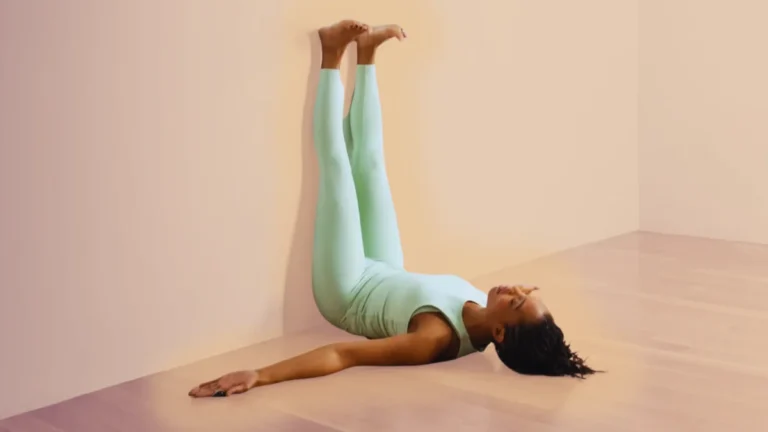
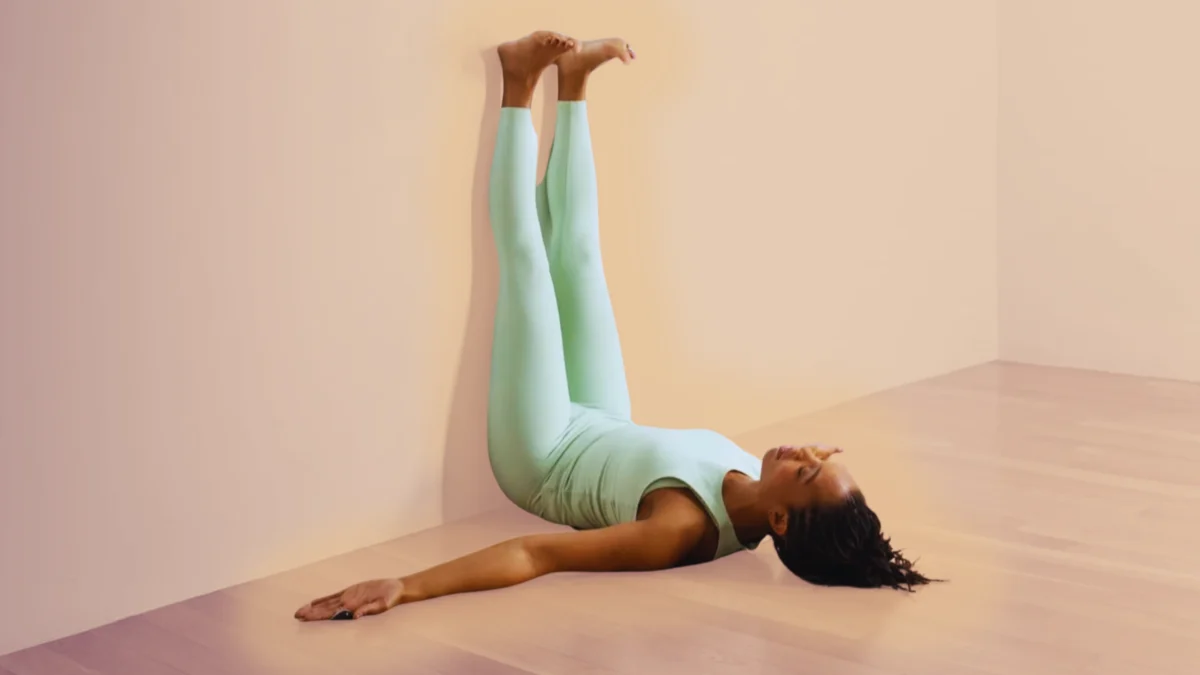
In the wellness world, certain practices are elevated to the status of dogma. Among the most revered is Viparita Karani, or Legs Up the Wall pose. It is the perennial darling of yoga instructors, sleep specialists, and stressed-out professionals alike. It is touted as the ultimate restorative panacea—a simple, gravity-defying inversion that promises to soothe the nervous system, reduce edema, and provide a sanctuary of stillness in an increasingly chaotic world.
However, for a significant segment of the population, the reality of the pose is far from restorative. For many, Viparita Karani is a source of quiet, infuriating frustration. As an editor with over a decade of personal yoga practice and eight years of experience navigating the health and wellness beat, I have spent years trying to reconcile the ecstatic testimonials of others with my own experience of what can only be described as a physical failure. My journey from skeptic to accidental practitioner offers a lesson in anatomy, patience, and the art of modifying perfection.
The Myth of the Universal Pose: Why Some Bodies Just Won’t Stay Still
The cultural lexicon of wellness often treats yoga as a "one size fits all" endeavor. We are told that if a pose doesn’t feel blissful, we are simply "not doing it right." In the case of Viparita Karani, the instruction is deceptively simple: lie on your back, extend your legs vertically against a wall, and breathe.
For years, I was the woman in the back of the studio, diligently adjusting my hips, sliding them closer to the wall, then further away, using blankets, bolsters, and pillows. I was searching for that elusive, "ah-ha" moment of total relaxation. Instead, I found myself in a state of muscular rigidity. The primary issue was not a lack of mindfulness, but a structural reality: my legs refused to stay together. Just as I would begin to settle into a rhythm of deep, diaphragmatic breathing, my feet would inevitably slide outward, succumbing to the pull of gravity and the specific geometry of my hip joints.
This led to a cycle of "micro-adjustments"—a frantic, internal battle of forcing the legs back to center. While I might have looked like I was meditating, I was actually performing a isometric leg workout that left me more agitated than when I began. My disdain for the pose grew proportionally with the number of times I tried to force it to work. It became a symbol of everything I resented about wellness culture: the insistence that a single technique should work for every body, regardless of individual biomechanics.
A Chronology of Resistance: From Grudge to Epiphany
My relationship with Viparita Karani can be mapped through a series of failed attempts, each fueling a deeper sense of irritation.
- The Early Years (2016–2020): During the initial phase of my practice, I operated under the assumption that my inability to stay in the pose was a moral or physical failing. I assumed my hamstrings were too tight or my hip mobility was insufficient.
- The Period of Diligence (2021–2024): I entered a phase of aggressive experimentation. I invested in props. I watched dozens of instructional videos. I tried the "blanket-under-the-pelvis" technique, the "bolster-support" method, and even attempted to practice in various times of day, hoping the timing would be the key. Each attempt ended in the same result: legs splayed, mind racing, and a deepening resentment toward the pose.
- The Breaking Point (August 2026): I reached a point of complete, vocalized rejection. I stopped including the pose in my personal practice entirely and began to view it as an over-hyped relic of yoga influencer culture.
- The Turning Point (September 2026): During a routine editorial meeting, I found myself venting about the absurdity of the pose. As it happens, the benefit of working at Yoga Journal is that one is surrounded by experts. When I offhandedly mentioned my "slippery leg syndrome," Editor-in-Chief Renee Marie Schettler offered a perspective that fundamentally altered my trajectory.
Expert Perspectives: The Biomechanics of Variation
When I shared my frustration with Renee Marie Schettler, she did not offer a complex philosophical explanation about "letting go" or "surrendering to the pose." Instead, she offered a pragmatic, anatomical truth: "Everyone’s anatomy is different."
This simple acknowledgment was a revelation. Yoga teachers frequently note that the shape of the hip socket (the acetabulum) and the orientation of the femur vary wildly from person to person. For some, the neutral position of the legs is a wide V; for others, it is parallel. By forcing our bodies into a specific, rigid alignment to satisfy a conventional image of the pose, we often override our body’s natural desire for rest.
Schettler’s follow-up question—"Have you tried tying a sweatshirt around your legs?"—was the key that unlocked the vault. It was a low-cost, high-utility intervention that turned a physical struggle into a support system.
Supporting Data: Why "Support" is the Secret Sauce
The science of restorative yoga relies on the concept of proprioception and the reduction of muscular effort. When the brain senses that the body is unstable, it engages the muscles to stabilize the limbs. In Viparita Karani, if your legs are sliding outward, your adductors and hip flexors are firing to prevent them from falling further, even if you are trying to remain "relaxed."
By using a soft restraint—like a tied sweatshirt, a yoga strap, or a soft belt—you effectively outsource the work of stabilization to the prop. This allows the nervous system to shift from the sympathetic (fight-or-flight) state to the parasympathetic (rest-and-digest) state.
The Benefits of the "Sweatshirt Modification":
- Lowered Neuromuscular Load: By eliminating the need to actively hold the legs together, the muscles can finally release.
- Increased Blood Flow: With the legs effectively supported, the cardiovascular benefits of the inversion (the drainage of venous blood from the lower extremities) are more easily achieved.
- Mental Decompression: The removal of the "micro-adjustment" loop allows the mind to drift into the quiet space that the pose is famous for creating.
Implications: The Power of Reframing Wellness
My experience has broader implications for how we engage with self-care in the 21st century. We are often conditioned to believe that if a wellness hack—whether it’s meditation, cold plunges, or a specific yoga pose—doesn’t provide immediate, transformative results, we are the ones who are broken.
1. The Value of Asking for Help
Had I not voiced my frustration, I would have likely continued to avoid the pose indefinitely. The lesson here is that even the most "simple" practices often require a community-based, collaborative approach to master.
2. Radical Modification is Not Failure
We need to shift the narrative around yoga props and modifications. Using a sweatshirt or a strap isn’t "cheating"; it is an act of self-advocacy. It is the recognition that your body’s unique geometry deserves to be accommodated, not coerced.
3. Sustainability in Practice
When I finally tried the "sweatshirt method," the results were immediate. I felt, for the first time, the true, heavy sensation of relaxation that the pose promised. It wasn’t about the pose being "right" or "wrong"—it was about finding the bridge between the intent of the practice and the reality of my physical form.
Conclusion: A New Beginning
I am still in the early days of my renewed relationship with Viparita Karani. I cannot yet say that it is my "desert island" pose, nor do I necessarily expect it to be. However, the experience has been a profound reminder that we should never underestimate the resources we already possess.
A ratty old sweatshirt, a bit of persistence, and a willingness to admit that I didn’t have all the answers transformed a source of rage into a tool for peace. If a simple piece of clothing can change my entire outlook on a foundational yoga pose, it begs the question: what other areas of our lives are we struggling with, simply because we haven’t yet found the right, simple modification to make them work for us?
In a world that demands perfection, perhaps the most radical act is to stop forcing the struggle and start looking for the support that makes the rest possible.