











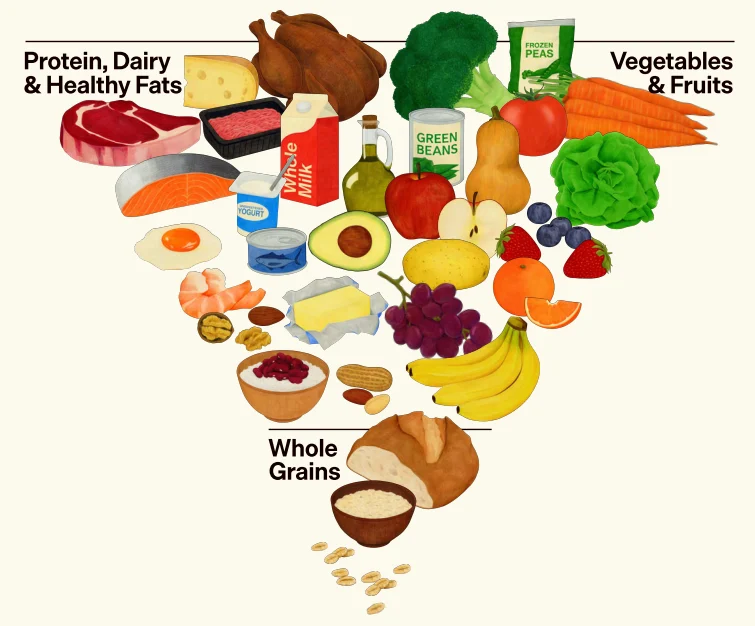
The release of the 2025–2030 Dietary Guidelines for Americans (DGAs) was met with significant anticipation, arriving with the bold, consumer-facing tagline: “Eat real food.” At first glance, the document appears to be a long-overdue pivot away from the ultra-processed, sugar-laden landscape of the modern American diet. However, beneath the polished exterior and the introduction of a revamped, "upside-down" food pyramid, a storm of controversy is brewing. Nutrition experts are warning that while the guidelines strike the right chord on sugar and processed foods, they simultaneously introduce contradictory visual messaging that could jeopardize cardiovascular health.
Main Facts: The New Nutritional Landscape
The 2025–2030 DGAs represent the federal government’s latest attempt to combat the nation’s chronic disease epidemic. For the first time in the history of these guidelines, the document explicitly calls out “highly processed foods.” The text urges Americans to pivot toward whole, fiber-rich options and away from sugar-sweetened beverages and refined carbohydrates.
However, the most striking feature of the release is the return of a graphic: the "New Food Pyramid." Unlike its predecessor, this version is inverted, placing heavy emphasis on protein sources such as steak, full-fat milk, and butter. This visual prioritization creates a significant point of tension. While the written text of the guidelines maintains the longstanding scientific consensus—that saturated fat intake should be capped at 10% of total daily calories—the visual representation suggests a dietary hierarchy that appears to encourage the very foods that push consumers over that limit.
Chronology: A Deviant Path to Publication
To understand the current confusion, one must look at the unconventional path taken to produce these guidelines. Typically, the DGAs are the result of a rigorous, two-year evidence review conducted by an independent Dietary Guidelines Advisory Committee (DGAC), a panel of non-governmental nutrition experts.
- The Scientific Report: The 2025-2030 DGAC spent two years synthesizing the latest nutrition science, following a transparent, peer-reviewed methodology designed to be free from industry influence.
- The Administrative Rejection: In a departure from historical precedent, the administration ultimately rejected the Committee’s primary findings.
- The Supplemental Analysis: Instead of relying on the Committee’s report, the government commissioned a "supplemental scientific analysis" conducted by a group selected through a federal contracting process.
- The Release: The final guidelines were published in early 2026, featuring the controversial pyramid and a set of recommendations that, according to experts, diverge significantly from the rigorous, evidence-based process established by the Department of Health and Human Services (HHS).
Dr. Deirdre Tobias, an assistant professor in the Department of Nutrition who served on the original advisory committee, has been vocal about this shift. "There has not been transparency in who wrote the new DGAs," she noted. "The reviews themselves, as well as their overall presentation and integration, deviate significantly from the rigorous process that was developed to ensure the evidence base was replicable, unbiased, and free from non-scientific influences."
Supporting Data: The Saturated Fat Math
The primary concern among nutritionists is the "saturated fat math" inherent in the new recommendations. If a consumer follows the DGAs’ suggestion for three servings of dairy per day, they are mathematically boxed into a corner.
For an individual consuming a standard 2,000-calorie diet, the 10% limit equates to approximately 22 grams of saturated fat. Consider the following daily intake:
- One 8-oz cup of whole milk: 5g saturated fat
- 3/4 cup of full-fat Greek yogurt: 6g saturated fat
- 1 ounce of cheddar cheese: 6g saturated fat
This single combination puts the consumer at 17 grams of saturated fat—77% of the daily limit—before they have even eaten a main protein source, a cooking fat (like butter, which adds 7g per tablespoon), or any other incidental fats throughout the day. By emphasizing these specific items in the new pyramid, the government is essentially providing a map that leads directly to the limit, if not well beyond it.
Furthermore, while the pyramid depicts olive oil, it is presented as one of many options, failing to highlight the critical distinction between unsaturated fats—which protect the heart—and animal-based saturated fats. Experts like Frank Hu, Chair of the Department of Nutrition at the Harvard T.H. Chan School of Public Health, argue that this lack of nuance is dangerous. "All these plant oils have been shown to lower LDL cholesterol and cardiovascular risk compared with animal fats such as butter or tropical fats," Dr. Hu explains.
Official Responses and Industry Influence
The lack of clarity in the new guidelines has drawn intense scrutiny regarding the role of industry lobbyists. Investigative reports have highlighted that several members of the panel responsible for the "supplemental analysis" have documented financial ties to the beef and dairy industries.
While the supplemental document claims that evidence was evaluated based solely on "scientific rigor" and underwent "internal quality checks," the irony of featuring meat and dairy so prominently while ignoring the environmental and socioeconomic impacts of food production is not lost on the scientific community. The DGAs remain largely silent on the sustainability of the American diet, an omission that experts argue ignores the inextricable link between the health of the planet and the health of the individual.
Implications: A Dangerous Precedent for Public Health
The implications of these mixed messages are profound. Nutrition guidelines are not merely academic documents; they dictate the menus of school lunches, hospital meals, and the nutritional standards for federal aid programs. When the guidelines are confusing, the most vulnerable populations suffer the consequences.
The Problem with "Protein Hype"
The guidelines suggest a significant increase in protein intake—up to 1.6 grams per kilogram of body weight—without distinguishing between high-quality sources (like fish, beans, and nuts) and those high in saturated fat (like processed red meats). This "protein package" is what matters for long-term health, yet the guidelines fail to guide the consumer toward the right choices.
The "Less Alcohol" Vacuum
Similarly, the advice to "consume less alcohol" is so vague that it effectively provides no guidance at all. Without specific parameters, consumers are left to define "less" based on personal bias rather than clinical safety.
The Visual Literacy Gap
History tells us that most Americans do not follow the dietary guidelines to the letter. Instead, they interact with the visuals—the pyramid, the plate, and the infographics. By prioritizing a pyramid that centers on saturated fat-rich foods, the government has created a powerful, memorable image that may override the nuanced, buried text.
Conclusion: Finding Clarity Amidst the Confusion
The 2025–2030 Dietary Guidelines for Americans are a paradoxical document. They move forward by acknowledging the harms of ultra-processed foods and added sugars, but they take a significant step backward in their handling of fats and protein sources.
For the average American, the message is effectively scrambled. If you are seeking to optimize your health, it may be wiser to look toward independent, non-industry-influenced models such as the Healthy Eating Plate. As the scientific community continues to analyze the "supplemental" process that birthed these guidelines, one thing remains clear: until federal recommendations are rooted entirely in transparent, independent science, consumers must exercise their own discernment and consult with registered dietitians to cut through the noise of conflicting advice.