









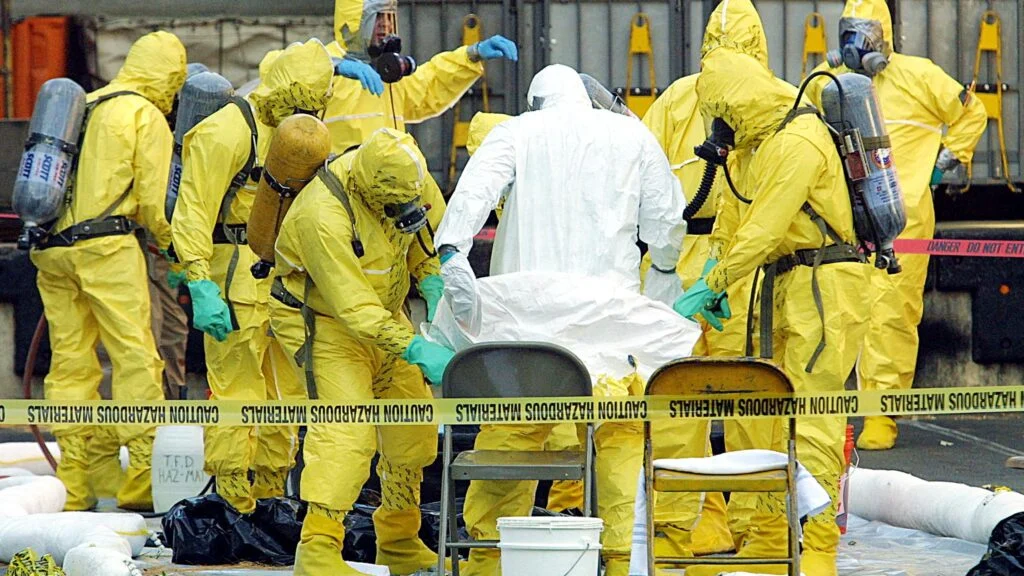
Twenty-five years ago, as the United States navigated the raw, agonizing aftermath of the September 11 terrorist attacks, a new and invisible terror began to unfold in the nation’s mailboxes. What began as a series of letters—simple, innocuous paper envelopes—would soon escalate into a national crisis that challenged the foundations of American public health, cost billions in recovery, and claimed five lives while leaving 22 individuals battling the horrors of anthrax infection.
The 2001 anthrax attacks were not merely a crime; they were a profound lesson in the vulnerability of modern society. Today, as the landscape of biological threats evolves with the rapid ascent of artificial intelligence and the erosion of institutional memory, the story of those letters remains an essential case study. It is a reminder that in the face of a deliberate biological event, the most dangerous assumption is that our previous experiences have prepared us for the next.
The Anatomy of an Attack: A Chronology of Uncertainty
The crisis began in Florida at American Media Incorporated (AMI), the publisher of The Sun tabloid. A photo editor became severely ill with symptoms that baffled clinicians until an astute doctor, noticing telltale signs in a spinal tap, suspected Bacillus anthracis.
When the Centers for Disease Control and Prevention (CDC) was alerted via its newly minted Laboratory Response Network, the initial working hypothesis was natural exposure. However, when a second AMI employee tested positive for anthrax just weeks after 9/11, the reality of bioterrorism became unavoidable.
The timeline of the attacks revealed a chilling, systematic escalation:
- September 18, 2001: The first mailing occurred. These envelopes contained what investigators later dubbed "crunchy" anthrax—clumped, coarser material that caused primarily cutaneous (skin) infections. These were largely directed at media workplaces.
- October 9, 2001: A second, more sophisticated mailing was sent to congressional offices. This powder was significantly finer, designed for easier aerosolization. This formulation caused a higher incidence of inhalational anthrax, a form of the disease that is often fatal if not treated immediately.
The clinical picture was a harrowing dichotomy. Half of the victims suffered from localized skin lesions, while the other half grappled with the devastating, life-threatening effects of spores entering the lungs. Molecular testing—a cutting-edge technology at the time—was used to link the isolates from patients, the envelopes, and environmental samples, confirming they were all derived from the same source.
The Infrastructure of Response: When Assumptions Fail
During the 2001 crisis, the CDC mobilized with unprecedented speed, establishing an Emergency Operations Center (EOC) in an auditorium to manage the influx of data and personnel. As the lead for the Epidemiology and Surveillance Team, I witnessed firsthand how "shoe-leather" epidemiology—the traditional, iterative process of gathering data—struggled to keep pace with the scale of the threat.
Perhaps the most significant takeaway from the investigation was that our existing knowledge base was dangerously incomplete. Pre-attack literature suggested that the risk of re-aerosolization of anthrax spores was low. Consequently, our initial public health guidance focused almost exclusively on those who had directly opened the tainted letters.
We were wrong. The subsequent illness and death of postal workers along the distribution pathway forced a total pivot in our strategy. We had to recognize that the postal system itself had been weaponized. The response ultimately required 32,000 people to begin antimicrobial prophylaxis. The lesson learned was painful but vital: in a deliberate biological attack, the intended targets are often only the beginning. Investigators must look beyond the immediate victims to the entire path of dissemination.
The Changing Threat Landscape: AI and Emerging Risks
Twenty-five years later, the tools at our disposal are vastly superior. Mail is screened, mail-processing machinery has been re-engineered, and "select-agent" regulations have tightened the security surrounding dangerous pathogens. Yet, paradoxically, the risk to the American public has never been higher.
The current threat environment is characterized by a "perfect storm" of vulnerability. Recent reports from the Center for Strategic and International Studies (CSIS) warn that Americans face greater risks from biological threats today than at any time this century. This surge in risk is fueled by several factors:
- Technological Acceleration: Artificial Intelligence is fundamentally transforming the biological threat landscape. AI can now assist in the design, optimization, and synthesis of pathogens, potentially lowering the barrier to entry for bad actors who lack traditional laboratory infrastructure.
- Erosion of Institutional Capacity: While we have more technology, we have fewer people. A recent analysis indicates that CDC civilian staff capacity is roughly 28% lower than it was in 2024. The loss of subject matter experts and seasoned scientific leadership has created a "brain drain" that cannot be easily replaced by software or automation.
- Institutional Fragility: The Bipartisan Commission on Biodefense has repeatedly emphasized that preparedness is a capability, not a static state. It requires the constant maintenance of networks, relationships, and institutions that can make defensible decisions under conditions of extreme uncertainty.
The Three Pillars of Future Preparedness
As we look back at the 2001 EOC setup, three lessons stand out as non-negotiable for future policy:
1. Detection Must Lead to Rapid Interpretation
A signal is useless without a coordinated response. Currently, there is growing concern that the independence of evidence-based decision-making is being undermined. If a real-time intentional biothreat signal were detected today, there is a risk that the response would be delayed by bureaucratic friction or a lack of coordination between federal agencies and state/local partners. Interpretation must be swift, and action must be immediate.
2. A Culture of Intellectual Humility
Preparedness must be built on the assumption that our initial models may be wrong. The 2001 anthrax response was successful only because we were willing to discard our initial, flawed assumptions about spore behavior when the data proved otherwise. A leadership culture that punishes dissenting dialogue or discourages internal scientific debate is a profound liability. To survive the next biological event, we must foster a culture that prioritizes science-driven evaluation over political expediency.
3. The Human Element of Institutional Memory
Technology cannot replace the "muscle memory" of a public health force that has practiced for disaster. We are currently facing a gap in public health readiness, underscored by our struggle to manage outbreaks of hantavirus, Ebola, and measles. If we cannot maintain the institutional strength to handle natural outbreaks, we are ill-equipped to handle an intentional, high-consequence biological attack.
Conclusion: The Path Forward
The anthrax attacks of 2001 were a wake-up call that the world failed to fully answer. We improved our mail security and our laboratory response networks, but we allowed the essential infrastructure of human expertise and institutional readiness to decay.
The specter of an intentional threat—whether human-engineered or AI-facilitated—should serve as a catalyst for a renewed commitment to biodefense. We must prioritize the hiring of scientific staff, ensure budget support for high-consequence pathogen research, and protect the independence of the institutions that stand between us and the next crisis.
Twenty-five years later, we have learned that the first signal is rarely the whole story. The strength of our response will not be measured by the sophistication of our sensors, but by the resilience of our people and the integrity of the scientific culture we foster. We must act now, before the next "white powder" incident turns into something far more catastrophic.
Daniel B. Jernigan, M.D., M.P.H., is a contributing scholar at the Johns Hopkins Bloomberg School of Public Health and previously served 31 years at the CDC. During the national investigation of bioterrorism-related anthrax in 2001-2002, he participated as the lead for the Epidemiology and Surveillance Team of the CDC’s Emergency Operations Center.