






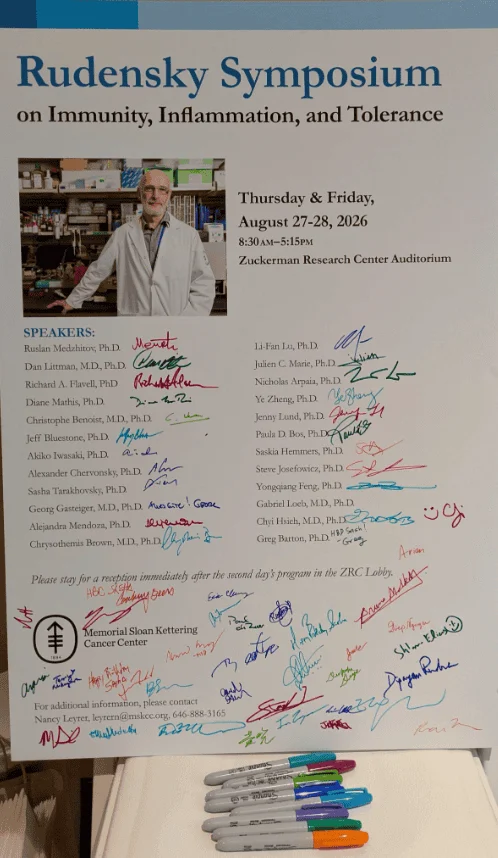
On August 27–28, 2026, the scientific community converged to honor not just a milestone birthday, but a legacy of discovery that has fundamentally reshaped our understanding of the human immune system. The "Rudensky Symposium on Immunity, Inflammation, and Tolerance" served as a two-day testament to the career of Alexander “Sasha” Rudensky, PhD, of the Memorial Sloan Kettering Cancer Center. While the event marked his 70th birthday, the proceedings transcended the celebratory nature of the occasion, functioning as a high-level summit on the future of immunotherapy.
The symposium brought together an illustrious assembly of former trainees, lifelong collaborators, and peers. For the Cancer Research Institute (CRI), which has been a steadfast partner in Dr. Rudensky’s journey for over two decades, the event was a poignant reminder of the power of sustained investment in basic research.
The Foundation of a Scientific Legacy
The history of Dr. Rudensky’s work is inextricably linked to the evolution of modern immunology. In 2015, the CRI recognized his pioneering research on regulatory T cells (Tregs) with the prestigious CRI William B. Coley Award. Tregs, which act as the immune system’s "brakes," are essential for maintaining self-tolerance and preventing autoimmune destruction. However, in the context of cancer, these cells often act as double agents, shielding tumors from immune detection.
The CRI’s involvement with Dr. Rudensky extends far beyond a single award. Over the past twenty years, the institute has supported more than a dozen CRI-funded fellows who have trained under his guidance. This “academic lineage” was on full display at the symposium, where the presentations were as much about the passing of the torch as they were about the latest data in tissue repair, microbiome research, and oncology.
Chronology of Insights: A Two-Day Deep Dive
The symposium was structured to mirror the arc of modern immunology—moving from the fundamental mechanisms of cellular homeostasis to the complex, micro-environmental challenges posed by malignant tumors.
Day One: Homeostasis and the "Maintenance Crew"
The opening sessions focused on how the immune system functions in a healthy state. A standout presentation came from 2003 CRI Coley Awardee Dr. Ruslan Medzhitov, who challenged the traditional view of immune cells as mere soldiers against infection. He argued that immune cells, particularly macrophages, act as the body’s "maintenance crew," tasked with clearing the molecular "garbage" of damaged proteins. This perspective suggests that inflammation is often a localized effort to maintain tissue integrity, a process that can be co-opted by cancer.
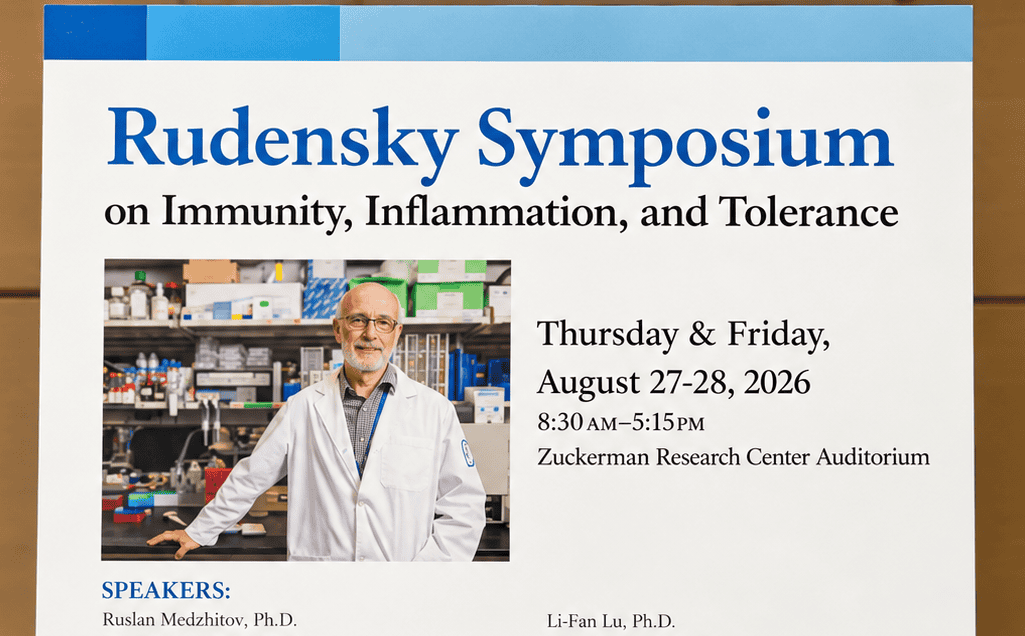
Following this, 2024 CRI Coley Awardees Drs. Diane Mathis and Christophe Benoist provided critical insights into the multifaceted roles of Tregs. Dr. Mathis detailed how specific Treg populations facilitate muscle repair and scar limitation, while Dr. Benoist illustrated how the molecular targets recognized by Tregs dictate their functional identity. These discussions underscored a vital biological truth: immune restraint is a precision instrument. An imbalance—whether through deficit or excess—is the difference between healthy tissue repair and cancer progression.
Day Two: The Pre-Tumor Landscape and Systemic Interactions
The second day shifted focus toward the earliest stages of malignancy. Dr. Richard A. Flavell, a 2012 CRI Coley Awardee, presented compelling data on “early immunosurveillance.” Using mouse models with cancer-linked BRAF mutations, Dr. Flavell’s team observed that the immune system actively eliminates mutant cells long before a tumor becomes clinically apparent.
This research suggests that the competition between healthy cells and nascent cancer clones is mediated by immune signaling. When mutant cells lose the ability to communicate with T cells, they gain a survival advantage. Similarly, Dr. Julien C. Marie presented data showing that TGF-β signaling in Th17 cells acts as a critical switch; when disrupted, these cells enter a pro-inflammatory state that creates a fertile ground for DNA damage and tumor initiation.
Supporting Data: The Ecosystem of the Tumor
The latter half of the symposium explored the "neighborhood" of the tumor, proving that cancer does not exist in a vacuum.
- The Microbiome-Immune Axis: Dr. Dan Littman, a 2016 CRI Coley Awardee, discussed the role of gut bacteria in training T cells. His research suggests that the state of the microbiome can dictate the efficacy of checkpoint immunotherapy, implying that the gut-immune axis is a key, yet under-explored, factor in systemic cancer control.
- The Architecture of Metastasis: Dr. Paula D. Bos highlighted the physical reality of the tumor microenvironment. By targeting Tregs, her team was able to alter the behavior of tumor-associated macrophages and disrupt collagen fibers that act as "highways" for metastatic cell escape. This suggests that future therapies could focus on modifying the physical structure of the tumor environment rather than merely attacking tumor cells directly.
- Engineered Neighborhoods: Dr. Nicholas Arpaia, building on collaborative work with CRI Lloyd J. Old STAR awardee Dr. Tal Danino, showcased the use of engineered bacteria to deliver payloads directly to the tumor site. This precision approach aims to modulate the immune landscape specifically within the suppressive "neighborhoods" created by fibroblasts, minimizing systemic toxicity.
Perspectives on Mentorship and Innovation
What made the Rudensky Symposium unique was the emphasis on the "human element" of science. The event served as a case study in how rigorous, sometimes heated, scientific debate fosters breakthrough discovery.
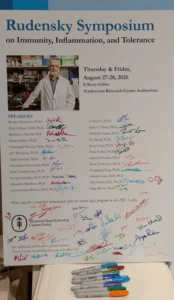
"Science is not a solitary endeavor; it is a relay race," noted one attendee. The poster board, signed by Dr. Rudensky’s "research family," represented dozens of careers launched in his laboratory. This network of former students now populates top-tier research institutions worldwide, ensuring that the methodologies and philosophies pioneered in the Rudensky lab continue to propagate.
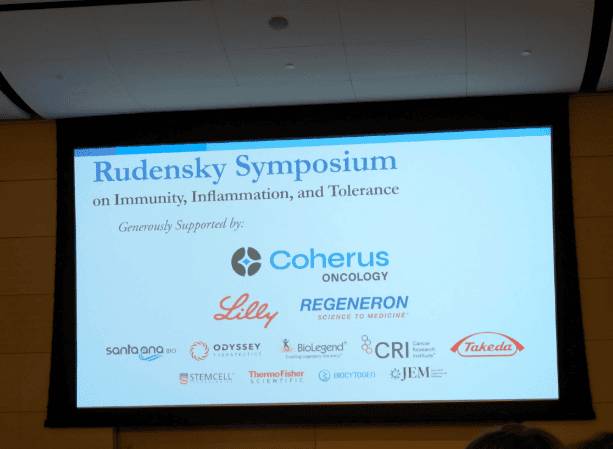
The CRI’s official stance, reiterated throughout the event, is that the future of cancer research relies on this "long-game" strategy. By funding fundamental questions about T cell development—questions that may have seemed abstract decades ago—the CRI has helped build the intellectual infrastructure that now supports the next generation of immunotherapy.
Implications for Future Therapy
The implications of the research presented are profound. We are moving toward a future where:
- Prevention is Immunological: By identifying early "pre-cancerous" competition, we may one day use immunomodulatory agents to prevent tumor development before it begins.
- Precision Targeting: Instead of broad immunosuppression or activation, therapies will focus on the specific "molecular identity" of Tregs, as described by Dr. Benoist, or the specific architectural features of the tumor microenvironment, as described by Dr. Bos.
- Systemic Integration: Clinicians will increasingly view the patient as a whole ecosystem, considering the gut microbiome and systemic inflammation as primary variables in the success of oncology treatments.
Conclusion: A Ripple Effect of Discovery
The Rudensky Symposium was more than a celebration of a career; it was a mapping of the future. The connections drawn between tissue repair, the microbiome, and tumor escape pathways represent the frontier of oncology.
For the CRI, the symposium served as a vindication of its 70-year commitment to funding basic science. It highlighted the undeniable truth that the most transformative clinical breakthroughs—the ones that eventually save lives—almost always originate from a deep, foundational curiosity about the way our cells live, die, and maintain the balance of life. As Dr. Rudensky’s trainees now become the mentors of the next generation, the "ripple effect" of his influence ensures that these fundamental questions will continue to be asked, explored, and ultimately solved.