Contributing Author: Blood Cancer United
As medical science achieves increasingly durable remissions for patients with complex blood cancers, the focus of oncology is shifting. While the primary goal of cancer treatment remains the eradication of disease, a new, equally vital priority has emerged: ensuring that survivors can thrive in the years that follow. For younger patients, one of the most pressing questions in this "survivorship" era is whether their path to parenthood remains viable after treatment.
During Blood Cancer Awareness Month, researchers are turning their attention to a critical knowledge gap: the impact of CAR T-cell therapy on human fertility. A collaborative effort led by Blood Cancer United, the Moffitt Cancer Center, and University of Florida Health is currently spearheading a groundbreaking study to provide patients with the data they need to make informed decisions about their reproductive futures.
The Evolution of CAR T-Cell Therapy: A Brief History
To understand the current research, one must first appreciate the remarkable technology behind CAR T-cell therapy. Chimeric antigen receptor (CAR) T-cell therapy is a sophisticated form of immunotherapy that turns the patient’s own immune system into a precision weapon against malignancy.
The Chronology of an Immunotherapy Breakthrough
- The Conceptual Foundation (1990s–2000s): Decades of rigorous laboratory research focused on how to effectively "reprogram" T cells—the foot soldiers of the immune system—to recognize cancer cells that otherwise hide in plain sight.
- The Remission Milestone (2010): A pivotal moment arrived when researchers, including CRI Scientific Advisory Member Dr. Carl June, successfully engineered T cells that achieved complete, durable remission in patients with refractory leukemia. This proof-of-concept study sent shockwaves of optimism through the oncology community.
- FDA Approval (2017): The first CAR T-cell therapy received FDA approval, signaling a new era of cancer care. Since then, the treatment has expanded to address specific leukemias, lymphomas, and multiple myeloma.
- The Modern Era (2020s–Present): Beyond oncology, the technology is now being investigated for its potential to treat autoimmune diseases like lupus, where the body’s immune system mistakenly attacks healthy tissue.
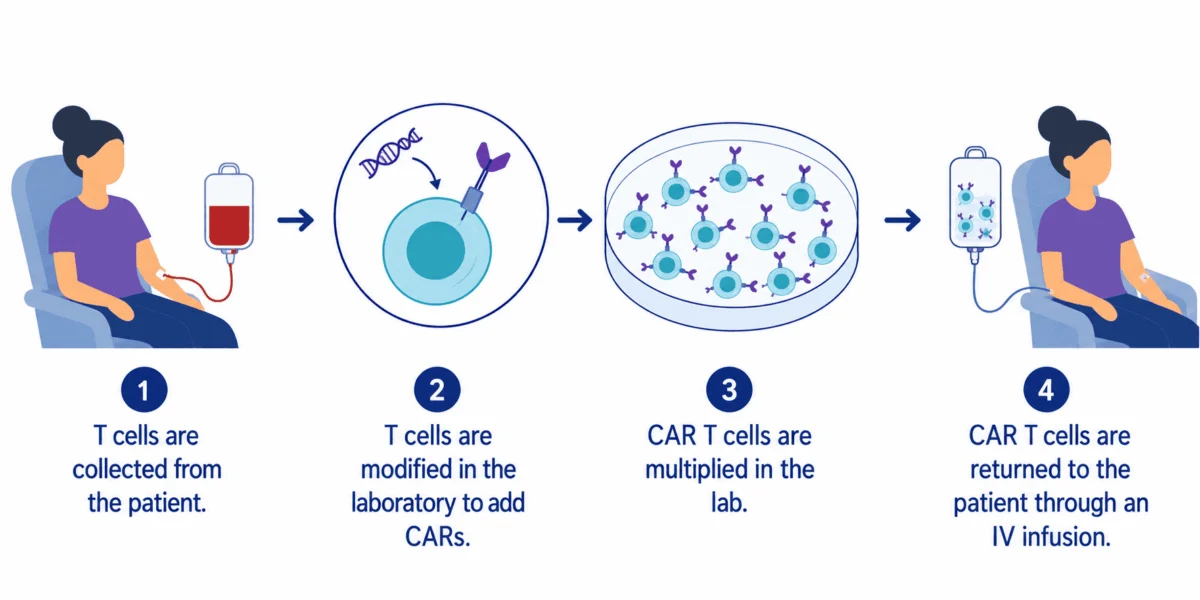
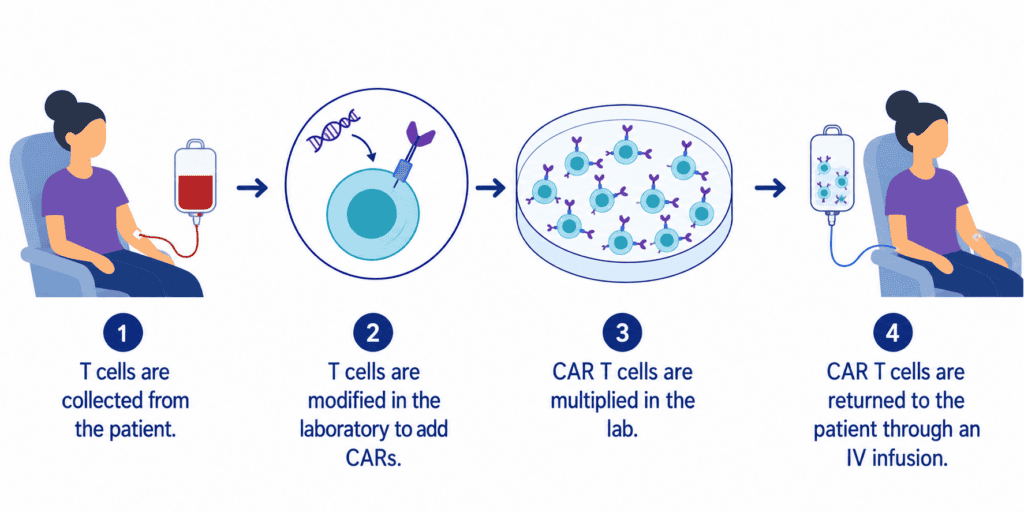
The process involves harvesting a patient’s T cells, genetically modifying them in a lab to express a "chimeric antigen receptor" that locks onto specific cancer cell targets, and then reinfusing these enhanced cells back into the patient. Because the treatment is so potent and targeted, it has become a lifeline for patients who have exhausted all other options.
The "Fertility Conundrum": Why Data Has Been Elusive
Historically, it has been notoriously difficult for researchers to isolate the impact of CAR T-cell therapy on fertility. This is due to several overlapping variables that complicate clinical data.
The Cumulative Effect of Prior Treatments
Most patients who qualify for CAR T-cell therapy have already faced an arduous journey. By the time a patient receives CAR T, they have often undergone:
- High-Dose Chemotherapy: Known to cause ovarian insufficiency or damage to sperm production.
- Radiation Therapy: Can cause localized damage to reproductive organs.
- Stem Cell Transplants: Often involve total body irradiation or intensive conditioning regimens that carry high risks for future infertility.
Furthermore, immediately preceding the infusion of engineered T cells, patients undergo a "lymphodepletion" phase—a short, intense course of chemotherapy designed to make space for the new, modified cells to expand.
Because these patients enter the CAR T process already carrying the "toxic footprint" of years of prior treatment, pinpointing whether a fertility issue is caused by the CAR T cells, the lymphodepletion, or the cumulative damage of the previous five years is a monumental challenge for clinical researchers.
New Evidence: Preliminary Findings from the Frontlines
To demystify these risks, the research team from Blood Cancer United and their partners launched a patient-facing survey designed to capture real-world data directly from those who have lived the experience.
The Survey Data
In an initial analysis of 106 respondents, the results offered a heartening, if still preliminary, glimpse into the reality of post-treatment life:
- Interest in Family Planning: Of the 106 respondents, 32 expressed a desire to have children following their CAR T-cell treatment.
- Attempted Conception: 12 of these individuals actively attempted to conceive.
- Pregnancy Outcomes: Six respondents reported a pregnancy (four female patients and two partners of male patients).
- Healthy Arrivals: At the time of the data cut-off, three pregnancies had resulted in successful live births, and three were ongoing.
Critically, none of the six individuals reported the use of assisted reproductive technology (ART), such as in vitro fertilization (IVF). While this sample size is too small to make broad clinical declarations, it provides a crucial signal: pregnancy is not only possible but is occurring in patients who have navigated the rigors of CAR T-cell therapy.
Perspectives from the Research Community
Dr. Nina Logan, Senior Director of Research and Clinical Programs at Blood Cancer United, emphasizes that these findings are not meant to be a definitive medical answer, but rather a vital starting point for doctor-patient communication.
"These early findings are encouraging, but they also highlight how much we still need to learn," says Dr. Logan. "Our goal is to provide patients and their care teams with better, more nuanced information about fertility after CAR T-cell therapy. We want patients to have informed, proactive conversations about their treatment, their survivorship, and their hopes for building a family."
Insights from the Autoimmune Front
The potential of CAR T-cell technology is further illuminated by its use in autoimmune research. A 2026 report provided a separate, fascinating data set: 14 pregnancies were documented among 13 patients treated with CAR T-cell therapy for autoimmune conditions. With eight healthy infants born at the time of the report, the clinical community is beginning to see a consistent, albeit small, trend of reproductive potential following these therapies. While patients with autoimmune diseases differ from cancer patients in their treatment history, these data points serve as a valuable cross-reference for researchers studying reproductive health.
The Broader Implications: What This Means for Future Care
The implications of this research extend far beyond the laboratory. If clinicians can definitively map the risks and possibilities surrounding CAR T-cell therapy and fertility, the standard of care for cancer patients will fundamentally change.
1. Informed Consent and Counseling
When a patient is presented with CAR T-cell therapy as a treatment option, the conversation often revolves entirely around survival rates. With better data, oncologists will be able to provide comprehensive guidance on:
- Fertility Preservation: Knowing the risks earlier allows patients to consider egg or sperm banking before beginning the lymphodepletion process.
- Realistic Expectations: Providing patients with honest data reduces the anxiety of the unknown, allowing them to better plan their post-treatment lives.
2. Longitudinal Survivorship Tracking
This research marks a shift in how we define "long-term success." For decades, oncology was obsessed with the five-year survival mark. Today, success is measured by the quality of the life that follows. Integrating reproductive health into long-term survivorship models ensures that the "cancer survivor" identity is not one of limitation, but of renewed possibility.
3. Advancing the Science of CAR T
By continuing to monitor fertility as a key metric in CAR T clinical trials, researchers can better assess if certain types of conditioning regimens or CAR constructs are more "fertility-sparing" than others. This could lead to the development of next-generation therapies that achieve the same clinical efficacy with a lighter footprint on the patient’s long-term health.
How to Participate
The research is ongoing, and the team is calling for more data. The CAR T-Cell Therapy and Fertility Survey remains open to adults aged 18 and older who have received this treatment for blood cancer.
By contributing their personal experiences, participants are doing more than just answering questions—they are helping build a foundation of evidence that will support the next generation of cancer patients. This collaborative effort represents the best of modern medicine: researchers, doctors, and patients working in tandem to solve the most human of problems.
For those interested in participating or learning more about the study, the CAR-T Fertility Survey is available online. Your story, your data, and your experience are the keys to a more informed future.
Sources and Further Reading
- Pediatric cancer immunotherapy and potential for impact on fertility: A need for evidence-based guidance, Transplant Cell Ther, 2024.
- Fertility outcomes following CAR T-cell therapy: Results from a patient-facing survey, Tandem Meetings | Transplantation & Cellular Therapy Meetings of ASTCT and CIBMTR, 2026.
- Pregnancies in patients with autoimmune disease receiving CAR T-cell therapy, New England Journal of Medicine, 2026.
- Approved Cellular and Gene Therapy Products, U.S. Food and Drug Administration, 2026.
Disclaimer: This article is provided for informational purposes only. The organizations mentioned herein do not endorse or recommend specific study participation. Please consult your primary oncologist or a fertility specialist before making any decisions regarding your medical care or reproductive health.