For patients battling the most aggressive forms of blood cancer, a stem cell transplant is often the final frontier—a high-stakes procedure that serves as the only potentially curative option. Yet, the specter of relapse remains a constant, haunting reality. When cancer returns post-transplant, the clinical toolkit is often barren, leaving oncologists with few effective maneuvers to reclaim the patient’s health.
However, a groundbreaking clinical trial led by researchers at the Washington University School of Medicine in St. Louis has introduced a transformative strategy: genetically modifying donor stem cells before they are ever introduced into the patient’s body. By removing a specific protein from donor cells, scientists have created a “shield,” allowing potent cancer therapies to hunt down malignant cells while leaving the healthy, rebuilt immune system completely unscathed.
The results of this phase 1/2 multicenter trial, conducted at Siteman Cancer Center at Barnes-Jewish Hospital and WashU Medicine in collaboration with 14 other sites across the United States and Canada, were recently published in Nature Medicine. This development marks a significant shift in how medicine approaches the “Achilles’ heel” of modern immunotherapy.
The Conundrum of CAR-T Therapy: Solving the Target Problem
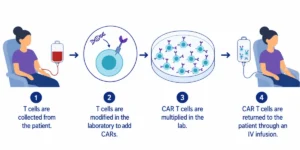
To understand the magnitude of this breakthrough, one must first recognize the inherent limitation of CAR-T cell therapy. In this approach, a patient’s T cells are re-engineered to recognize and destroy cancer cells. While this has been a triumph for many lymphomas and leukemias, it has struggled against acute myeloid leukemia (AML) and myelodysplastic syndrome (MDS).
The fundamental challenge, as explained by Dr. John F. DiPersio, the Virginia E. & Sam J. Golman Professor of Medicine at WashU Medicine, is a phenomenon known as "on-target, off-tumor" toxicity. Many of the proteins expressed on the surface of AML and MDS cancer cells are also found on healthy myeloid cells. Because these healthy cells are vital for the body’s ability to produce new blood, any therapy programmed to attack these markers will inevitably destroy the very stem cells that provide the patient with a healthy blood system.
"If CAR-T cells are programmed to attack one of these shared proteins, they may destroy healthy blood stem cells along with the cancer," Dr. DiPersio noted. This collateral damage creates two critical problems: it triggers a dangerous systemic inflammatory response, and it dilutes the efficacy of the treatment, as the CAR-T cells are overwhelmed by the sheer volume of healthy targets, leaving them unable to focus their destructive power on the malignant cells.
The Genesis of the Research: A Conceptual Shift
The conceptual framework for bypassing this limitation originated with Dr. Miriam Y. Kim, now an assistant professor of medicine at WashU Medicine. Dr. Kim, who began this research as a postdoctoral fellow at the University of Pennsylvania before continuing her work in the DiPersio lab, sought a way to strip the "identity" of the target protein from healthy cells without compromising their biological function.
The target chosen was CD33. CD33 is an ideal candidate for this strategy because it is exclusively expressed on blood-forming cells and is not present in other vital tissues. Furthermore, evidence suggests that CD33 is not strictly necessary for the normal functioning of blood stem cells; individuals born with a natural absence of this protein do not suffer from related health issues. By removing the CD33 protein from donor stem cells through CRISPR gene editing, researchers hypothesized they could create a population of healthy blood cells that are essentially “invisible” to CD33-targeted therapies.
Chronology of the Clinical Trial: From Bench to Bedside
The trial, which enrolled 30 adults with high-risk AML or MDS, utilized a gene-edited product known as tremtelectogene empogeditemcel (trem-cel), developed by Vor Biopharma. The process followed a rigorous timeline:
- Pre-Transplant Modification: Donor stem cells were harvested and modified using CRISPR technology to excise the CD33 protein.
- Engraftment: All 30 patients underwent transplantation. The clinical data showed that by day 28, every patient achieved successful engraftment, with donor stem cells effectively seeding the bone marrow and initiating hematopoiesis (blood production).
- Recovery Milestones: Notably, platelet production—a key indicator of bone marrow recovery—returned by day 16 on average. This recovery trajectory was indistinguishable from that observed in patients receiving standard, non-edited stem cell transplants, confirming that the gene editing did not hinder the cells’ ability to function.
- Maintenance Phase: To test the "shield" hypothesis, patients received gemtuzumab ozogamicin, an engineered antibody that delivers a toxic payload to CD33-expressing cells. While historically limited by side effects like liver toxicity and the destruction of healthy blood cells, the study participants maintained their blood counts even while receiving the drug.
Supporting Data: Proof of Concept in Action
The clinical success of this method was further punctuated by a separate, high-profile case study published in JCO Precision Oncology in October 2025. In this instance, a patient with high-risk AML received the CD33-deleted transplant. When the cancer inevitably returned, the patient was treated with CD33-targeted CAR-T cells derived from the original donor.
The results were profound: the patient achieved complete remission and remained cancer-free for more than a year. Analysis of the patient’s blood revealed that all of their circulating blood cells lacked the CD33 protein, confirming that the engineered donor cells had successfully established a permanent, protected population within the bone marrow. This case provided the "smoking gun" evidence that the shield strategy works: the immunotherapy destroyed the cancer but left the healthy, engineered blood system intact.
Official Responses and Clinical Observations
Dr. DiPersio, who also directs the Center for Gene and Cellular Immunotherapy at WashU Medicine, expressed cautious optimism regarding the trial’s safety profile. "We are encouraged by the results of this study showing that a CD33-deleted stem cell transplant looks very similar to the outcomes of standard stem cell transplantation," he said.
The safety data provided a balanced view of the experimental treatment. While seven patients passed away during the study—four due to cancer progression and three due to transplant-related complications like sepsis and liver toxicity—these rates are consistent with the high-risk nature of the patient population being treated. The adverse events recorded, including anemia, fever, and graft-versus-host disease, were broadly aligned with the risks inherent in any standard stem cell transplantation procedure, suggesting that the CRISPR-editing process did not introduce unforeseen long-term systemic toxicities.
Implications for the Future of Oncology
The implications of this study extend far beyond the treatment of AML. By demonstrating that we can "delete" a specific protein from donor stem cells to protect them from subsequent targeted therapies, researchers have opened the door to a new era of "programmable" transplantation.
1. Enhanced Immunotherapy Efficacy
By removing the "sink" of healthy cells that currently trap and distract CAR-T cells, clinicians may eventually be able to administer more aggressive, higher-dose immunotherapy without the fear of depleting the patient’s healthy blood cells.
2. A Modular Approach to Treatment
The ability to pair a transplant with a follow-up maintenance therapy that would otherwise be too toxic—like the gemtuzumab ozogamicin used in this trial—changes the calculus for high-risk patients. It moves the goalposts from simply surviving a transplant to actively suppressing the disease through targeted, long-term immunotherapy.
3. Expansion to Other Targets
While CD33 is the focus here, the underlying technology is a platform. If researchers can identify other markers that are present on both cancer cells and healthy hematopoietic stem cells, they can potentially apply this same CRISPR-based "shielding" technique to treat a wider array of hematologic malignancies.
As the medical community looks toward the next phase of development, the focus will shift to optimizing these protocols and integrating them into standard care pathways. The work conducted by the team at WashU Medicine and their partners represents a sophisticated marriage of gene editing and cellular therapy—a testament to the progress being made in the relentless pursuit of curing blood cancers that were, until now, considered untreatable.
Disclaimer: This research was supported by Vor Biopharma. Several co-authors were employees of the company at the time of the study.