







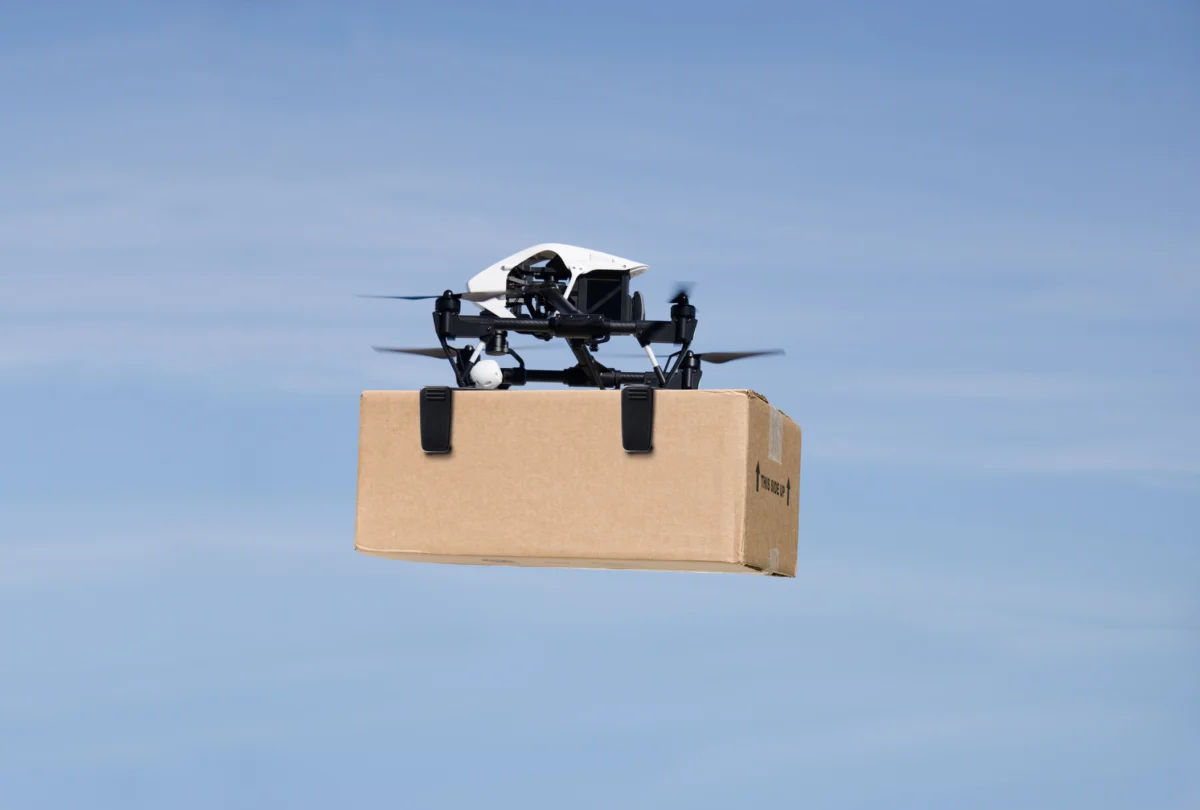
In the pursuit of universal healthcare, the most significant barrier remains geography. For patients residing on the remote islands of South Korea, access to critical respiratory care—often dependent on fragile supply chains of filters, circuits, and specialized equipment—has historically been hindered by the limitations of traditional logistics. However, a groundbreaking initiative by Yuyu Teijin Medicare, a joint venture between South Korea’s Yuyu Pharma and Japan’s Teijin Pharma, has successfully demonstrated that the future of home healthcare is no longer tethered to the constraints of land-based transport.
By successfully deploying drone technology to deliver essential medical supplies to a ventilator patient on a remote island, the company has provided a proof-of-concept that could fundamentally alter the landscape of medical logistics for isolated populations worldwide.
Main Facts: A New Frontier in Medical Logistics
The pilot program, which took place off the coast of South Korea, represents a pivotal moment in the integration of aerospace technology and medical supply chain management. The primary objective was to determine if unmanned aerial vehicles (UAVs) could bridge the gap between urban medical hubs and isolated island communities, where weather conditions and limited ferry schedules frequently delay the delivery of life-sustaining supplies.
The test flight involved a drone tasked with transporting critical ventilator consumables—specifically breathing circuits and filtration systems—from a mainland facility to a patient in need. The distance covered was approximately three kilometers. While the physical journey is short, the logistical hurdles—traversing open water and navigating varying wind conditions—are significant. The drone completed the delivery in just three minutes, a staggering 85% reduction in time compared to the 20 minutes typically required by conventional transport methods like ferries or specialized delivery vehicles.
This efficiency is not merely a matter of convenience; for patients dependent on ventilators, the timely receipt of replacement circuits and filters is essential to prevent infections and ensure the continued, safe operation of their life-support equipment.
Chronology of the Initiative
The journey toward this successful demonstration did not occur in a vacuum. It is the culmination of years of strategic planning aimed at modernizing home healthcare.
- Early Research and Development (2022–2023): Yuyu Teijin Medicare identified a critical "last-mile" challenge within their service network. Analyzing the needs of patients on remote islands, the company sought a technological partner capable of navigating the regulatory and technical hurdles of maritime drone transport.
- Feasibility Testing (Early 2024): The engineering team conducted rigorous stress tests on the drone hardware, ensuring it could withstand the atmospheric conditions of the South Korean coastline while maintaining the integrity of medical-grade supplies.
- The Pilot Mission (Mid-2024): The successful flight to the island patient served as the live-fire test. The drone, outfitted with secure storage for delicate medical equipment, demonstrated high levels of precision and reliability.
- Current Phase (Late 2024–2025): The company is currently analyzing the flight telemetry and patient satisfaction data, using these metrics to optimize flight paths and battery life for future, longer-range missions.
- Future Roadmap (2026–2027): Yuyu Teijin Medicare has set a firm timeline to transition from experimental flights to a regular, monthly drone delivery schedule by the end of 2026. By 2027, the firm intends to seek collaborative partnerships with local municipal governments and professional drone operators to scale the service to additional island chains.
Supporting Data and Technical Implications
The 85% reduction in delivery time is the headline figure, but the technical implications of this pilot project are far-reaching.
The Logistics Gap
Conventional logistics in island communities are plagued by "transportation friction." A typical delivery requires coordinating a courier, a ferry schedule, and a final-leg vehicle. Each step introduces potential delays. By bypassing road networks and waterborne traffic, drones offer a "straight-line" solution.
Equipment Integrity
Medical equipment, particularly respiratory supplies, requires specific handling. The drones used in the pilot were equipped with shock-absorbing, climate-controlled compartments, ensuring that the integrity of the medical devices was maintained from the mainland warehouse to the patient’s doorstep.
Scalability and Sustainability
The transition to drone-based delivery is not only faster but potentially more environmentally sustainable. By reducing the reliance on fuel-burning delivery vehicles and ferries for small, urgent medical packages, Yuyu Teijin Medicare is aligning its logistical operations with global sustainability goals.
Official Responses: A Vision for Independence
Robert Wonsang Yu, CEO of both Yuyu Teijin Medicare and Yuyu Pharma, has been a vocal proponent of this initiative. His philosophy centers on the concept of "equity of access," regardless of a patient’s zip code or geographical isolation.
"Our goal is simple: patients on islands should have the same access to home healthcare support as patients in cities," Yu stated in a press release. He emphasizes that the technology is intended to be a force multiplier rather than a replacement for human touch. "We want to combine our nationwide home healthcare network with new technologies such as drones, AI, and robotics to improve patients’ quality of life and help them live more independently."
Yu’s sentiment reflects a growing trend in global healthcare: the shift from reactive to proactive, patient-centric models. By offloading the burden of logistics to autonomous systems, the company’s human staff can focus more on the clinical and emotional aspects of patient care, such as equipment calibration, patient education, and wellness monitoring.
Implications: A New Era of Home Healthcare
The success of this pilot in Korea serves as a blueprint for other nations facing similar demographic and geographical challenges. As populations age globally, the demand for home-based respiratory care is projected to rise.
The Hybrid Model
It is essential to clarify that drone deliveries are designed to complement, not replace, in-person clinical inspections. The "human-in-the-loop" model remains the gold standard. Nurses and technicians will continue to visit patients to conduct equipment maintenance and physical assessments. However, the drones act as the "urgent response" mechanism, ensuring that if a supply runs low or a part fails unexpectedly, the patient is not left vulnerable while waiting for a scheduled visit.
Technology-Enabled Platforms
The move into drone delivery is just one facet of a broader digital transformation. Yuyu Teijin Medicare is increasingly pivoting toward an integrated, tech-enabled platform. This ecosystem includes:
- Remote Monitoring: Real-time data transmission from CPAP machines and ventilators to medical centers, allowing clinicians to detect anomalies before they become emergencies.
- AI Diagnostics: Predictive algorithms that analyze usage patterns to determine when a filter or circuit is approaching the end of its life, triggering an automated drone delivery request before the patient even realizes the need.
- Robotics: Assisting with the physical management of equipment for patients with limited mobility.
Regulatory and Social Challenges
Despite the success, the path forward is not without challenges. Integrating drones into national airspace requires complex coordination with aviation authorities. There are also social considerations; residents of rural areas must be comfortable with the presence of autonomous vehicles in their communities. However, the tangible health benefits—reduced anxiety for patients and improved clinical outcomes—are powerful drivers for public and regulatory support.
Conclusion: Redefining "Local"
The experiment in South Korea is a testament to the power of targeted innovation. By solving a specific, high-stakes problem—the delivery of respiratory supplies to isolated patients—Yuyu Teijin Medicare has proven that emerging technologies can humanize the cold, hard logistics of medical care.
As we look toward 2026 and beyond, the expectation is that the "drone delivery" will become as commonplace as a courier van in urban centers. For the patient on a remote island, this signifies more than just a faster delivery; it signifies the removal of the invisible barrier that has long separated them from the high-quality care enjoyed by their urban counterparts.
The future of healthcare is no longer just about the medicine itself; it is about the speed, intelligence, and accessibility of the delivery system that brings that medicine to those who need it most. Through this initiative, the gap between the mainland and the remote outpost has effectively been closed, proving that in the modern era, geography is no longer destiny.