









For the millions of individuals living with Ehlers-Danlos Syndrome (EDS), the professional world can often feel like an obstacle course. As a complex, multisystemic genetic connective tissue disorder, EDS—which includes 13 distinct subtypes—presents a unique array of challenges. From joint hypermobility and chronic pain to associated comorbidities like Dysautonomia, Postural Orthostatic Tachycardia Syndrome (POTS), and Mast Cell Activation Syndrome (MCAS), the condition is as unpredictable as it is debilitating.
However, the intersection of chronic illness and career longevity is not a dead end. Under the Americans with Disabilities Act (ADA) and similar international legal frameworks, qualified employees are entitled to reasonable accommodations. By fostering an informed dialogue between employers and employees, the workplace can transition from a source of strain to a sustainable environment for success.
Understanding the Landscape: The Facts of EDS in the Workplace
At its core, EDS affects the collagen that provides structure to skin, blood vessels, bones, and organs. For an employee, this translates to a high risk of dislocations, subluxations, and severe fatigue. When combined with comorbidities, the physiological requirements of a standard 9-to-5 office environment—sitting in static chairs, navigating fluorescent lighting, or managing rigid schedules—can exacerbate symptoms.
The ADA mandates that covered employers provide "reasonable accommodations" to qualified employees with disabilities, provided those accommodations do not impose an "undue hardship" on the business. For many employers, the primary barrier to providing these supports is a lack of awareness regarding the variability of EDS. Because EDS is often an "invisible" disability, colleagues and management may not immediately recognize the physical toll of the condition, making open communication and documentation essential.
Chronology of Advocacy: From Awareness to Integration
The shift toward inclusive workspaces has not happened overnight. Historically, the burden of "fitting in" fell squarely on the shoulders of the employee.
- Pre-2000s: The workplace environment was largely rigid, with little consideration for ergonomic diversity or remote flexibility. Individuals with chronic invisible disabilities often hid their conditions to avoid stigma or termination.
- 2010–2020: The rise of disability advocacy movements and a better clinical understanding of EDS led to a surge in medical documentation for accommodations. HR departments began to see a rise in requests for ergonomic equipment.
- 2020–Present: The global pandemic served as a catalyst for "universal design." The mainstream adoption of remote work and flexible scheduling—originally forced by necessity—proved that productivity is not tethered to a physical office chair. This shift has provided the EDS community with unprecedented leverage to request long-term flexibility.
Prioritizing Physical Safety: The Ergonomic Foundation
The physical manifestation of EDS often involves joint instability. For those who spend long hours at a desk, the traditional "office chair" can be an instrument of injury.
Ergonomic Interventions
To minimize the risk of subluxations and chronic pain, employees should advocate for:
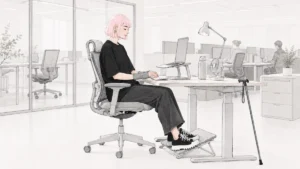
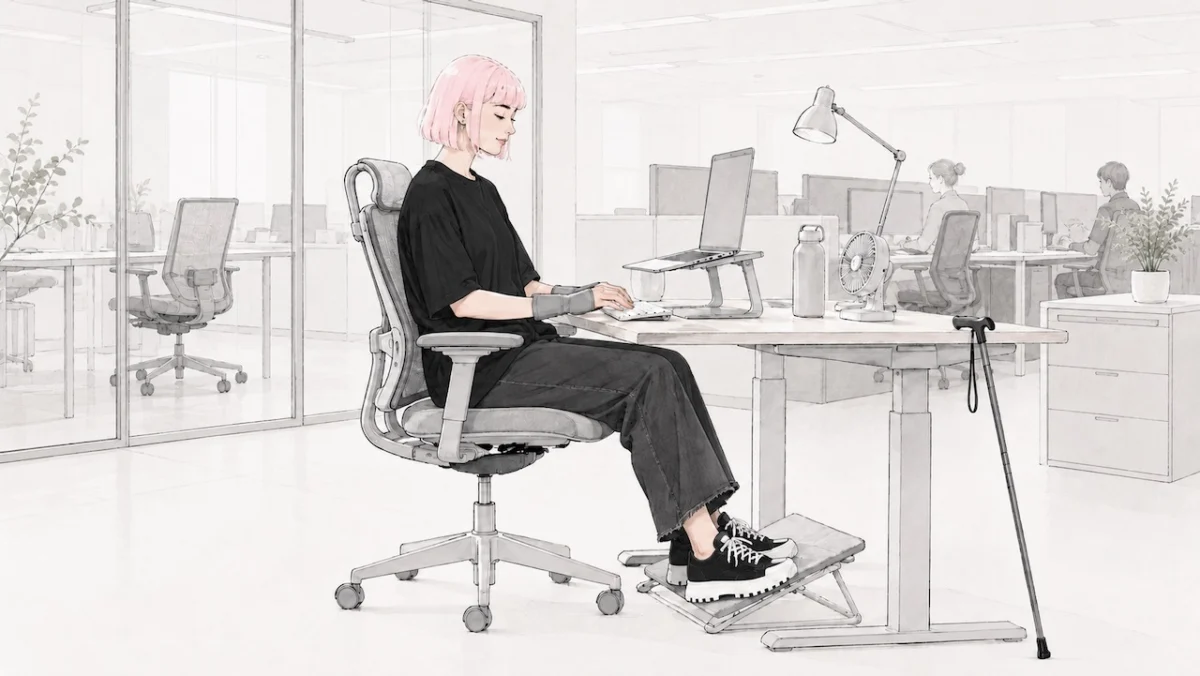
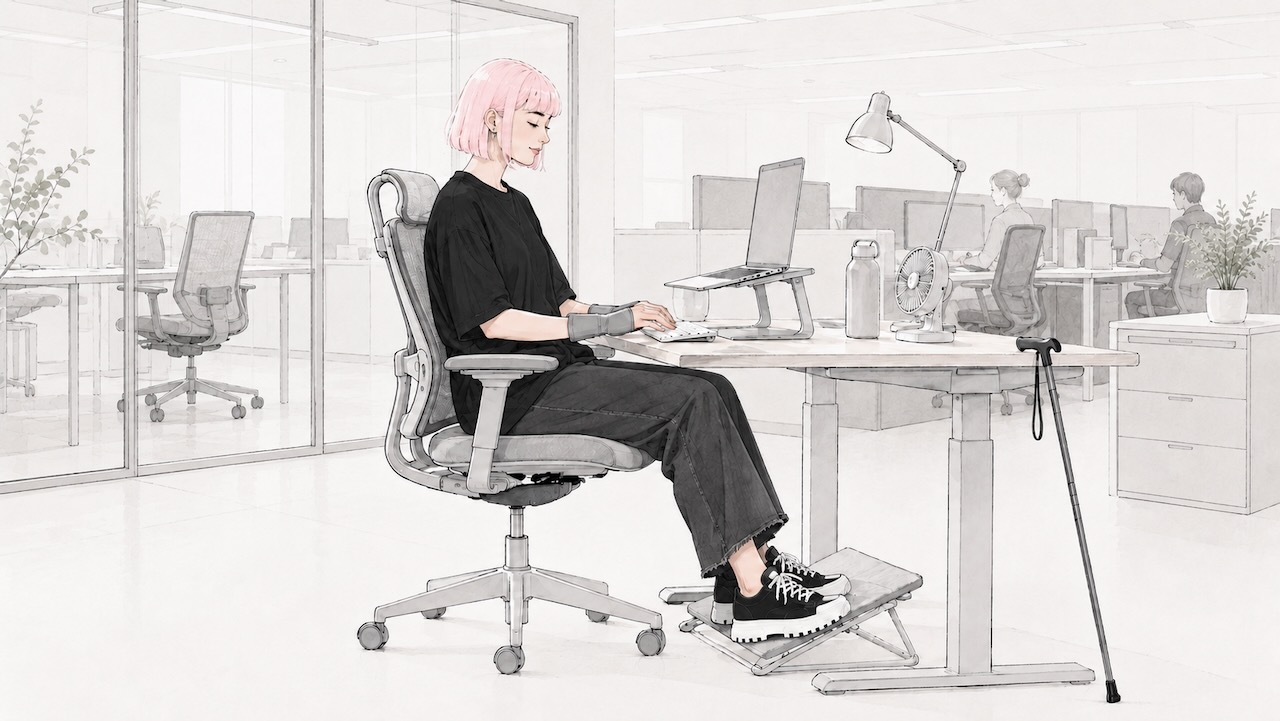
- Customized Seating: Chairs with adjustable lumbar support, seat depth, and armrests that can be set to prevent shoulder strain.
- Vertical Mice and Split Keyboards: These reduce repetitive strain on wrists and fingers, which are particularly vulnerable to joint issues in EDS patients.
- Footrests and Monitor Arms: Proper alignment of the neck and feet reduces the "slump" that triggers spinal pain.
- Mobility Support: For those who use canes or rollators, ensuring the workspace is clear of tripping hazards is a baseline safety requirement, not a luxury.
Flexibility as a Survival Strategy
For an individual with EDS, a "good day" and a "bad day" can be separated by a single night’s sleep. A flare-up can occur without warning, triggered by weather, stress, or autonomic dysfunction.
The New Standard of Flexibility
To maintain long-term employment, employees and employers should negotiate:
- Hybrid/Remote Schedules: Eliminating the commute reduces physical fatigue, allowing energy to be directed toward core job functions.
- Flexible Start/End Times: Allowing for "slow mornings"—where a patient may need time for medications or symptom management before starting work—can be the difference between a productive day and a sick day.
- Task Batching and Breaks: Implementing short, frequent breaks (the "Pomodoro" technique) can prevent prolonged static positioning, which is critical for those with POTS.
Creating an EDS-Friendly Environment
Many individuals with EDS also live with MCAS or sensory processing sensitivities. In these cases, the environment itself can act as a trigger.
- Environmental Controls: Temperature regulation is vital. For those with POTS, overheating can lead to syncope (fainting). Access to a personal fan or a desk away from heating vents can mitigate this.
- Lighting Adjustments: Fluorescent lights are a common trigger for migraines and eye strain. Utilizing desk lamps, diffusers, or asking for bulbs to be replaced with warmer, flicker-free LED options can significantly improve concentration.
- Fragrance-Free Policies: MCAS often involves chemical sensitivities. A workplace policy that discourages heavy perfumes or cleaning agents can ensure the office remains accessible to those with respiratory or immune sensitivities.
Accessibility Beyond the Desk: The Holistic Approach
Workplace accessibility must be viewed through a wide-angle lens. It is not just about the chair; it is about the entire experience of being an employee.
- Physical Navigation: Ensure that meeting rooms, break areas, and bathrooms are easily accessible. For those using mobility aids, this includes automatic doors and clear pathways.
- Inclusive Meetings: If an employee has difficulty standing for long periods, all-hands meetings should provide seating or allow for remote participation.
- Digital Accessibility: Screen readers, voice-to-text software, and high-contrast displays are essential for employees who may be experiencing vision issues or hand pain related to their condition.
Official Perspectives and Legal Implications
Legal experts emphasize that the interactive process—the dialogue between the employer and the employee—is the most critical phase of the accommodation process.
The U.S. Equal Employment Opportunity Commission (EEOC) maintains that the request for accommodation does not need to be formal or written initially, but documentation from a medical professional is usually the next step. Employers who dismiss these requests without exploring options face significant legal risk under the ADA. Conversely, employees are encouraged to present their requests in terms of "functional limitations" rather than just medical diagnoses. By explaining what they cannot do (e.g., "I cannot sit for more than 30 minutes without needing to change position") rather than just stating their diagnosis, the employee provides the employer with actionable information.
The Implications of a Supportive Culture
The impact of these accommodations extends far beyond the individual. Companies that embrace accessibility often report higher retention rates, improved employee morale, and a broader diversity of thought. When a company proves it can support an employee with a complex chronic condition, it signals a culture of empathy and adaptability that benefits the entire workforce.
For the EDS community, the implications are profound: it transforms the workplace from a site of exhaustion into a place of contribution. It allows the brilliance, creativity, and professional dedication of EDS patients to shine without being overshadowed by the physical cost of the environment.
Key Takeaways for the EDS Community
- Know Your Rights: Familiarize yourself with the ADA (or equivalent regional laws). You are entitled to reasonable accommodations that allow you to perform your job.
- Document Everything: Keep records of your requests and the outcomes. If a request is denied, ask for the reason in writing.
- Focus on Function: When speaking with HR, focus on your functional limitations and the specific equipment or policy changes that would enable your success.
- Seek Outside Help: Organizations like the Job Accommodation Network (JAN) provide free, expert guidance on accommodations for specific conditions.
- Build Your Team: You do not have to do this alone. Connect with other EDS advocates who have navigated the corporate world.
Resources for Further Support
United States
- Job Accommodation Network (JAN): The gold standard for workplace accommodation advice. They provide a free, searchable database of accommodations by disability.
- EEOC.gov: Official resources on the Americans with Disabilities Act.
United Kingdom
- Access to Work – GOV.UK: A government-backed program that provides grants to help cover the costs of practical support and equipment.
Canada
- Government of Canada – Accessibility: Resources regarding the Accessible Canada Act and workplace supports.
Author Note: As we look toward the future of work, we must recognize that disability is not a deviation from the norm—it is a part of the human experience. By advocating for ourselves and educating our employers, we are building a more inclusive future for everyone in the EDS community. You deserve a career that accommodates your needs, not one that ignores them.
Rebecca Hayes
Disability Advocate
October 2026