









The release of the 2025–2030 Dietary Guidelines for Americans (DGAs) marks a significant moment in national public health policy. Billed with the straightforward, consumer-friendly tagline "Eat Real Food," the document aims to provide a roadmap for a healthier nation. However, beneath the accessible language and revamped visual aids lies a document that has ignited a firestorm of controversy among nutrition scientists, public health advocates, and industry stakeholders. While the Guidelines take a laudable and long-overdue stance against the ubiquity of ultra-processed foods and added sugars, they simultaneously introduce a new, "flipped" food pyramid that appears to contradict the very scientific consensus the document claims to uphold.
The Main Facts: A Shift in Tone and Content
The core mandate of the DGAs is to provide science-based advice on what to eat and drink to promote health, reduce the risk of chronic disease, and meet nutrient needs. This latest edition distinguishes itself by being the first to explicitly call out "highly processed foods." This is a significant pivot; by recommending that Americans limit intake of sugary beverages, salty snacks, and refined carbohydrates, the federal government is aligning itself with contemporary research that links food processing—not just caloric density—to metabolic decline.
Furthermore, the new Guidelines take a significantly stricter position on added sugars. The document boldly states that "no amount of added sugars or non-nutritive sweeteners is recommended or considered part of a healthy or nutritious diet." It effectively lowers the bar for intake, particularly for children, suggesting they avoid added sugars entirely until age 10—a dramatic shift from the previous threshold of age two.
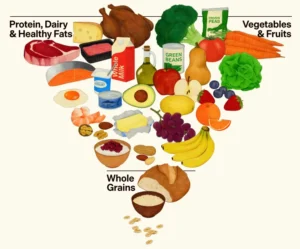
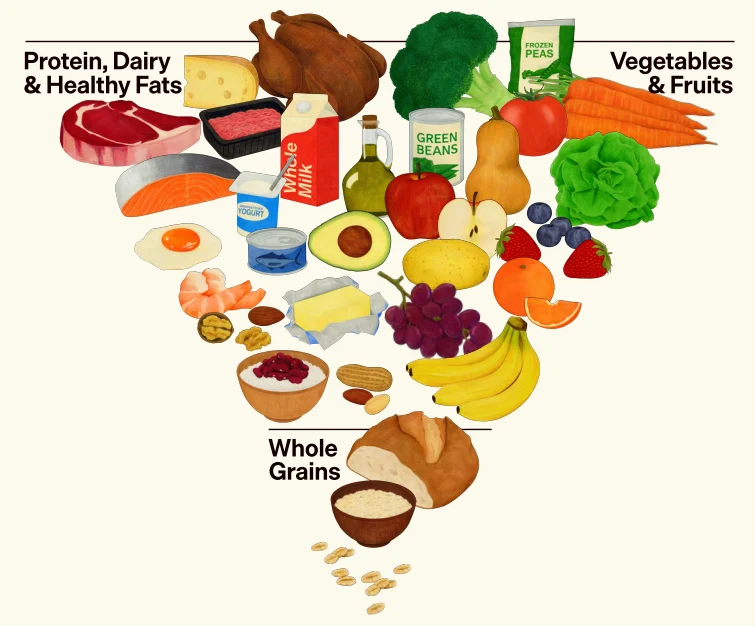
However, the most contentious feature of this release is the return of a graphic: the "New Food Pyramid." Unlike the classic iterations of the past, this pyramid is inverted, placing a visual emphasis on animal proteins, full-fat dairy, and butter. This design choice has left experts like Frank Hu, Chair of the Department of Nutrition at the Harvard T.H. Chan School of Public Health, concerned. "There appear to be several contradictions within the DGAs and between the DGAs and the new pyramid," Hu noted. "The mixed messages surrounding saturated-fat-rich foods may lead to confusion and potentially higher intake of saturated fat, which is directly linked to increased LDL cholesterol and cardiovascular risk."
Chronology of a Controversial Update
The path to the 2025–2030 DGAs was anything but conventional. Every five years, the U.S. Departments of Agriculture (USDA) and Health and Human Services (HHS) oversee the update. The process usually begins with an independent Dietary Guidelines Advisory Committee—a group of vetted, non-partisan experts who synthesize the latest nutritional science. This committee produces a comprehensive report that serves as the bedrock for the final policy document.
In this cycle, the process hit a major roadblock: the administration rejected the Advisory Committee’s initial scientific report. In an unprecedented move, the government opted to commission a "supplemental scientific analysis" via a private federal contracting process. This decision has sparked intense scrutiny.
Critics, including members of the original committee, have expressed profound concern regarding the lack of transparency in how this supplemental research was conducted. Deirdre Tobias, an assistant professor at the Harvard Chan School who served on the 2025–2030 Committee, voiced her concerns: "There is no transparency in the methodology and rigor that was employed, or why certain topics were selected to be relitigated." Investigative reports have since highlighted that several individuals involved in this supplemental review process maintained documented financial ties to the beef and dairy industries, raising questions about potential conflicts of interest that may have influenced the visual and dietary priorities presented in the final version of the Guidelines.
Supporting Data: The Saturated Fat Math
One of the most persistent areas of confusion in dietary science is the role of saturated fats. The 2025–2030 DGAs maintain the long-standing scientific consensus that saturated fat should account for no more than 10% of total daily calories. Yet, the practical application of this rule is nearly impossible given the visual recommendations provided by the new pyramid.
Consider a standard 2,000-calorie diet. At a 10% limit, an individual should consume no more than 22 grams of saturated fat per day. The DGAs recommend three servings of dairy daily. If a consumer follows the "New Food Pyramid" and opts for full-fat versions—such as one cup of whole milk (5g saturated fat), three-quarters of a cup of full-fat Greek yogurt (6g), and one ounce of cheddar cheese (6g)—the consumer has already reached 17 grams of saturated fat. Adding a single tablespoon of butter (7g) or beef tallow (6g) for cooking—both of which are prominently featured in the new visual guide—pushes the total well over the 22-gram limit before the individual has even consumed a single serving of protein or any other food for the rest of the day.
This disconnect between the written recommendation (limit saturated fat) and the visual marketing (eat butter, steak, and whole milk) creates a "nutrient-gap" that is difficult for the average American to bridge without professional guidance from a dietitian.
Official Responses and Internal Tensions
The response from the public health community has been largely one of skepticism. While organizations have welcomed the focus on processed foods, they have been quick to point out that the Guidelines remain silent on two critical issues: the environmental impact of food production and the socioeconomic barriers to healthy eating.
The omission of sustainability is particularly striking, as the relationship between dietary choices and climate health is well-documented. By failing to acknowledge that the production of red meat and high-fat dairy has a significantly larger carbon footprint than plant-based proteins, the DGAs miss an opportunity to align individual health goals with planetary health.
Moreover, the lack of clarity regarding protein quality remains a point of contention. The new Guidelines suggest an increase in protein intake (1.2 to 1.6 grams per kilogram of body weight), a substantial jump from previous recommendations. While individual needs vary, critics argue that promoting higher protein consumption without emphasizing the "protein package"—the fiber, healthy fats, and nutrients that come alongside protein—could lead to an over-reliance on red meats rather than the fish, legumes, and nuts that have been shown to offer superior long-term health outcomes.
Implications for Public Health
The ultimate goal of the DGAs is to improve the health of the American population. However, history provides a sobering perspective: research from the CDC consistently shows that Americans rarely follow the dietary guidelines as written. With this new, more "consumer-friendly" iteration, the government hopes to increase compliance through a more accessible website and simplified graphics.
However, the risk of "mixed messaging" is high. When a visual guide suggests foods that the text explicitly advises to consume in moderation, the result is often consumer paralysis. If individuals are confused about whether butter and steak are "good" or "bad" for them, they are more likely to fall back on established habits—which, in the current U.S. food environment, lean heavily toward ultra-processed, convenient, and unhealthy options.
For the public, the takeaway from the 2025–2030 Guidelines is to practice discernment. While the warnings against added sugar and highly processed foods are sound, the visual guidance—specifically regarding saturated fats and animal products—should be treated with caution. Health experts continue to suggest that for those looking for a reliable, evidence-based approach to nutrition, resources like the Healthy Eating Plate (developed by the Harvard T.H. Chan School of Public Health) remain a more consistent and scientifically sound alternative.
As the nation moves forward with these new standards, the conversation will likely continue to center on how much "industry influence" should be permitted in the development of public health policy. Until transparency in the committee selection and review process is fully restored, the Dietary Guidelines for Americans will continue to be viewed as much as a political document as a scientific one. For now, the best advice remains the most classic: prioritize whole, plant-forward foods, limit processed ingredients, and rely on individualized guidance from qualified healthcare providers rather than simplified, and potentially conflicting, pyramid graphics.