









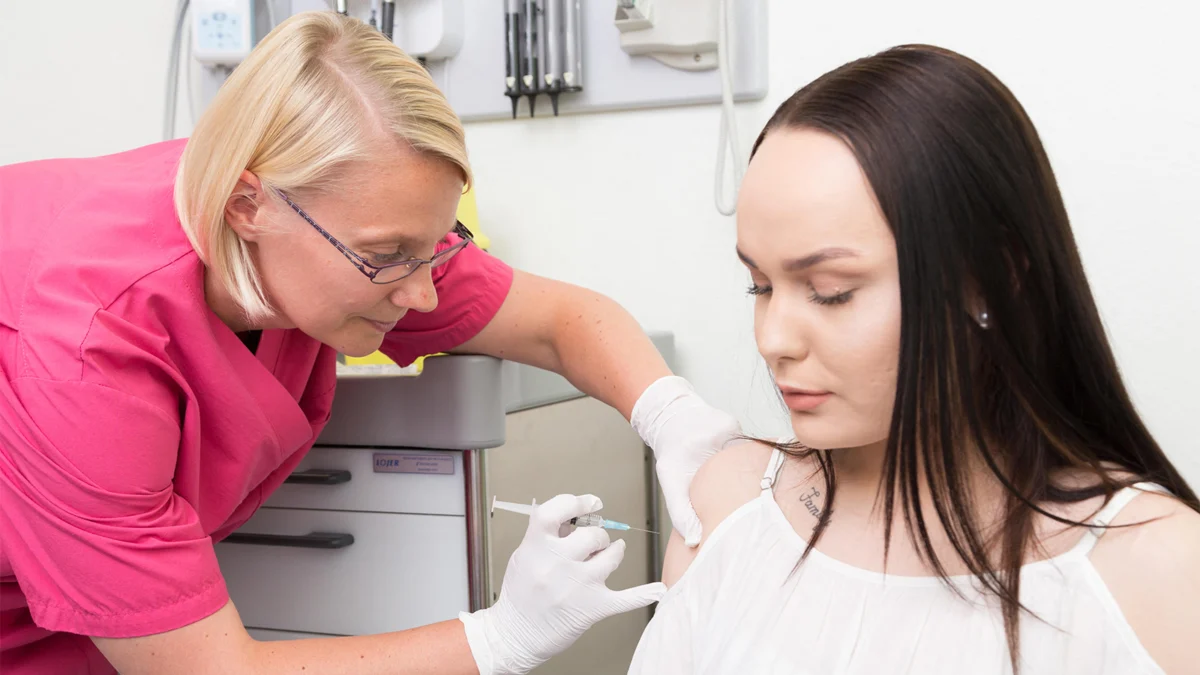
October 12, 2026 — For decades, the human papillomavirus (HPV) vaccine has been championed primarily as a vital tool in the global fight against cervical and other related cancers. However, a landmark national case-control study conducted in Sweden suggests that the benefits of the vaccine may extend significantly further than oncology, potentially acting as a protective shield for reproductive health and pregnancy outcomes.
The study, published in The BMJ, reveals that women who received the quadrivalent HPV vaccine experienced a statistically significant reduction in the risk of several adverse pregnancy outcomes, including preterm births. These findings add a compelling new dimension to the public health argument for universal HPV vaccination, suggesting that the vaccine’s impact reaches into the very earliest stages of human life.
The Core Findings: A Closer Look at the Data
The study, led by Dr. Jiayao Lei of the Karolinska Institute in Stockholm, analyzed an expansive dataset involving nearly 625,000 singleton births between 2006 and 2023. By comparing vaccinated women to their unvaccinated counterparts, researchers were able to quantify the impact of the HPV shot on maternal and neonatal health.
The results indicate that vaccinated women were notably less likely to encounter complications such as preterm birth (adjusted odds ratio [aOR] 0.95), very preterm birth (aOR 0.85), and spontaneous preterm birth (aOR 0.95).
Perhaps most compelling is the evidence regarding the timing of the vaccination. The study found that the protective association was even stronger for women who received their HPV vaccine before the age of 17. For this cohort, the adjusted odds ratio for preterm birth dropped to 0.90, while the odds for spontaneous preterm birth fell to 0.89. These data points suggest that early intervention—well before the onset of sexual activity—may be the key to maximizing the reproductive benefits of the vaccine.
Chronology of the Research: From Data Collection to Publication
The research journey spanned nearly two decades of Swedish public health data. By utilizing Sweden’s robust national registers, the team at the Karolinska Institute was able to track a massive cohort of nulliparous women (those who have not previously given birth) between the ages of 16 and 35.
- 2006–2023: The study period, during which 624,713 singleton births were recorded and analyzed.
- Methodological Rigor: To ensure accuracy, the researchers utilized a case-control design. Each individual who experienced an adverse pregnancy outcome was matched with up to 10 controls who did not experience such complications, allowing for a precise calculation of risk reduction.
- Exclusion Criteria: To maintain consistency, researchers excluded births from women who had received bivalent or nonavalent vaccines, focusing specifically on the quadrivalent version to ensure the data remained comparable across the cohort.
- The Findings: After adjusting for various confounding factors, the team finalized their analysis in 2026, culminating in the peer-reviewed publication in The BMJ this month.
Supporting Data: Understanding the Mechanisms
The study did not merely observe a correlation; it sought to understand the "why" behind these improved outcomes. Dr. Lei and co-author Zhongsong Zhang highlighted two primary hypotheses for how HPV vaccination might influence pregnancy.
1. The Impact of Cervical Lesion Prevention
One of the most significant findings involves the reduction of high-grade cervical lesions. Research has long established that the surgical treatments often required to remove these lesions can lead to weakened cervical tissue, which in turn increases the risk of preterm birth.
In this study, only 0.6% of vaccinated women presented with high-grade cervical lesions, compared to 3.7% of unvaccinated women. When the researchers adjusted for these lesions, the association between the vaccine and improved pregnancy outcomes weakened, suggesting that the vaccine’s primary protective mechanism may be the prevention of these lesions, thereby avoiding the need for invasive, risk-inducing treatments.
2. Direct Biological Influence
Beyond surgical prevention, there is the possibility that HPV infection itself creates an inflammatory environment that interferes with embryonic development. The researchers noted that HPV might contribute to placental dysfunction, which is a known driver of preterm delivery. Maternal vaccination, by preventing the virus from taking hold, may protect the placenta and the developing embryo from these harmful effects.
Secondary Outcomes
The study also noted improvements in other metrics:
- Preterm Premature Rupture of Membranes (PROM): Vaccinated women showed a lower risk (aOR 0.93).
- Severe Small for Gestational Age (SGA): The study found a lower risk of severe SGA infants among the vaccinated (aOR 0.92).
Official Responses and Expert Perspectives
The academic and public health community has reacted with cautious optimism. Dr. Lei and Zhang emphasized that while the individual-level benefits might appear "modest," the population-level impact could be profound.
"Our findings highlight the importance of timely HPV vaccination and suggest that its potential benefits may extend beyond cancer prevention to reproductive health," the authors stated. They noted that the results should prompt policymakers to rethink the cost-effectiveness analyses of HPV vaccination programs. When factoring in the lifelong healthcare costs associated with preterm births—which can include long-term developmental challenges and extensive NICU stays—the vaccine becomes an even more attractive investment for national healthcare budgets.
Public health experts are also drawing attention to the "sexual debut" factor. By vaccinating children between the ages of 9 and 12, as recommended by groups like the American Academy of Pediatrics, we are not only preventing future cancer cases but also ensuring that women enter their reproductive years with a fully protected reproductive tract, free from the scarring or viral interference that can complicate pregnancy.
Implications for Public Health Policy
The implications of this study are far-reaching, particularly for countries with established HPV vaccination programs.
A New Narrative for Vaccine Advocacy
Public health campaigns have historically focused on the "cancer-preventing" aspects of the HPV vaccine. This new data provides a more immediate, tangible incentive for parents. The prospect of reducing the risk of preterm birth—a major cause of neonatal morbidity—could be a powerful motivator for increasing vaccine uptake in populations that might otherwise be hesitant.
Economic Considerations
Preterm birth is one of the most expensive conditions to manage in a healthcare system. If widespread vaccination can effectively reduce the incidence of preterm deliveries by even a small percentage, the resulting savings could be in the hundreds of millions of dollars annually on a national scale. Policy analysts are already calling for updated models that incorporate these obstetric benefits into the standard cost-benefit assessments used to determine vaccine funding.
Clinical Guidance
For obstetricians and gynecologists, the study suggests that a patient’s vaccination status is an important piece of their reproductive history. While the researchers cautioned that this study should be viewed as exploratory rather than definitive proof of a causal mechanism, the consistent patterns observed across the massive Swedish dataset provide a strong foundation for future clinical guidelines.
Conclusion: Looking Ahead
While this study from the Karolinska Institute represents a significant step forward, the authors acknowledge that there are limitations. Residual confounding—such as differences in socioeconomic status, lifestyle choices, or access to prenatal care—could still play a role. Furthermore, the study could not fully account for all reproductive behaviors or specific, granular details regarding prior cervical treatments.
Nevertheless, the weight of the evidence is clear: the HPV vaccine is a multifaceted tool for public health. By reducing the incidence of high-grade cervical lesions and potentially safeguarding the reproductive environment, the vaccine is proving to be a cornerstone of not just cancer prevention, but of maternal and neonatal health. As we look toward the future of global immunization strategies, this research serves as a reminder that the benefits of science often ripple far beyond our initial expectations. The case for early, universal HPV vaccination has never been more compelling.