








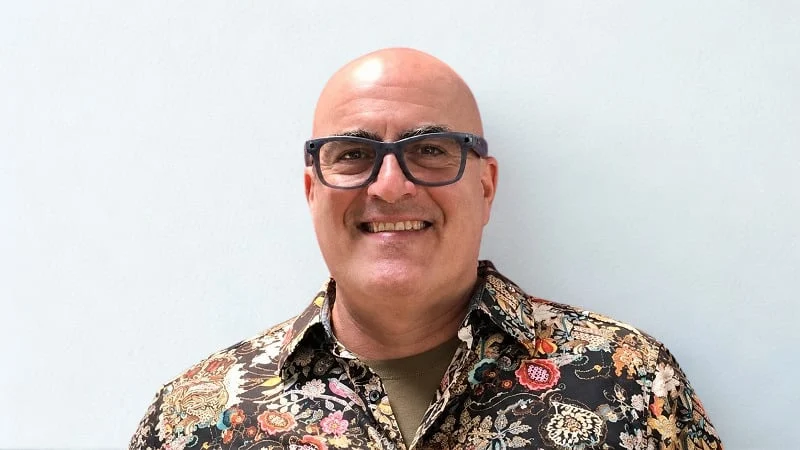
Melbourne, FL – [Current Date] – Kalogon, a pioneering company renowned for its innovative smart seating technology, has announced the appointment of Marty Evans as its first Chief Technology Officer (CTO). This strategic move signifies a pivotal moment for Kalogon as it prepares to dramatically expand its adaptive seating solutions beyond its foundational work in wheelchairs into high-demand sectors such as aviation and other markets where prolonged sitting poses significant challenges.
Evans, a veteran engineer with over 25 years of experience in designing and shipping advanced consumer hardware for industry giants like Microsoft, Meta, Magic Leap, and HP, will now spearhead Kalogon’s engineering and product development teams. His appointment is expected to accelerate the company’s trajectory, leveraging his deep expertise to bring sophisticated, empathy-driven design principles to a broader audience of individuals who spend countless hours seated, from pilots and passengers to office workers and beyond.
Main Facts: A New Era for Adaptive Seating
Kalogon’s decision to appoint Marty Evans as its inaugural Chief Technology Officer marks a significant inflection point for the company. Until now, Kalogon has garnered acclaim for its intelligent seating products, primarily addressing the critical needs of wheelchair users by preventing pressure injuries and enhancing comfort through dynamic pressure redistribution. With Evans at the helm of its technology division, Kalogon is poised to translate this specialized expertise into a much wider array of applications.
Evans’ role will encompass leading the entirety of Kalogon’s engineering and product development efforts, from initial concept generation through to production. His mandate is clear: to shape the company’s technological roadmap, ensuring that Kalogon’s innovative solutions remain at the forefront of adaptive seating design. This expansion is not merely about increasing market share; it’s about fundamentally rethinking how technology can enhance the daily lives and long-term health of millions who rely on seating for work, travel, or mobility.
The appointment underscores Kalogon’s ambitious vision to become the leading provider of smart seating technology across multiple industries. The company’s innovative approach, which combines advanced sensors, intelligent algorithms, and dynamic actuation systems, promises to transform static, uncomfortable seating into responsive, health-promoting environments. Evans’ proven track record in bringing complex hardware products to market, coupled with his background in highly demanding technological fields, makes him an ideal leader to navigate this ambitious expansion.
A Distinguished Chronology: Marty Evans’ Journey to Kalogon
Marty Evans’ career path is a testament to a relentless pursuit of technological innovation, characterized by a unique blend of military precision, consumer electronics savvy, and a deep understanding of human-computer interaction. His journey has consistently placed him at the vanguard of hardware development, preparing him for this pivotal role at Kalogon.
Early Foundations: Air Force and Electrical Engineering
Evans’ professional life began not in the gleaming labs of Silicon Valley, but in the rigorous, high-stakes environment of the United States Air Force. As an avionics technician, he was entrusted with the maintenance of some of the nation’s most advanced aircraft, including the F-16 fighter jets and the stealth F-117A Nighthawk. This foundational experience instilled in him an unparalleled attention to detail, a methodical approach to problem-solving, and a profound appreciation for systems reliability under extreme conditions. The precision required to ensure the operational integrity of these complex machines undoubtedly shaped his engineering mindset, fostering a discipline that would serve him well in subsequent roles.
After his distinguished military service, Evans transitioned to academia, earning his electrical engineering degree with top honors. This academic achievement, completed in 1999, provided him with the theoretical framework to complement his practical experience, laying the groundwork for a career that would bridge the gap between abstract engineering principles and tangible product development.
Pioneering Consumer Hardware: Microsoft, Valve, Meta, Magic Leap
Upon entering the consumer electronics industry, Evans rapidly established himself as a force in hardware innovation. His career trajectory reads like a roll call of companies that have defined the modern technological landscape. At HP, he honed his skills in product development within a large, established enterprise, learning the intricacies of bringing high-volume consumer devices to market.
His tenure at Microsoft saw him contribute to the groundbreaking Surface product line. The Surface devices are celebrated not just for their technical prowess but for their elegant integration of hardware and software, redefining what a personal computing device could be. Evans’ work here involved developing sophisticated, user-centric hardware components that seamlessly blended into the overall user experience, a philosophy directly applicable to Kalogon’s mission of making advanced seating technology "disappear into the background."
Moving to Valve, a company known for its innovative gaming hardware and software, Evans was exposed to a culture of pushing boundaries and reimagining user interaction. This experience likely deepened his understanding of ergonomic design and the importance of user comfort in highly interactive environments.
Later, as Director of Electrical Engineering at Meta’s Reality Labs, Evans played a crucial role in developing cutting-edge virtual and augmented reality (VR/AR) technologies. This domain is inherently complex, requiring the integration of advanced sensors, precise optics, and powerful processing into compact, wearable forms. The challenges of creating comfortable, immersive, and high-performing AR/VR devices directly relate to the nuanced requirements of adaptive seating – both demand a deep understanding of human physiology, perception, and interaction to create a truly transformative experience.
His most recent role as VP of Engineering at Magic Leap, another pioneer in the mixed reality space, further solidified his reputation as a leader capable of navigating the complexities of emerging technologies. In these roles, Evans wasn’t just building devices; he was building experiences, pushing the boundaries of what technology could do to augment human perception and capability.
Throughout his illustrious career, Evans has amassed an impressive portfolio of over 20 patents. These patents span a diverse range of critical technologies, including pressure sensing, wireless charging, electromechanical actuation, power management, and accessory usability. This breadth of intellectual property demonstrates his deep technical versatility and his ability to innovate across various core components essential for advanced smart devices, including those at the heart of Kalogon’s adaptive seating systems.
The Return to Roots: Kalogon and Adaptive Seating
For Evans, joining Kalogon represents more than just a new professional chapter; it is, as he describes it, "coming full circle." His work in AR/VR explored ways technology could extend human abilities – whether by helping someone follow a conversation in a noisy room or making visual information more accessible. He sees a direct parallel in adaptive seating: "Adaptive seating calls for the same mindset – understanding what each person needs, then using hardware and thoughtful design to improve their daily experience."
This perspective highlights a critical aspect of Kalogon’s mission: it’s not just about technology for technology’s sake, but about technology as an enabler for human well-being and independence. His "empathy-driven design" philosophy, honed in the demanding world of consumer electronics, is perfectly aligned with Kalogon’s user-centric approach to solving complex seating challenges. The opportunity to apply this mindset to a sector with such direct and profound impact on quality of life, particularly in his hometown of Melbourne, Florida, resonated deeply with Evans, leading him to describe it as "a match made in engineering heaven."
Supporting Data and Technological Prowess
Kalogon’s strength lies in its proprietary technology, which combines sophisticated engineering with a profound understanding of human physiology. The company’s initial success and future expansion are built upon a foundation of quantifiable results and strategic partnerships.
The Core Innovation: Kalogon’s Smart Seating Technology
At its heart, Kalogon’s smart seating technology is an adaptive system designed to dynamically manage pressure distribution. Unlike traditional static cushions, Kalogon’s solutions actively sense and respond to the user’s body, continuously adjusting to prevent prolonged pressure on any single point. This is achieved through an intricate network of sensors that map pressure points in real-time, feeding data to an intelligent control system. This system then activates micro-adjustments within the cushion, typically using electromechanical actuators or pneumatic cells, to redistribute pressure and promote healthy blood flow.
The problem this technology addresses is significant: prolonged static pressure is a leading cause of pressure injuries (also known as bedsores or decubitus ulcers), which are particularly prevalent among wheelchair users and bedridden patients. These injuries are not only painful and debilitating but also incredibly costly to treat, often leading to serious infections, extended hospital stays, and reduced quality of life. By actively managing pressure, Kalogon’s technology dramatically reduces the risk of these injuries, offering a preventative solution that enhances both comfort and health.
Expanding Horizons: From Wheelchairs to Aviation
Kalogon’s ambition extends far beyond its initial success in the wheelchair market. The company has identified aviation as a critical sector ripe for innovation, particularly given Marty Evans’ own background in the U.S. Air Force. This expansion is already well underway, supported by significant investment.
The company has secured multiple Small Business Innovation Research (SBIR) Phase II grants from the U.S. Air Force, totaling an impressive $3.5 million. These grants are specifically aimed at adapting Kalogon’s smart seating for the rigorous demands of military aircrews, particularly those operating the B-52 Stratofortress and E-4B Nightwatch aircraft. Aircrews in these roles can spend an astonishing 30 to 40 hours in their seats during extended missions. The existing seating in these aircraft, often designed decades ago, is ill-equipped to handle the physiological stresses of such prolonged periods of immobility, leading to severe fatigue, discomfort, and potential long-term health issues.
Air Force testing of Kalogon’s adaptive cushions has yielded compelling results. The technology demonstrated a remarkable 51% reduction in peak pressure points on aircrews. This significant reduction is directly correlated with a decrease in the risk of pressure injuries and an improvement in overall comfort. Furthermore, the testing indicated a significant reduction in pilot fatigue, a critical factor in maintaining operational effectiveness and safety during long-duration flights. Reduced fatigue not only enhances crew performance but also contributes to mission success and the well-being of military personnel.
These results highlight the immense potential of Kalogon’s technology not only in military applications but also in long-haul commercial aviation. Passengers and flight crews on transcontinental and intercontinental flights endure similar challenges of prolonged sitting, leading to discomfort, back pain, and an increased risk of deep vein thrombosis (DVT). Implementing Kalogon’s smart seating in commercial aircraft could revolutionize the passenger experience, improve crew health, and potentially reduce health-related incidents during flights.
Market Potential and Future Applications
The implications of Kalogon’s technology, particularly with Evans’ leadership, extend far beyond wheelchairs and aviation. Any scenario involving prolonged sitting represents a potential market. This includes:
- Office Environments: With the rise of sedentary work, smart office chairs could dynamically adjust to reduce strain and promote better posture, combating the health risks associated with prolonged desk work.
- Automotive Industry: Long-distance truck drivers, ride-share operators, and even daily commuters could benefit from adaptive seating that reduces fatigue and discomfort.
- Gaming and Entertainment: Professional gamers and enthusiasts often spend hours in front of screens; smart gaming chairs could enhance comfort and performance.
- Industrial and Control Rooms: Operators in critical infrastructure, surveillance, or manufacturing often occupy fixed positions for extended periods, making them ideal candidates for adaptive seating.
The economic impact of seating-related health issues is substantial. Pressure injuries alone cost billions annually in healthcare expenditures worldwide. By preventing these conditions, Kalogon’s technology offers not only improved quality of life but also significant healthcare cost savings. Furthermore, by reducing fatigue and enhancing comfort, the technology can lead to increased productivity and alertness in professional settings, offering tangible economic benefits across various industries.
Official Responses and Strategic Vision
The appointment of Marty Evans has been met with enthusiasm from Kalogon’s leadership, who view it as a critical step in realizing the company’s expansive vision. Both Evans and CEO Tim Balz have articulated a clear strategy for leveraging this new leadership to drive innovation and market penetration.
Kalogon’s Leadership Perspective: CEO Tim Balz
Tim Balz, founder and CEO of Kalogon, expressed profound confidence in Evans’ ability to steer the company’s technological future. Balz emphasized Evans’ distinguished career in developing sophisticated consumer devices, highlighting a key attribute that aligns perfectly with Kalogon’s mission: "Marty has built some of the most sophisticated consumer devices on the market, and he knows how to make advanced technology disappear into the background of someone’s day."
This concept of "disappearing technology" is central to Kalogon’s product philosophy. For adaptive seating to be truly effective and widely adopted, it must be intuitive, seamless, and unobtrusive. Users should experience enhanced comfort and health benefits without feeling overwhelmed by complex controls or visible mechanisms. Evans’ experience in creating user-friendly, elegant hardware at companies like Microsoft (Surface) and Meta (Reality Labs) makes him uniquely qualified to achieve this delicate balance.
Balz further articulated the strategic importance of Evans’ appointment for accelerating Kalogon’s market expansion: "That’s exactly what great seating should do. His experience will help us move faster as we take what we’ve learned from wheelchair users into new places people sit, including the airplane cabin." This statement underscores Kalogon’s intent to rapidly diversify its product offerings and penetrate new sectors. Evans’ extensive background in managing complex engineering projects from concept to production, coupled with his deep understanding of scaling hardware manufacturing, will be instrumental in executing this ambitious growth strategy. His leadership is expected to streamline development cycles, optimize product performance, and ensure that Kalogon’s innovations are robust and market-ready.
Marty Evans on His New Role and Vision
Marty Evans himself articulated a compelling vision for his role at Kalogon, drawing direct parallels between his past work in AR/VR and his new mission in adaptive seating. His earlier work in augmented reality, which focused on "explor[ing] ways technology could extend someone’s abilities, from helping someone follow a conversation in a noisy room to making visual information easier to see," resonates deeply with the core ethos of adaptive seating. In both domains, the goal is to leverage technology to augment human capabilities and improve daily experiences by understanding individual needs.
Evans’ excitement for the team and the company’s location in Melbourne is palpable. He lauded the "team of passionate engineers, makers and tinkerers doing exactly that, right here in Melbourne," indicating a strong cultural fit and a shared dedication to innovation. His personal connection to the region, coupled with the compelling nature of Kalogon’s mission, clearly played a significant role in his decision to join.
His extensive patent portfolio, covering areas like pressure sensing, wireless charging, electromechanical actuation, and power management, directly aligns with the technical challenges and opportunities inherent in smart seating. For instance, advanced pressure sensing is crucial for real-time data collection, while electromechanical actuation is vital for dynamic adjustments. His expertise in power management will be critical for developing efficient, long-lasting battery solutions for portable or integrated smart seating systems. Evans’ comprehensive technical background ensures that he can lead Kalogon’s engineering teams with both strategic vision and hands-on understanding of the underlying technologies. He will shape the company’s technology strategy, ensuring that innovation is not only cutting-edge but also practical, manufacturable, and user-centric.
Broader Implications and Industry Impact
The appointment of Marty Evans and Kalogon’s strategic expansion signal a profound shift in how the world approaches seating, positioning the company as a potential disrupter in multiple industries.
Reshaping the Seating Industry
For too long, seating has been viewed as a static, passive component of our environment. Kalogon, under Evans’ technical leadership, is poised to transform this perception entirely. Smart seating could evolve from a niche product for specific medical conditions into a standard feature across various applications. Imagine office chairs that prevent musculoskeletal issues, car seats that actively reduce driver fatigue, or airplane seats that virtually eliminate the discomfort and health risks of long-haul flights.
This paradigm shift would not only improve individual comfort and health but also drive innovation across the entire seating manufacturing ecosystem. Manufacturers of office furniture, automotive components, and aerospace interiors will be compelled to integrate advanced sensor technology, dynamic adjustment systems, and intelligent algorithms into their products, moving beyond traditional ergonomic designs to truly adaptive solutions. Kalogon’s role in pioneering and popularizing this technology positions it as a leader in defining the future of seating.
The Intersection of Hardware Innovation and Human Well-being
Marty Evans’ career exemplifies the powerful intersection of cutting-edge hardware innovation and direct benefits to human well-being. His transition from developing complex AR/VR systems that extend human perception to creating adaptive seating that enhances physical comfort and prevents injury underscores a growing trend: technology is increasingly being leveraged not just for entertainment or productivity, but for fundamental improvements in quality of life and health.
This convergence highlights the increasing demand for "wellness tech" that seamlessly integrates into daily life. As people become more aware of the health implications of sedentary lifestyles and prolonged static positions, solutions like Kalogon’s adaptive seating will become indispensable. Evans’ ability to translate highly sophisticated engineering into tangible, user-friendly products is key to making this vision a reality.
Economic and Societal Benefits
The widespread adoption of Kalogon’s smart seating technology could yield substantial economic and societal benefits. On the economic front, reducing the incidence of pressure injuries and other seating-related health issues could significantly lower healthcare costs for individuals, insurers, and national health systems. Preventing these conditions is far more cost-effective and humane than treating them.
Societally, improved comfort and reduced fatigue for professionals like pilots, truck drivers, and office workers can lead to enhanced productivity, fewer accidents, and a general improvement in job satisfaction. For individuals with mobility challenges, Kalogon’s technology offers greater independence and a higher quality of life, empowering them to participate more fully in society without the constant threat of pressure-related complications. The ability to sit comfortably for extended periods opens up new possibilities for travel, work, and leisure.
Kalogon’s Future Trajectory
With Marty Evans as CTO, Kalogon is strategically positioned for rapid growth and diversification. The company’s foundational success in the medical sector provides a robust, clinically validated platform from which to launch into broader consumer and commercial markets. The $3.5 million in SBIR grants for military aviation is a powerful endorsement of their technology’s efficacy and potential in demanding environments, paving the way for further penetration into both defense and commercial aerospace.
The strategic importance of this CTO appointment cannot be overstated. Evans’ leadership will not only accelerate product development but also attract top-tier engineering talent, foster a culture of innovation, and ensure that Kalogon remains at the cutting edge of adaptive seating technology. The company’s future trajectory appears bright, with a clear path to becoming a global leader in intelligent solutions that transform the act of sitting from a potential health risk into a comfortable, health-promoting experience.
About Kalogon
Kalogon is a leading innovator in adaptive seating technology, dedicated to improving the health and comfort of individuals who spend extended periods seated. Founded on principles of empathy-driven design and cutting-edge engineering, Kalogon’s smart cushions dynamically adjust to prevent pressure injuries, reduce fatigue, and enhance overall well-being. Initially focused on serving wheelchair users, the company is rapidly expanding its reach into aviation, office environments, and other markets where prolonged sitting poses significant challenges. Kalogon is committed to leveraging advanced technology to create a healthier, more comfortable future for everyone.
Contact Information
To learn more about Kalogon and its innovative smart seating solutions, please visit: https://www.kalogon.com