






For decades, the clinical landscape of Hypermobile Ehlers-Danlos syndrome (hEDS) and Hypermobility Spectrum Disorders (HSD) has been dominated by a single demographic: women. A casual scan of any support group or the waiting room of a connective tissue disorder clinic reveals a stark, overwhelming female majority. This persistent skew has long fueled a common medical assumption that these conditions are essentially "women’s diseases."
However, a groundbreaking 2026 study from the Mayo Clinic’s EDS Clinic in Florida is challenging this long-held dogma. By analyzing the health data of over 2,400 patients, researchers have provided the most comprehensive look to date at how sex differences shape the manifestation of these complex, systemic conditions. The findings suggest that while men may experience a different symptom profile, the persistent diagnostic gap is not merely a product of biology—it is a failure of clinical recognition.
The Study: A Deep Dive into Patient Data
The research, published as a preprint in 2026, represents a milestone in understanding the systemic impact of hypermobility. Researchers retrospectively analyzed self-reported health data from 2,451 adults diagnosed with hEDS or HSD at the Mayo Clinic’s Florida facility between 2019 and 2025.
To ensure a granular understanding of the patient experience, each participant completed an intake questionnaire covering 122 distinct symptoms and comorbidities. The scope was exhaustive, spanning musculoskeletal, neurological, gastrointestinal, immunological, and psychological health. By comparing these datasets, the study sought to answer a pivotal question: Are men truly less affected, or are they simply being left behind by current diagnostic criteria?
While the study remains a preprint—awaiting the final scrutiny of formal peer review—the sheer volume of data and the clinical setting in which it was collected provide a vital evidentiary baseline for future research.
Chronology of a Diagnostic Disparity
The history of EDS and HSD diagnosis is one characterized by gender-biased frameworks. Historically, the clinical "prototype" for hypermobility was a young woman presenting with joint instability. Consequently, when men presented with similar connective tissue concerns, their symptoms were often misattributed to sports injuries, orthopedic wear-and-tear, or were simply dismissed as unrelated, non-syndromic issues.
The data from the Mayo Clinic study quantifies this historical bias:
- The hEDS Divide: Of the 635 patients diagnosed with hEDS, only 9.4% were male, resulting in a 10:1 female-to-male ratio.
- The HSD Divide: Among the 1,816 patients with HSD, the disparity widened to a 20:1 ratio.
Given that hEDS follows an autosomal dominant inheritance pattern—meaning it should theoretically distribute equally among biological sexes—a 1:1 ratio would be expected in the general population. The reality of a 20:1 clinical skew suggests that the "missing men" are not absent from the population, but rather excluded from the diagnostic pool due to a mismatch between their symptom presentation and traditional clinical expectations.
Supporting Data: Mapping the Symptom Landscape
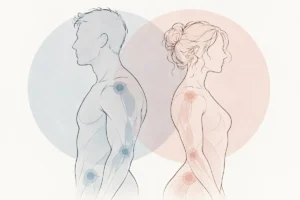
The researchers’ exhaustive survey of 122 symptoms revealed that while both sexes suffer, the "disease burden"—the aggregate weight of systemic symptoms—is significantly higher in women.
Neurological and GI Dominance
Women reported symptoms more frequently across almost every category. Neurological issues, including brain fog, chronic migraines, vertigo, and neuropathy, were far more prevalent in women. Similarly, the gastrointestinal system showed a distinct female skew; nausea, vomiting, and constipation were reported at much higher rates, particularly among women with HSD.
The Male Symptom Signature
Interestingly, only five of the 122 surveyed symptoms were reported more frequently by men: ADHD, developmental delays, snoring, autism spectrum disorder, and obstructive sleep apnea.
Crucially, the authors note that these five conditions are already known to occur more frequently in males in the general population. This suggests that for men with hEDS and HSD, their clinical presentation is often colored by the background noise of their biological sex, potentially masking the underlying connective tissue pathology.
The Mast Cell Factor
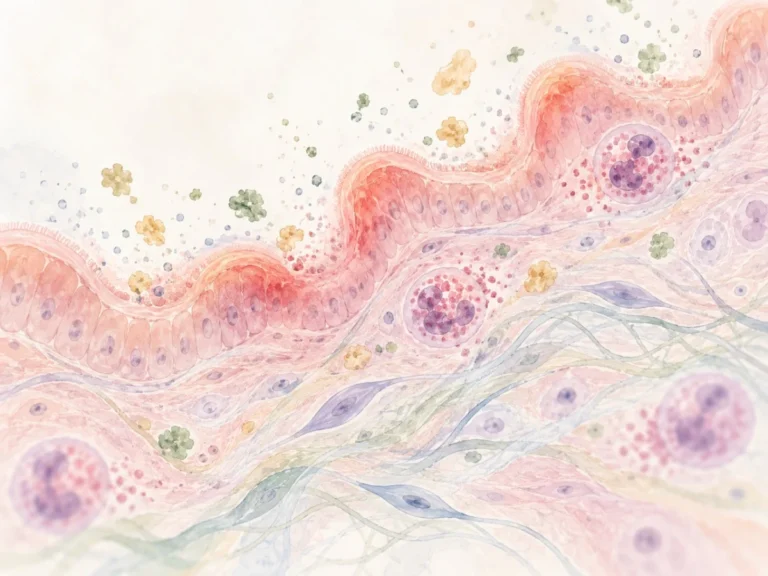
One of the study’s most compelling insights involves mast cell activation. Mast cells are key regulators of inflammation and immune response. The study found that women with HSD had significantly higher "mast cell scores" and elevated levels of tissue-remodeling proteins. This suggests that for HSD, sex-based differences in immune response may act as a catalyst for the higher disease burden seen in women. In contrast, the mast cell activity in hEDS was more evenly distributed, suggesting that the genetic drivers of hEDS might be more uniform across sexes, even if the symptomatic expression differs.
Implications for Clinical Practice
The implications of this study are profound for the medical community and for male patients who have long felt invisible.
1. A Shift in Diagnostic Perspective
The study highlights that a lower symptom burden in men does not equate to a lack of pathology. Instead, it suggests a "different pattern of suffering." Clinicians must move away from the assumption that the "classic" hypermobility patient is female. A man presenting with a combination of chronic joint pain and sleep apnea, or neurodevelopmental symptoms paired with GI distress, should trigger an investigation into potential connective tissue disorders.
2. The Protective Role of Biology
While the "testosterone effect"—whereby higher muscle mass provides joint stability—is a common theory for why men might present with fewer orthopedic complaints, this study proves it is an incomplete explanation. Muscle mass cannot explain the gendered differences in migraines or immune-related mast cell activation. Future research must look deeper into hormonal influences on collagen integrity and immune regulation.
3. Redefining "Disease Burden"
The study provides a framework for physicians to view "disease burden" not as a fixed state, but as a dynamic interaction between genetics, sex, and systemic inflammation. By acknowledging that women face a higher burden of comorbidities, doctors can provide more tailored care, while simultaneously becoming more alert to the subtle, often ignored symptoms that define the male experience of EDS.
A Call for Inclusive Medicine
The findings from the Mayo Clinic’s 2026 study serve as a wake-up call. We are currently operating with a limited map of a global condition. By relying on a female-centric model of hEDS and HSD, we have inadvertently created a diagnostic desert for men, who are left to navigate chronic pain without the validation or specialized support provided to their female counterparts.
The study concludes that hEDS and HSD are not, and have never been, "women’s diseases." They are systemic, multi-faceted conditions that affect the human body regardless of sex. As we move forward, the medical community must refine its diagnostic tools to capture the male experience, ensuring that every patient—regardless of gender—can access the care necessary to manage these life-altering conditions.
For the man who has spent years being told his joint pain is just "bad luck," or that his fatigue is "all in his head," this research offers a critical piece of validation. It confirms that the struggle is real, the symptoms are documented, and the medical establishment is finally beginning to pay attention to the full, diverse spectrum of the Ehlers-Danlos experience.
Research conducted by: Jacqueline Moltzau Anderson, PhD, University of California, October 2026.