





By Jackie Keating, LCSW
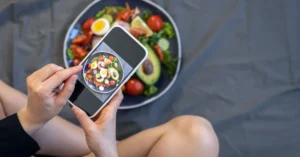
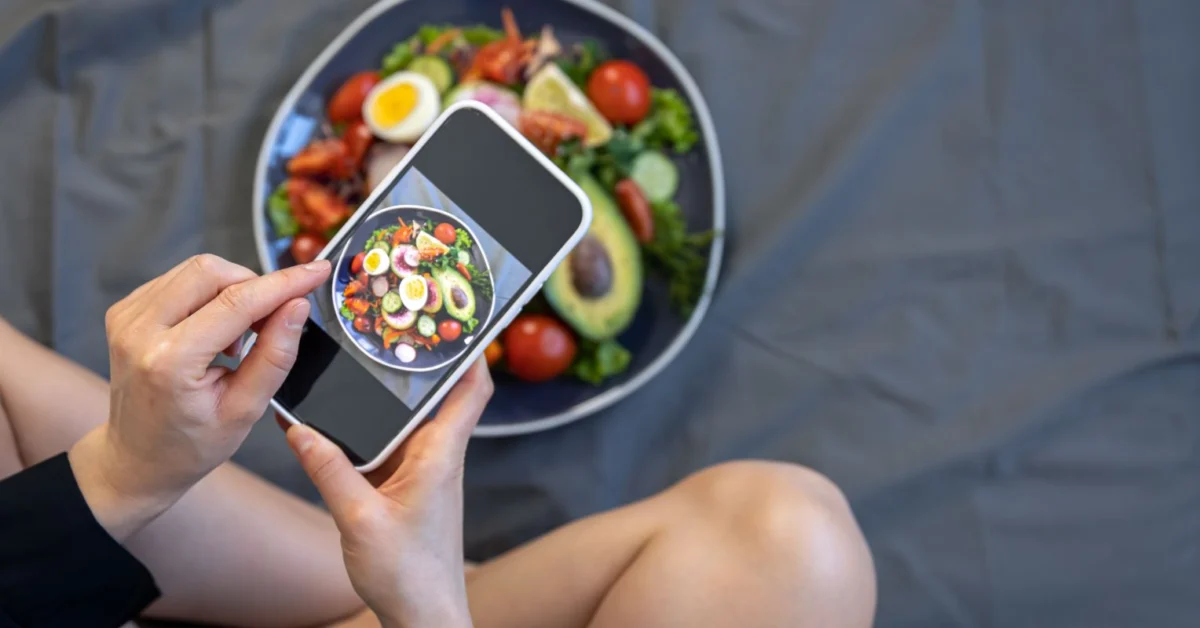
It is a familiar Sunday night ritual: you are lying in bed, the lights are dimmed, and you reach for your phone to unwind. Within seconds, the algorithmic feed begins its curation. An influencer appears on your screen with a "What I Eat in a Day" post, showcasing a plate of meticulously arranged, low-calorie, carb-free morsels. Swiping further, you encounter a creator joking about their weekend party exploits, followed by a "relatable" mom meme suggesting she needs a glass of wine to survive the stresses of parenting. Interspersed between these are aggressive advertisements for fitness programs, all promising that your life can be fundamentally fixed in "three simple steps."
By Monday morning, these digital messages have permeated your physical reality. A coworker mentions a new restrictive diet they are starting; a friend texts about the need to shed weight "in time for summer." Even celebrities like Tom Brady capture headlines with their latest plant-based protocols. The messaging is relentless, pervasive, and increasingly dangerous. While social media was designed to connect us, it has evolved into a high-speed delivery system for diet culture, body shame, and a sophisticated, profit-driven wellness industry that thrives on the insecurity of its users.
The Mechanics of Modern Diet Culture
Social media offers a space for connection, but it simultaneously acts as an accelerant for harmful ideals. Diet culture operates on a seductive, albeit fraudulent, promise: if you adhere to the right set of restrictions, you will attain not just a specific body type, but health and happiness. In reality, this framework frequently delivers the inverse—shame, guilt, and debilitating anxiety around food and body image.
The wellness market has become a titan of the global economy, reaching an estimated $160 billion in 2024. Projections indicate this figure could climb to a staggering $360 billion by 2034. This massive financial expansion is driven by the monetization of insecurity. Digital creators and influencers often promote products, "clean eating" habits, and extreme fitness tricks that demonize specific food groups. They engage in fat-shaming as a means of gatekeeping their lifestyle, implying that if you do not look like them, you are simply not trying hard enough.
The psychological toll is quantifiable. Research suggests that nearly half (46%) of teens aged 13 to 17 report feeling worse about their physical appearance after social media exposure. Furthermore, individuals who spend more than three hours a day on social media platforms are twice as likely to develop eating disorders compared to those with lower screen time. Beneath the filtered, aesthetic-heavy images lies a darker reality of extreme restriction, fasting, and hidden mental health struggles, including severe depression and chronic stress.
Chronology of a Crisis: From Comparison to Clinical Disorder
The progression from casual social media use to the development of a clinical disorder often follows a insidious, incremental path.
- The Exposure Phase: The user begins by following "wellness" content that appears benign—yoga tips, meal prep ideas, or healthy recipes.
- The Normalization Phase: Through algorithmic reinforcement, the feed narrows. The user is exposed to increasingly restrictive eating habits and "cheat day" behaviors that promote a cycle of bingeing and purging, often framed as "balance."
- The Emotional Disconnection: As the pressure to meet unrealistic beauty standards intensifies, the user begins to use the very behaviors they see online—such as excessive exercise or substance use—to cope with the resulting anxiety.
- The Clinical Threshold: When the behavior shifts from a lifestyle choice to a rigid, uncontrollable compulsion that impairs daily functioning, the individual has crossed the threshold into a clinical eating disorder (ED) or substance use disorder (SUD).
Supporting Data: The Intertwined Nature of Illness
Eating disorders and substance use disorders may appear distinct on the surface, but clinical research reveals they are deeply interconnected. Both function as maladaptive coping mechanisms used to manage stress, trauma, and emotional turbulence.
According to the National Eating Disorders Association (NEDA), approximately 50% of people struggling with an eating disorder also misuse alcohol or drugs. This is not a coincidence; there is a documented interdependent relationship between the two. Each disorder exacerbates the physiological and psychological vulnerabilities of the other, creating a feedback loop that is exceptionally difficult to break.
The digital environment further complicates this by glamorizing both behaviors. Platforms like TikTok and Instagram often treat alcohol consumption as a "stress reliever" while simultaneously promoting extreme dieting as "discipline." This cultural normalization creates a "blind spot" where users may slide into life-threatening behaviors without identifying them as problematic until they are in a state of crisis.
Official Perspectives and the Cost of Silence
The medical and psychiatric communities have sounded the alarm on these co-occurring disorders, which carry some of the highest mortality rates in mental health. Anorexia nervosa, in particular, has the highest mortality rate of any psychiatric condition. When an ED is compounded by substance use, the risk of fatality is amplified significantly.
Recent studies suggest that co-occurring alcohol and illicit drug use can quadruple the mortality risk for those suffering from an eating disorder. Furthermore, these patients demonstrate higher rates of suicide attempts, self-harm, and severe mood or anxiety disorders.
The current healthcare landscape, however, is often ill-equipped to handle this complexity. Treatment systems frequently operate in silos; a patient may be sent to an eating disorder clinic that lacks expertise in substance abuse, or a rehab center that ignores the root causes of an ED. This fragmented care leaves patients trapped in a "whack-a-mole" cycle, where they address one symptom only for the other to spiral out of control.
Implications: The Path Toward Integrated Recovery
The path forward requires a fundamental shift in both clinical practice and cultural perception. To effectively combat this crisis, we must move toward an integrated model of care—one that addresses the ED and the SUD simultaneously, while also accounting for the profound cultural pressures that drive them.
Reclaiming Health from Profit
We are living in a digital ecosystem that profits from our struggle. The "wellness" industry spends billions on marketing that targets our deepest insecurities, transforming our desire for health into a commodity. To reclaim our health, we must engage in "digital hygiene," curating our feeds to remove content that promotes restrictive eating or judgmental beauty standards.
The Need for Systemic Change
Clinicians must advocate for treatment programs that treat the whole person rather than isolated symptoms. This means:
- Unified Diagnosis: Recognizing that substance use and disordered eating are often two sides of the same coin of emotional regulation.
- Cultural Literacy: Providers must understand the role of social media in shaping patient identity and behavior.
- Preventative Education: Schools and community organizations need to equip young people with the media literacy skills required to navigate and deconstruct the harmful messages they encounter online.
Ultimately, the battle against diet culture is not just about food or weight—it is about restoring the autonomy of the individual. We must dismantle the narrative that our worth is tied to our aesthetic or our productivity. By fostering environments that value nuance, self-compassion, and integrated mental health care, we can begin to mitigate the damage caused by a digital culture that has prioritized profit over human life.
It is time to log off from the unrealistic, and log on to the authentic. Recovery is possible, but it requires a conscious, collective effort to look past the filter and address the human being beneath the screen.
Selected References
- Dane, A., & Bhatia, K. (2023). The social media diet: A scoping review to investigate the association between social media, body image and eating disorders amongst young people. PLOS Global Public Health.
- Finklea, K. (2025). The wrong influence: The link between diet culture and eating disorder. HopeHealth.
- Mellentin, A. I., et al. (2022). The impact of alcohol and other substance use disorders on mortality in patients with eating disorders. The American Journal of Psychiatry.
- National Eating Disorders Association (2023). Statistics & research on eating disorders and substance use.
- Pierce, S., Joy, J. M., & Wiss, D. A. (2025). Abstinence-based treatment of comorbid eating disorders and ultra-processed food addiction. Frontiers in Psychiatry.
- The REACH Institute (2025). Mind over minutes: How youths’ screen habits are impacting their mental health.