









The modern bedroom, once a sanctuary for restoration and repair, is increasingly under siege. As global temperatures climb, the cooling of our internal biological systems—a prerequisite for deep, restorative sleep—is being compromised by an environment that refuses to cool down after sunset. The silent crisis of "climate-linked sleep loss" is no longer a distant future projection; it is a current, measurable, and systemic threat to public health.
As researchers delve deeper into the nexus of meteorology and sleep science, a troubling pattern has emerged: rising nighttime temperatures are stripping millions of people of their most fundamental health resource. With the world witnessing record-breaking heat waves, the inability to find respite at night is shifting from an occasional annoyance to a chronic health burden.
The Biological Necessity of the Chill
To understand why climate change is wrecking our rest, one must first understand the physiology of sleep. Sleep is not a passive state; it is an active, highly regulated biological process. A critical component of initiating and maintaining sleep is a drop in the body’s core temperature.
Under normal conditions, as the evening progresses, the body’s circadian rhythm signals the peripheral blood vessels to dilate, allowing heat to escape through the skin. This natural "thermal dump" is the body’s way of signaling to the brain that it is time to transition into sleep. However, this process relies on a thermal gradient: the air around you must be cooler than your skin for that heat transfer to occur effectively.
When nighttime temperatures remain elevated—a phenomenon increasingly common due to urban heat islands and global warming—the body struggles to shed that heat. The result is a fragmented sleep cycle, prolonged sleep latency (the time it takes to fall asleep), and a reduction in the time spent in the deep, slow-wave sleep stages essential for physical recovery and memory consolidation.
A Chronology of Declining Rest
The trajectory of sleep loss is intrinsically linked to the industrial era’s impact on the climate. Data spanning the last half-century reveals that the problem is accelerating.
- 1970s–1990s: Nighttime temperatures began their steady, upward climb, yet sleep health remained a secondary concern in climate discussions. During this era, the "cooling window"—the hours after sunset—was still sufficient for most temperate regions to reach comfortable sleeping temperatures.
- 2000s–2010s: As global temperatures hit record highs, studies began to show a direct correlation between nocturnal heat and emergency room visits for sleep-related disorders. The concept of the "urban heat island" became more prevalent, as concrete and asphalt stored daytime heat and released it slowly throughout the night, preventing urban dwellers from experiencing a true temperature drop.
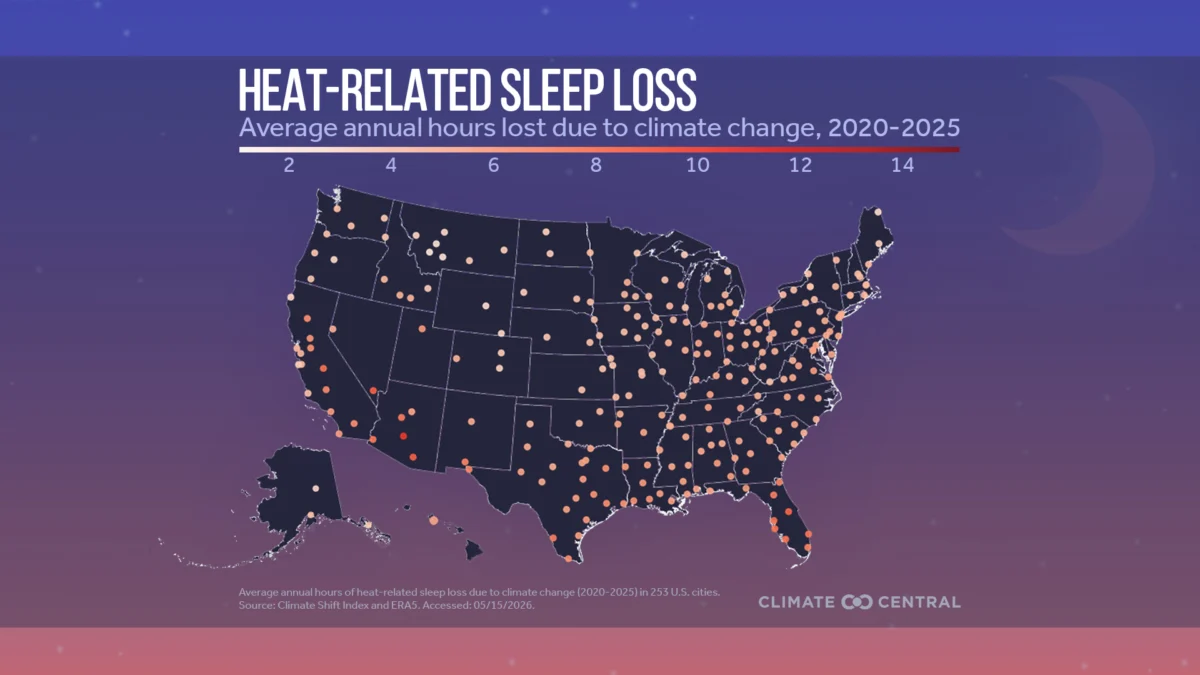
- 2020–2025: A landmark analysis by Climate Central quantified the crisis, estimating that high nighttime temperatures caused the average person globally to lose nearly 56 hours of sleep annually.
- 2026 and Beyond: The current reality is stark. Recent heat waves, such as those seen in the United Kingdom in 2026, have demonstrated that even regions historically unaccustomed to extreme heat are now facing the same physiological challenges as arid, tropical climates.
Supporting Data: The Cost of a Warm Night
The data provided by Climate Central and published in journals like One Earth paints a sobering picture of our sleep deficit.
A comprehensive study analyzing over 7 million sleep records alongside local weather data found a definitive threshold for sleep disruption. Once nighttime temperatures exceed 77 degrees Fahrenheit (25 degrees Celsius), the probability of achieving less than seven hours of sleep increases significantly. When temperatures soar above 86 degrees Fahrenheit (30 degrees Celsius), the loss is even more pronounced, with sleep duration dropping by an average of 14 minutes per night.
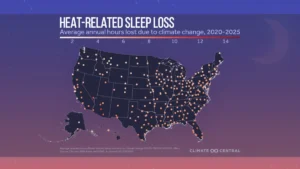
While 14 minutes may seem negligible to some, sleep experts emphasize that this is a "compounding interest" problem. A cumulative loss of over 50 hours of sleep per year is equivalent to losing more than a full week of restorative rest annually. Furthermore, the Climate Central analysis identified that in the United States alone, residents of 253 cities lost an average of 36 hours of sleep per year. Hardest hit were regions with consistent, high-heat profiles: Arizona, California, Florida, and Nevada, where some residents faced a loss of up to nine hours annually due strictly to climate-linked factors.
Crucially, researchers have found little evidence of human adaptation. The human body does not seem to "get used to" sleeping in heat. Instead, the physiological demand for cooling remains constant, making sleep as a human function increasingly vulnerable as nights continue to warm.
Official Perspectives and Public Health Implications
Public health organizations are beginning to view sleep loss as a major "silent" morbidity factor. The implications extend far beyond simple daytime fatigue.
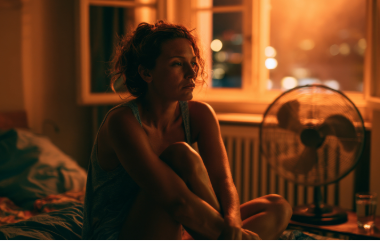
The PLOS Medicine study involving young adults in Boston during a 2016 heat wave provided a glimpse into the cognitive cost of thermal stress. Those sleeping in rooms without air conditioning showed measurable deficits in cognitive performance, including slower processing speeds, diminished working memory, and reduced attention spans.
"We are seeing a direct impact on the ‘cognitive reserve’ of the population," says Dr. Dionne Morgan, who reviewed these findings. "When you remove the brain’s ability to recover through deep sleep, you are essentially asking people to function with a self-inflicted cognitive impairment the following day."
This has profound societal consequences. Increased daytime fatigue leads to higher rates of workplace accidents, reduced productivity, and a higher propensity for mood disorders. As the population becomes more chronically sleep-deprived, the public health burden increases, potentially leading to long-term issues such as hypertension, cardiovascular disease, and metabolic dysfunction, all of which are linked to chronic sleep deprivation.
The Equity Gap: Who is Most Affected?
The impact of heat-related sleep loss is not distributed equally. It is a classic example of climate inequality.
- The Energy-Poor: While air conditioning (AC) is a primary defense, it is a privilege. Many low-income households in developing nations—and even in the U.S.—lack access to, or cannot afford the electricity to run, cooling systems.
- The Urban Dweller: Residents of densely populated cities suffer from the "Urban Heat Island" effect, where buildings and pavement absorb heat during the day and radiate it back at night, keeping city temperatures several degrees higher than surrounding rural areas.
- The Elderly and Vulnerable: Physiological thermoregulation naturally weakens with age, making seniors significantly more susceptible to the physiological stress of a hot bedroom.
Even for those with air conditioning, there is a limit. Climate Central notes that dependence on cooling is not a perfect solution. It is an energy-intensive stopgap that contributes to the very carbon emissions driving the warming trend, creating a vicious feedback loop.
Mitigation: Strategies for a Cooler Rest
While we cannot immediately reverse global climate trends, individuals can take tactical steps to preserve their sleep environment.
- Environmental Optimization: Keep the bedroom "cool, dark, and quiet." Use blackout curtains to prevent daytime solar gain.
- Ventilation: If outdoor air is cooler than indoor air at night, create cross-ventilation. If not, seal the windows to prevent hot air intrusion and use fans to circulate air.
- Bedding Materials: Invest in moisture-wicking, breathable fabrics like linen or bamboo, which facilitate better airflow and heat dissipation compared to synthetic fibers.
- Thermal Regulation: Some sleep experts suggest "pre-cooling"—taking a lukewarm shower before bed to help the body begin its thermal dissipation process.
- Sleep Hygiene: Maintain strict consistency in sleep and wake times, even during heat waves, to protect the integrity of the circadian rhythm.
When to Seek Professional Guidance
It is vital to distinguish between a few restless nights and chronic sleep disorders. If sleep quality does not improve with environmental adjustments, or if daytime sleepiness begins to impact work, school, or safety, it is time to consult a healthcare provider.
Sleep centers accredited by the AASM (American Academy of Sleep Medicine) can provide diagnostic testing to ensure that environmental heat is not masking an underlying condition like sleep apnea, which can be exacerbated by thermal stress.
The Bottom Line
The evidence is clear: the climate is changing, and our sleep is the canary in the coal mine. The loss of a few minutes of rest each night may seem minor in the short term, but as a global public health trend, it represents a significant erosion of our capacity to function, learn, and maintain our health.
Healthy sleep is not a luxury; it is a fundamental pillar of human biology. As we face a future of warmer nights, the challenge will be to adapt our infrastructure, our homes, and our habits to protect the most essential human activity: the ability to rest. If we fail to address the warming of our nights, we may find that the price of climate change is paid not just in heat, but in the lost productivity and health of an exhausted world.