









Editor’s Note: This story includes discussion of suicide. If you or someone you know needs help, the national suicide and crisis lifeline in the U.S. is available by calling or texting 988.
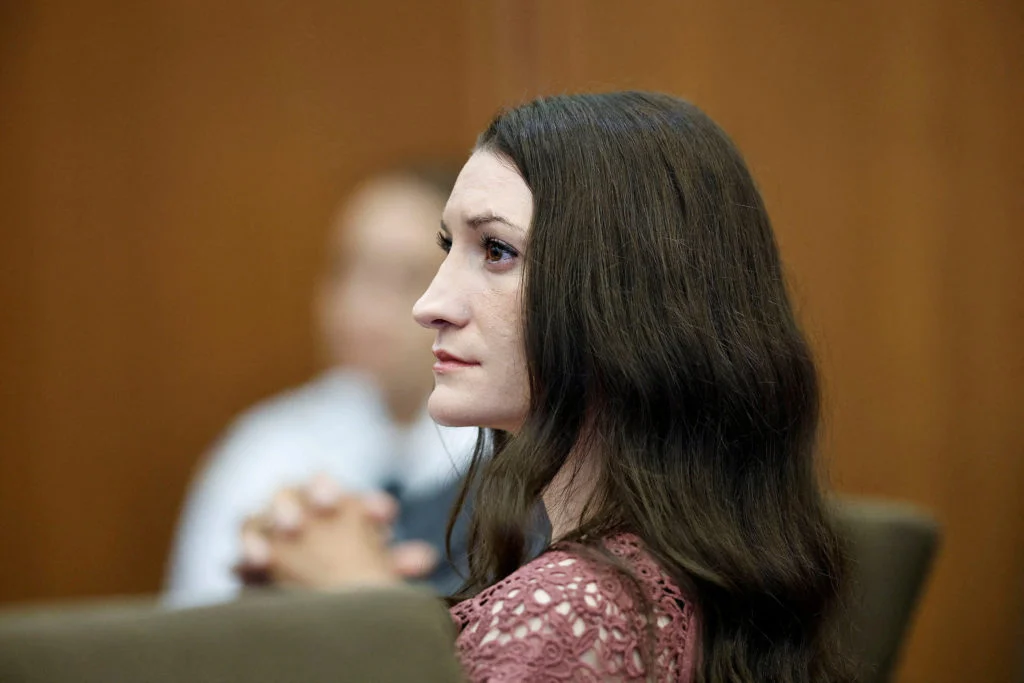
PLYMOUTH, Mass. — The legal proceedings surrounding Lindsay Clancy, the Massachusetts mother accused of murdering her three young children in 2023, have entered a volatile new phase. On Monday, Clancy’s defense team returned to Plymouth Superior Court, filing a motion to dismiss the charges against her on the grounds of double jeopardy. The hearing follows a September mistrial, which was declared after a jury remained deadlocked, unable to reach a unanimous verdict on charges of first-degree murder.
The courtroom atmosphere was charged with tension as defense attorneys and prosecutors clashed over the integrity of the original trial, the conduct of the jury, and the potential for a fair retrial. As Judge William Sullivan considers whether to dismiss the case entirely, the legal community is watching closely, debating the boundaries of judicial intervention and the rights of defendants in high-profile, emotionally charged cases.
A Tragedy in Duxbury: The Case Against Lindsay Clancy
In January 2023, the town of Duxbury, Massachusetts, was rocked by the deaths of five-year-old Cora, three-year-old Dawson, and eight-month-old Callan Clancy. Lindsay Clancy, 36, was discovered in the family’s home having survived an apparent attempt to take her own life after the killings.
Since the outset, the defense has not disputed the physical act of the killings. Instead, they have mounted a rigorous defense based on the assertion that Clancy was suffering from severe postpartum psychosis at the time. Her attorney, Kevin Reddington, has argued that the mental health crisis rendered her incapable of conforming her behavior to the law or understanding the wrongfulness of her actions.
The prosecution, however, has maintained a starkly different narrative. While acknowledging that Clancy experienced significant mental health struggles, prosecutors argue that her actions were deliberate, calculated, and carried out with a full understanding of the consequences. They contend that the severity of the act and the planning involved point toward criminal responsibility rather than a complete absence of sanity.
Chronology of the Legal Battle
The path to the current stalemate has been marked by exhaustive testimony and intricate legal maneuvering:
- January 2023: The incident occurs in Duxbury, leading to the deaths of the three Clancy children.
- Early 2023–2024: Pre-trial hearings focus on the admissibility of psychiatric evidence and the extent of Clancy’s medical records.
- September 2024: The trial concludes in a mistrial after the jury, following days of deliberation, signals that it is hopelessly deadlocked.
- October 2024: The defense files a motion for a judgment of acquittal, which Judge Sullivan denies, citing sufficient evidence to warrant a jury’s consideration.
- November 2024: The current hearing regarding the motion to dismiss on double jeopardy grounds takes place, featuring intense scrutiny of the jury’s conduct during the initial trial.
The Controversy of the Holdout Juror
Central to Monday’s proceedings was the conduct of Michael Desronvil, the lone juror who reportedly stood against the rest of the panel in his desire to convict Clancy. The defense, led by Martin G. Weinberg, argued that Judge Sullivan failed to properly investigate the jury foreperson’s notes, which had hinted at internal discord.
Weinberg contended that the court had a duty to intervene further when the foreperson indicated that a juror was not following the court’s instructions. By failing to isolate the situation or conduct a more thorough investigation, the defense argues, the judge allowed a mistrial to occur that could have been avoided had the holdout juror been replaced or instructed more effectively.
"That’s what the foreperson was asking the court to do," Weinberg argued, suggesting that the judge’s decision to keep the jury together was a missed opportunity to ensure a verdict.
The prosecution countered that the judge exercised appropriate discretion. Prosecutor Jennifer Sprague emphasized that the court’s role is not to influence the outcome of deliberations or to weigh in on the "correctness" of a juror’s assessment of evidence. "It is clear from the record that this juror did not refuse to deliberate," Sprague stated. "He refused to agree."
The argument hinges on the delicate balance of the jury system: at what point does a dissenting juror’s conviction become a refusal to deliberate, and at what point does a judge’s inquiry become an impermissible interference in the sacred space of the jury room?
Heated Exchanges and Allegations of Misconduct
The hearing took an aggressive turn when defense attorney Kevin Reddington began to openly criticize Desronvil. Reddington alleged that the holdout juror had utilized a cellphone to conduct independent research on legal terms during the trial—a direct violation of jury instructions—and suggested that he had been untruthful regarding his criminal history during the jury selection process (voir dire).
Judge Sullivan, clearly perturbed by the line of questioning and the public identification of the juror, repeatedly intervened. "Why don’t we all dial this back a little bit," the judge said, eventually calling for a sidebar to mitigate the volatility. Reddington maintained that the juror’s alleged conduct constituted a "fatal infection" of the trial’s integrity, arguing that the public record was relevant to the defense’s motion for dismissal.
The prosecution argued that the defense’s focus on the juror is a tactical distraction. They maintain that the double jeopardy clause does not preclude the Commonwealth from seeking justice for the victims, and that singling out a dissenting juror for a post-trial investigation constitutes an "impermissible intrusion" into the private deliberations of the jury.
The Question of a Gag Order
Parallel to the motion to dismiss, the court addressed a motion filed by the prosecution seeking a gag order. The Commonwealth has requested that the court restrict the attorneys and their supporters from making "extrajudicial statements" that could prejudice future proceedings.
The prosecution’s request is seen as a direct response to the media strategy employed by the defense. Throughout the trial and the subsequent weeks, Kevin Reddington has been a frequent presence in the media, holding near-daily press briefings. The prosecution, conversely, has remained silent, adhering to traditional courtroom decorum.
The defense team has pushed back hard against the gag order proposal, characterizing it as "prior restraint"—an unconstitutional suppression of free speech. Laura McConnell, representing the defense, argued in filings that because no trial date is currently set and the future of the case is uncertain, such an order is entirely premature and unnecessary.
Implications for the Massachusetts Legal System
The outcome of the current motions will have profound implications for the future of the Clancy case and the broader Massachusetts legal landscape.
If Judge Sullivan grants the motion to dismiss, the state will be barred from retrying Clancy, effectively ending the criminal proceedings. This would be a significant blow to the prosecution and likely spark intense public debate regarding the standards for retrial after a hung jury.
If the motion is denied, the case will proceed toward a second trial. This presents its own set of challenges: finding an impartial jury in a case that has been so heavily publicized will be a Herculean task. Furthermore, the defense will likely continue to argue that the previous mistrial created an environment that prejudices the defendant’s right to a fair trial.
Ultimately, the case remains a sobering reminder of the intersection between mental health, the legal system, and the tragic consequences of postpartum psychosis. As the court deliberates, the families of those involved, the legal teams, and the public are left waiting to see whether the process will result in a final verdict or if the complexities of the initial trial will continue to complicate the path toward resolution.
Judge Sullivan has taken the motion to dismiss under advisement and is expected to issue a formal ruling in the coming weeks. Until then, the case of Lindsay Clancy remains suspended in a state of legal limbo, reflecting the high stakes and the deep emotional toll of the tragedy that prompted it.