









PAGOSA SPRINGS, Colo. — As the sun finally broke through the heavy, charcoal-grey cloud cover on Tuesday, the stark reality of a climate-driven catastrophe settled over the American Southwest. Residents in Colorado, New Mexico, Arizona, and Nevada emerged from nearly two weeks of unrelenting, torrential rainfall to confront a landscape transformed by mud, debris, and the splintered remnants of their homes.
While the skies offered a reprieve, the human cost of the weather event—which saw 20 trillion gallons of water dumped across the region—remained in full view. For many, the labor-intensive process of clearing thick, silt-heavy mud from businesses and residences has only just begun, a grueling task made more complicated by the fact that this historic flooding coincided with the critical 2026 midterm elections.
The Magnitude of the Deluge: A Meteorological Anomaly
The scope of the rainfall is difficult to conceptualize. According to analysis from former National Oceanic and Atmospheric Administration (NOAA) chief scientist Ryan Maue, the region was subjected to approximately 20 trillion gallons of water over the past two weeks. To put this into perspective, that volume of water is equivalent to ten months of the total flow over Niagara Falls.
This unprecedented moisture arrived on ground already saturated from an abnormally wet autumn, leaving the earth unable to absorb the influx. The result was a cascade of flash floods that turned dry creek beds into raging torrents and overwhelmed regional drainage infrastructure. While meteorologists note that the systems are now moving out of the area, the saturation levels remain at record highs, keeping the threat of secondary landslides and structural collapses at a persistent level.
Chronology of a Crisis
The disaster did not unfold in a single burst but rather through a sustained, two-week assault of back-to-back storm systems.
- Late October: The initial systems began to saturate the soil, leading to localized flooding that local officials initially managed with standard emergency protocols.
- Early November: As the ground reached its saturation threshold, the secondary wave of storms brought catastrophic levels of precipitation. River gauges across the Four Corners region began to hit and exceed historic flood stages.
- Election Eve: Panic intensified as rivers in areas like Shiprock and Farmington, New Mexico, threatened to crest at levels that would have breached existing levee systems.
- Tuesday Morning: Skies began to clear. Emergency crews transitioned from life-saving water rescues to damage assessment and road clearance, while election officials across multiple states scrambled to ensure that democratic participation remained possible despite the wreckage.
Voting Under Duress: A Logistical Nightmare
The confluence of a major natural disaster and a high-stakes Election Day created a logistical nightmare that forced election officials to act on the fly.
In eastern Florida, the story was one of intense, sudden downpours. Gov. Ron DeSantis issued an emergency declaration as severe flooding hit counties like Brevard and Palm Beach, where over 2 feet of rain submerged parking lots and cut off access to major residential complexes. Election supervisors were forced to relocate at least 20 polling stations across eight counties to ensure that voters had a safe, accessible place to cast their ballots.
The situation was equally dire in the Navajo Nation. In Rock Point, Arizona, the physical geography of the region—combined with the destruction of infrastructure—effectively disenfranchised a significant portion of the population. Valinda Shirley, vice president of the Rock Point Chapter, described a heartbreaking scene of voters trapped by washed-out dirt roads and the closure of a critical bridge.
"I have people that are still texting me asking how I can get them out so they can vote," Shirley said Tuesday afternoon. Despite the heroic efforts of individuals like Alyssa Gallegos, a U.S. Postal Service contractor who navigated flooded roads to ensure mail-in ballots reached collection points by the 7 p.m. deadline, the reality remains that many citizens were physically unable to reach the polls.
The Human Toll: Stories from the Mud
For residents like Willow Bradner, a resident of Durango, Colorado, the financial and emotional devastation is absolute. Bradner, who purchased her ranch-style home in 2024, was told by officials at the time that she was not in a flood zone. Yet, on Tuesday, she stood looking at a home filled with 5 feet of mud and water.
"Our basement became a soup bowl," she said, reflecting on the loss of her family’s primary financial asset. Like many others, Bradner and her husband are now facing a future defined by the daunting, expensive, and slow process of reconstruction.
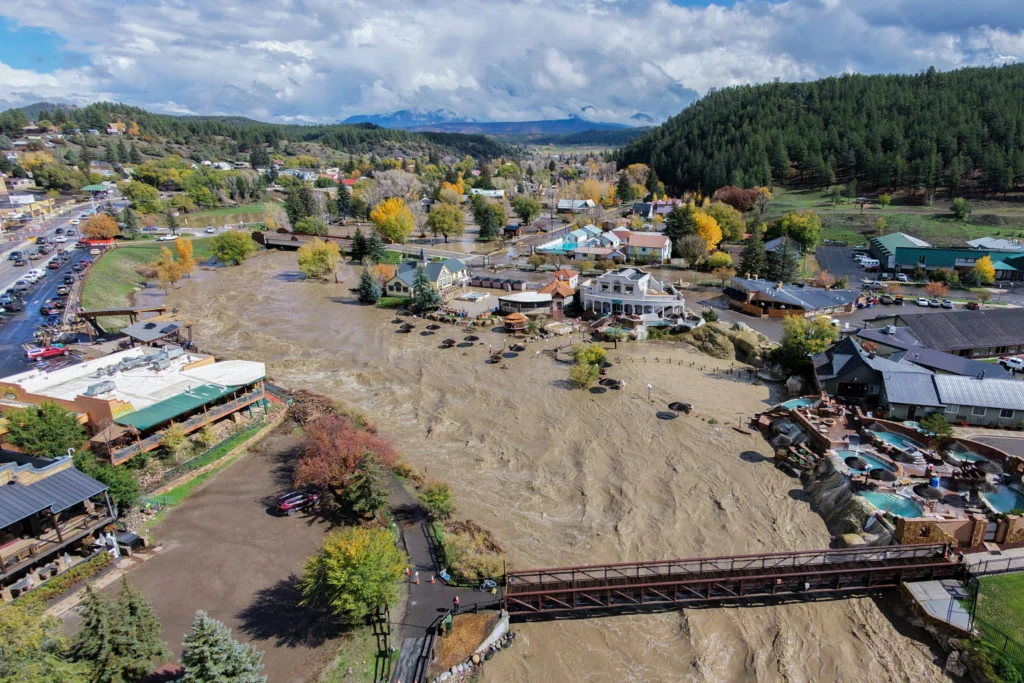
In Pagosa Springs, the sentiment is one of grim resilience. Jack Ellis, a retired schoolteacher, surveyed the damage along the San Juan River, which has been hit by multiple floods in recent weeks. "This is quite a disaster for everybody, especially in the low-lying areas," Ellis remarked. "We dig in and dig out, and that’s what it’s going to take."
For Gallegos, an eighth-generation local, the loss is generational. Watching a video on social media, she witnessed her stepfather’s house being swept from its foundation. "My heart’s crushed," she said. "And it’s not just him, it’s all the people."
Official Responses and Recovery Challenges
Devin Neeley, a spokesperson for San Juan County, New Mexico, provided a cautious update Tuesday, noting that while some rivers crested at levels lower than the worst-case scenarios, the danger has not passed. "Now it’s a waiting game for the waters to recede," Neeley stated.
The county plans to lift evacuation orders for approximately 20,000 residents once the flood risk is mitigated, but the recovery phase is expected to be lengthy. Municipal resources are being stretched to the limit, with heavy equipment diverted to clear roads and restore access to critical infrastructure.
In tourist hubs like Pagosa Springs, the economic impact will be felt long after the mud is cleared. The downtown area remains closed to traffic as crews work to repair collapsed walkways and damaged bridges. The local government is currently balancing the immediate needs of flood victims with the long-term economic necessity of rehabilitating the town’s hot-springs tourism infrastructure.
Implications: A New Normal?
The events of the past two weeks raise uncomfortable questions about regional preparedness in an era of climate volatility. Experts argue that the "100-year flood" terminology is becoming increasingly obsolete as weather patterns shift toward more frequent and intense precipitation events.
The 2026 election cycle will likely be remembered not just for its political outcomes, but for the resilience—and the fragility—of the systems designed to maintain the democratic process during extreme events. The fact that polling stations had to be relocated, and that entire communities were effectively locked out of the democratic process by washed-out infrastructure, serves as a wake-up call for state and federal planners.
As the Southwest begins the slow, muddy process of recovery, the focus will inevitably shift toward how these regions will fortify themselves against future deluges. For the residents of Pagosa Springs, Durango, and the Navajo Nation, however, the priority remains immediate: finding stable housing, securing financial aid, and beginning the long, difficult task of rebuilding lives from the ground up.
"The world doesn’t stop turning," Gallegos said, capturing the stoic, necessary outlook of those in the storm’s path. "They’re not gonna wait for us, so we just gotta stay with it."
As the recovery efforts continue, the nation watches, waiting to see how long it will take for these scarred landscapes to return to their former state—or if they will be forced to adapt to a reality where the "soup bowl" basement becomes a standard risk of homeownership in the American West.