









For the first time in over thirty years, American obstetricians and pediatricians are confronting a medical phenomenon that had effectively been relegated to history books: congenital measles. As vaccination rates across the United States continue to stutter, the resurgence of this highly contagious virus has reached a critical threshold, leading to the clinical detection of infants born with the disease. This development marks a grim turning point in the nation’s public health trajectory, signaling the end of an era of measles elimination.
Main Facts: A Preventable Tragedy Returns
Congenital measles occurs when a pregnant woman contracts the measles virus and transmits it to her fetus in utero. While the medical community has long understood the mechanics of this transmission, the absence of widespread measles circulation in the U.S. since the year 2000 had rendered the condition virtually nonexistent.
Preliminary data published in a recent medical journal alert reveals that between the start of 2025 and the end of September, 13 cases of congenital measles were reported to the U.S. Centers for Disease Control and Prevention (CDC). These cases emerged amidst a backdrop of surging outbreaks nationwide. Furthermore, clinicians documented 112 cases of confirmed measles in pregnant women during the same timeframe. The overwhelming majority of these women were either unvaccinated or possessed an unknown immunization status, highlighting a clear, preventable gap in prenatal care.
"This is a brand new phenomenon in the modern American context," said Michael Osterholm, director of the University of Minnesota’s Center for Infectious Disease Research and Policy. "We are seeing a convergence of factors—declining vaccine uptake and a generational gap in natural immunity—that has created a highly susceptible population of childbearing age."
Chronology of a Public Health Retreat
The erosion of U.S. measles immunity has been a gradual, multi-year process that has finally culminated in a formal loss of status.
- 2000: The United States officially declares measles eliminated, meaning the virus is no longer continuously transmitted within the country.
- 2023–2024: Public health officials report a slow but steady decline in childhood vaccination rates, exacerbated by post-pandemic vaccine hesitancy and misinformation. During this period, the CDC reports more than 7,500 total measles cases.
- Early 2025: Large, localized outbreaks begin to flare up in various regions, most notably in Pennsylvania, where the state health department issues urgent advisories to schools and childcare providers.
- September 2025: The Pan American Health Organization (PAHO) prepares to formally strip the U.S. of its "measles-free" status, a designation held for a quarter-century.
- Late September 2025: A public health alert is issued by NEJM Evidence, in partnership with the University of Minnesota, documenting the first 13 congenital cases and the 112 maternal infections.
Supporting Data: The Mathematical Vulnerability
The return of measles is fundamentally a failure of community-level immunity. Epidemiologists maintain that a 95% vaccination rate is the "gold standard" required to maintain herd immunity and prevent the virus from gaining a foothold. When rates dip below this threshold, the virus exploits the cracks.
Recent CDC data for the 2025-26 academic year shows that only 92.4% of U.S. kindergarteners received their required MMR (measles, mumps, and rubella) shots. While this figure may seem high to a layperson, it represents thousands of children who remain vulnerable, creating a "tinderbox" environment.
The danger is amplified by the fact that many women currently of childbearing age missed their opportunity for vaccination or never acquired natural immunity through infection, because the disease was so effectively suppressed for the last two decades. "We have an entire generation that has never seen a measles case," noted Dr. Adam Ratner of the American Academy of Pediatrics. "Because the virus was beaten back, the perceived risk of the vaccine began to outweigh the perceived risk of the disease for many people. Now, we are paying the price."
Clinical Implications: The Devastating Impact on Newborns
When a pregnant woman contracts measles, the consequences for the fetus are severe. If infection occurs toward the end of the pregnancy, the risk of transmission to the infant is estimated at 25% to 30%.
Congenital measles presents differently than adult measles. Newborns often exhibit fever, jaundice, and a characteristic rash shortly after birth. However, the long-term complications are the primary concern for pediatricians. Infants who survive the initial infection are at elevated risk for:
- Pneumonia: A frequent cause of mortality in infected infants.
- Encephalitis: Severe inflammation of the brain that can lead to permanent neurological damage.
- Subacute Sclerosing Panencephalitis (SSPE): A rare, almost universally fatal degenerative brain disorder.
Crucially, Dr. Ratner points out that children infected in utero or shortly after birth may be at higher risk for developing SSPE, and they may develop it much sooner than children who contract the disease at an older age. "It is a devastating, irreversible condition," Ratner warned. "The fact that we are seeing the potential for this to occur again is a massive step backward for pediatric medicine."
Official Responses and Prevention Strategies
In response to the surge, health agencies are scrambling to update clinical guidelines. The American Academy of Pediatrics has disseminated new protocols to doctors, and state health departments—led by Pennsylvania, which is currently experiencing the largest outbreak in the nation—have intensified their outreach to healthcare providers, schools, and childcare facilities.
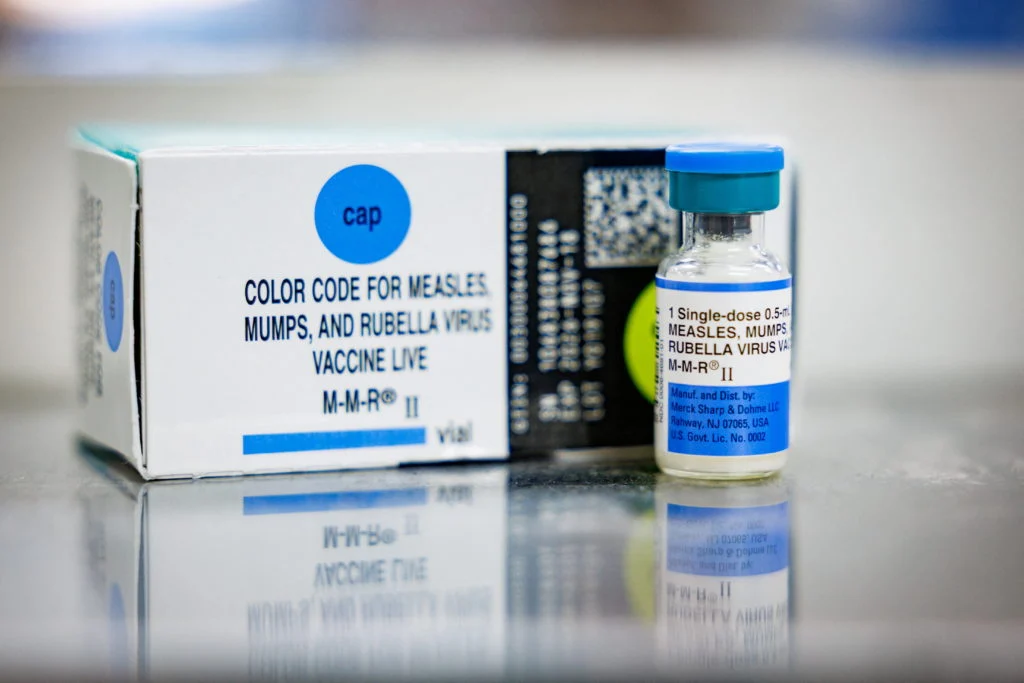
The consensus among experts is clear: the only path forward is a return to high-coverage vaccination. The MMR vaccine remains the most effective tool in the public health arsenal. Because the vaccine cannot be administered during pregnancy, the onus is on pre-conception care.
"Women of childbearing age must ensure their MMR vaccination status is up to date before becoming pregnant," the CDC alert advises. "When a woman is vaccinated before pregnancy, she passes protective antibodies through the placenta to the fetus, providing the newborn with a shield of immunity that lasts for several months after birth."
For unvaccinated pregnant women who are exposed to the virus, the window for intervention is extremely narrow. Doctors can provide a solution containing antibodies within six days of exposure to mitigate the risk of severe infection and complications. However, this is an emergency measure, not a substitute for the long-term protection provided by the vaccine.
The Path Ahead: Restoring Public Trust
The emergence of congenital measles serves as a stark reminder that infectious diseases do not respect borders or historical progress. The success of the measles vaccine in the 20th century was one of the greatest triumphs of modern medicine, yet that very success has bred a new reality: complacency.
"We need to get back to the point where everybody who can get vaccinated is getting vaccinated," Dr. Ratner stated. "It is going to be a lot of work on the part of pediatricians, public health institutions, and communities. It requires rebuilding the trust that has been eroded by misinformation."
As the U.S. faces the loss of its measles-free status, the path forward is complex. It involves not only clinical interventions but also a broader societal effort to combat vaccine hesitancy. For now, the medical community remains on high alert, bracing for a winter season that could see these numbers climb even higher if immunization rates do not rebound. The return of congenital measles is not just a medical crisis; it is a signal that the protective infrastructure of American society requires urgent and immediate reinforcement.