









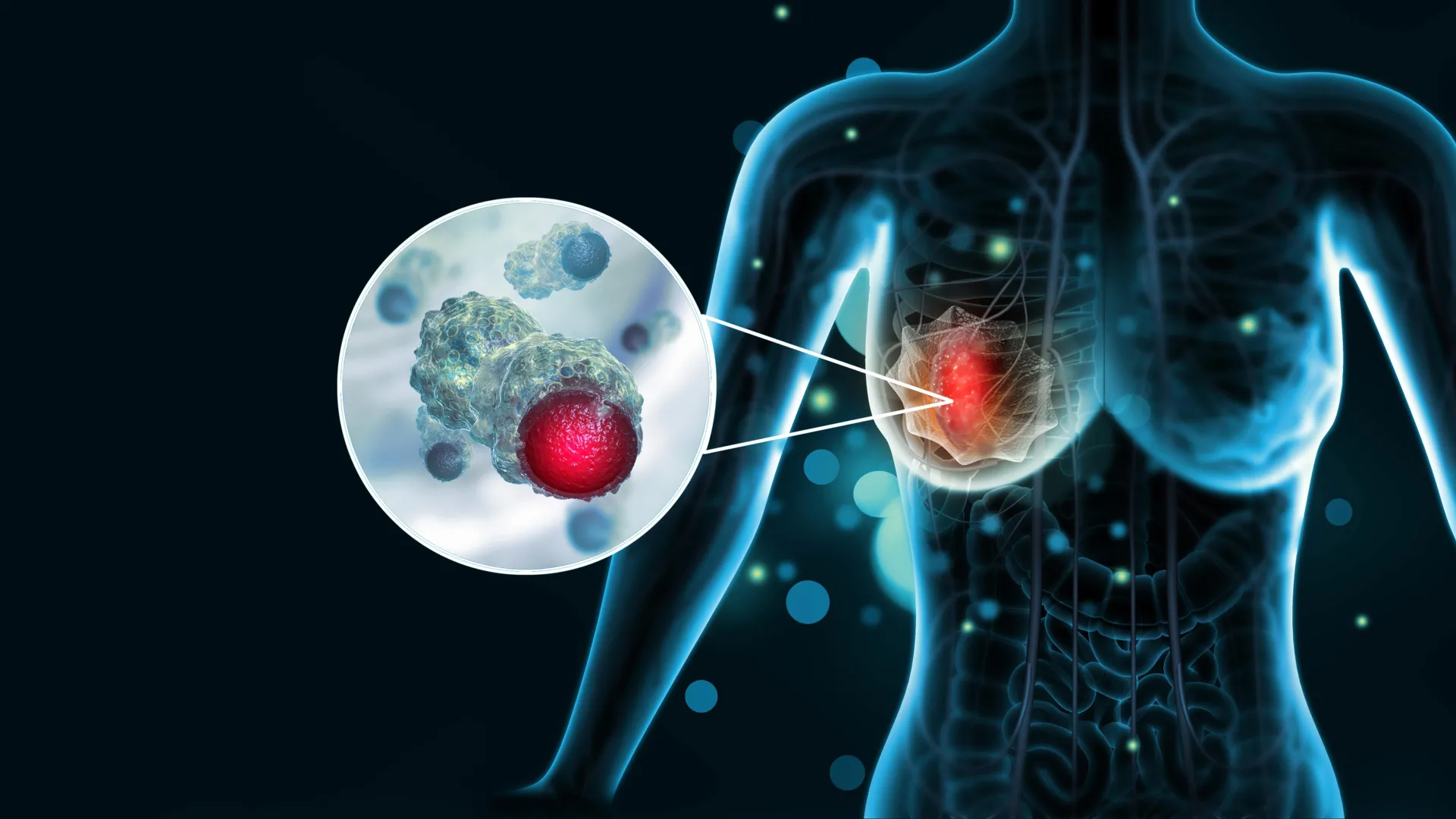
In a discovery that adds a sobering layer to the ongoing debate surrounding environmental pollutants, researchers at the National Institutes of Health (NIH) have identified a significant association between exposure to per- and polyfluoroalkyl substances (PFAS) and an increased risk of developing a particularly aggressive form of breast cancer. The study, published in the Journal of Clinical Oncology, provides compelling evidence that two legacy "forever chemicals"—perfluorooctanoic acid (PFOA) and perfluorooctanesulfonic acid (PFOS)—may be linked to the development of estrogen receptor-negative (ER-negative) breast cancer.
While the study does not definitively prove causation, the statistical strength of the correlation suggests that these persistent environmental pollutants may be a contributing factor in the development of a disease that has long baffled oncologists due to its elusive origins.
The Nature of the Threat: Understanding PFAS
Per- and polyfluoroalkyl substances, or PFAS, are a vast class of synthetic chemicals that have been integral to modern manufacturing for decades. Renowned for their ability to resist heat, water, oil, and stains, these chemicals have been utilized in everything from non-stick cookware and food packaging to waterproof textiles and firefighting foams.
However, their chemical durability is a double-edged sword. Often dubbed "forever chemicals," PFAS possess exceptionally strong carbon-fluorine bonds that do not break down easily in the natural environment. When these chemicals enter the ecosystem, they persist for decades, eventually infiltrating water supplies, soil, and the food chain. Once ingested or absorbed, they accumulate in human tissues, remaining in the bloodstream for years. This study marks a critical advancement in understanding how this bioaccumulation might be manifesting as a severe public health crisis.
Chronology: From the Sister Study to Scientific Breakthrough
The foundation for this research lies in the "Sister Study," an expansive, long-term research project conducted by the National Institute of Environmental Health Sciences (NIEHS). Launched between 2003 and 2009, the study enrolled 50,884 women across the United States and Puerto Rico. All participants were free of breast cancer at the time of enrollment but shared a common risk factor: each had a sister who had previously been diagnosed with the disease.
The researchers leveraged this cohort to conduct a nested case-control study. By analyzing blood samples collected years before a cancer diagnosis, the team was able to retrospectively evaluate the relationship between historical PFAS exposure and subsequent health outcomes.
The investigative process involved:
- Sample Selection: Researchers identified 1,609 women who developed breast cancer during the follow-up period and a control group of 2,269 women who remained cancer-free.
- Chemical Profiling: Scientists measured concentrations of 17 different PFAS in the blood samples.
- Statistical Correlation: The team cross-referenced these concentrations with the specific subtypes of breast cancer that later developed, specifically looking for differences in hormone receptor status.
Decoding the Data: A Significant Statistical Correlation
The findings of the NIH study are stark. While the researchers found no clear, overarching link between total PFAS exposure and general breast cancer risk, the picture changes dramatically when isolating ER-negative breast cancer.
ER-negative breast cancer is a notoriously aggressive form of the disease. Unlike hormone-receptor-positive cancers, which are driven by estrogen or progesterone, ER-negative tumors do not rely on these hormones for growth. This makes them resistant to common endocrine therapies like tamoxifen, leaving patients with fewer treatment options and often leading to poorer long-term prognoses.
The study’s data revealed:
- PFOA Impact: Women in the highest quartile of PFOA exposure faced a 67% higher rate of developing ER-negative breast cancer compared to those in the lowest quartile.
- PFOS Impact: The association was even more pronounced for PFOS, with the highest exposure group showing a 93% increased risk—nearly double that of the lowest exposure group.
These figures represent relative differences between the cohorts. The authors caution that these percentages do not imply an individual woman’s absolute probability of developing the disease, nor do they suggest that these chemicals are the sole cause of these tumors. However, the consistency of the findings, bolstered by a meta-analysis of prior research, provides a strong indication that these pollutants are acting as significant environmental stressors.
Official Responses and Political Implications
The implications of the study have reached the highest levels of the U.S. government. HHS Secretary Robert F. Kennedy, Jr. emphasized the government’s commitment to addressing these environmental health risks.
"Women deserve clear answers about how chemicals in their environment may affect their health," said Secretary Kennedy. "This NIH study links two forever chemicals to a higher risk of ER-negative breast cancer and demands further investigation. Under President Trump’s leadership, we will pursue the evidence, confront environmental health risks, and give women the information they need to protect their health."
The response highlights a shift in federal priorities, signaling a more proactive stance toward regulating industrial chemicals and investigating the nexus between environmental degradation and chronic illness.
Implications for Public Health and Prevention
The researchers behind the study, led by NIH Stadtman Investigator Alexandra White, Ph.D., suggest that while the persistence of PFAS in the environment is a daunting challenge, it is not an insurmountable one.
1. Modifiability of Exposure
Che-Jung Chang, Ph.D., the study’s lead author and currently a researcher at the scientific organization DLH, points out that while the chemicals themselves are persistent, personal exposure is theoretically modifiable. "Although PFAS are persistent in the environment and in our bodies, exposure to them is still potentially modifiable, meaning people can take steps to reduce their exposure," Chang explained. Future public health initiatives could focus on identifying high-risk exposure pathways—such as specific consumer products, water sources, or occupational settings—to help individuals reduce their body burden of these substances.
2. Biological Mechanisms
The study raises fundamental questions about how these chemicals interact with the body. Because the association is specific to ER-negative tumors, the researchers hypothesize that PFAS may bypass traditional hormonal signaling pathways. Instead, they might exert influence through epigenetic changes (altering gene activity) or by suppressing immune system surveillance, which would otherwise detect and eliminate nascent cancer cells. Identifying these mechanisms is the next "frontier" for the research team.
3. The "Replacement" Crisis
Perhaps the most pressing concern highlighted by the research is the status of newer, "next-generation" PFAS. While PFOA and PFOS have been largely phased out of production in the United States, they have been replaced by a suite of new chemicals that are often marketed as safer alternatives. However, many of these replacement compounds share similar chemical structures and persistence profiles.
"More research is needed, particularly evaluating the risk of breast cancer associated with newer replacement PFAS chemicals," Dr. White noted. The scientific community is currently racing to determine if the replacements carry the same oncogenic potential as their predecessors.
Future Directions: A Call for Targeted Research
The NIH study concludes with a call for more targeted investigations. Future studies must move beyond general cohorts to focus on:
- High-Exposure Populations: Research should target communities living in close proximity to manufacturing plants or those with contaminated municipal water supplies.
- Health Equity: Investigating whether systemic disparities in environmental exposure contribute to the higher rates of aggressive breast cancer seen in certain demographics.
- Molecular Analysis: Direct laboratory investigations to identify exactly how PFAS interact with human cells to trigger the transition from healthy tissue to ER-negative malignancy.
As the scientific community digests these findings, the message to the public remains one of cautious awareness. While we cannot undo decades of environmental accumulation overnight, the identification of this link provides a roadmap for future policy, regulation, and individual prevention.
The study, supported by NIEHS grants Z01ES044005, Z1AES103332, and R01ES032831, serves as a powerful reminder that the health of the individual is inextricably linked to the health of the environment. As policymakers and scientists work to decode these "forever" risks, the priority remains clear: to replace complacency with action and ensure that the chemicals we bring into our homes do not become the catalysts for the diseases we fear most.