





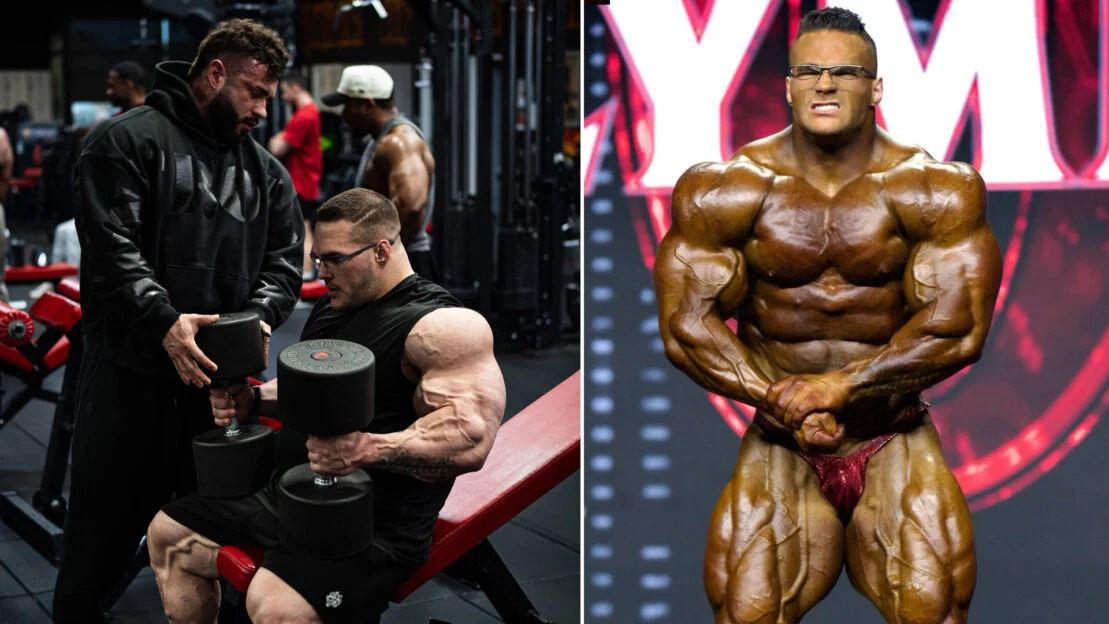
The bodybuilding world is currently fixated on a singular, massive focal point: Columbus, Ohio. As the professional circuit gears up for the 2027 Arnold Classic, all eyes are locked on the reigning Mr. Olympia, Nick "The Mutant" Walker. Having conquered the sport’s most prestigious stage last September—dethroning the likes of Samson Dauda and Derek Lunsford—Walker is now setting his sights on a trophy that has long been a staple of his competitive roadmap.
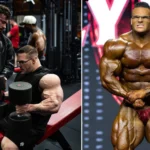
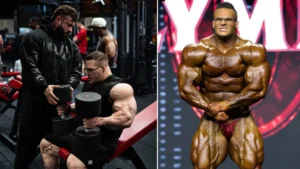
If recent training footage is any indicator, the reigning king of the Olympia is not resting on his laurels. In a brutal, high-intensity upper-body session shared with his two million Instagram followers, Walker demonstrated the kind of visceral, unyielding work ethic that turned him into a global phenomenon. As he prepares to face an elite lineup in March, including a potential showdown with runner-up Samson Dauda and a defense of the stage by reigning Arnold Classic champion Andrew Jacked, Walker’s training suggests he is not just aiming to compete—he is aiming to dominate.
Chronology of a Champion: From Olympia Gold to Arnold Ambitions
Nick Walker’s rise to the top of the IFBB Pro League has been nothing short of meteoric. His victory at the 2026 Mr. Olympia served as the definitive answer to critics who questioned whether his "Mutant" aesthetic could translate into a Sandow trophy. By defeating industry giants Samson Dauda and Derek Lunsford, Walker proved that raw mass, when paired with meticulous conditioning, remains the gold standard in modern bodybuilding.
However, the professional calendar is relentless. Almost immediately following his crowning moment in Las Vegas, the conversation shifted to the Arnold Classic. Historically, the Arnold serves as the second most important event in the sport, and for a reigning Mr. Olympia, it represents a unique challenge: the pressure to maintain perfection. Walker has openly stated his intent to improve upon his previous second-place finishes in Columbus. With the 2027 event approaching, his training volume has reached a fever pitch, characterized by controlled, heavy-load movements designed to force hypertrophy into every fiber of his physique.
The Mechanics of Growth: Breakdown of the "Mutant" Routine
To understand the caliber of athlete Walker is, one must look at the blueprint of his current training regimen. The recent session, supervised by fellow IFBB Pro Andy Paredes, was a masterclass in hypertrophy-focused intensity. Walker’s philosophy is clear: prioritize time under tension and mechanical load while ensuring total safety through spotters and precise form.
1. Seated Incline Dumbbell Press
The session commenced with the incline dumbbell press, a foundational movement for building the upper pectoral shelf and the anterior deltoids. By utilizing dumbbells rather than a barbell, Walker gains a greater range of motion, allowing for a deep stretch at the bottom of the movement. This is critical for the "Mutant" look, which demands an expansive, shelf-like chest that separates from the deltoids.
2. Seated Chest Press Machine
Transitioning to the machine-based chest press allowed Walker to focus exclusively on muscular failure without the need for the stabilizing core work required by free weights. In a high-stakes preparation phase, machine work is invaluable; it isolates the target muscle groups—chest, shoulders, and triceps—and minimizes the risk of injury from stabilizer fatigue.
3. Weighted Chest Dips
Perhaps the most iconic move in the routine, the weighted chest dip, showcased Walker’s commitment to density. By leaning forward—as opposed to staying upright for triceps-focused dips—Walker successfully shifted the mechanical stress onto the sternal head of the pectorals and the front delts. The addition of a weighted plate on a chain is a testament to the sheer force he exerts, turning a bodyweight exercise into a heavy-duty mass builder.
4. Standing Lateral Raise Machine
To achieve the "V-taper" that defines a Mr. Olympia, lateral deltoid development is non-negotiable. Walker’s use of the standing lateral raise machine, executed with a deliberate, slow tempo, highlights his understanding of time under tension. By avoiding momentum and focusing on the squeeze at the apex of the movement, he is building the width required to dwarf his competition on the Arnold stage.
5. Standing Barbell Bicep Curls
The final movement focused on the biceps. Despite the heavy load, Walker avoided the "swinging" motion that often plagues heavy lifters. By keeping his core braced and his elbows locked in position, he ensured that every ounce of the load was absorbed by the bicep brachii. This focus on quality over quantity is what keeps his arms looking balanced despite their extreme circumference.
Supporting Data: Why Intensity Matters in Pro Bodybuilding
The science of hypertrophy is evolving, and Walker’s routine aligns with the latest data regarding mechanical tension and metabolic stress. Modern research suggests that for elite-level athletes, the "sweet spot" for growth involves 8–12 repetitions per set, with a focus on reaching muscular failure.
Walker’s inclusion of Andy Paredes as a training partner is a strategic move. The psychological benefit of having a seasoned professional provide a spot cannot be understated. In the final weeks of prep, where glycogen stores are low and fatigue is high, the "safety net" provided by a partner allows an athlete to push past the threshold of mental fatigue. As Walker noted in his caption, "I’m not big on partners, but homie trains hard," acknowledging that in the pursuit of greatness, the right environment is as essential as the right supplement stack.
Official Responses and Industry Implications
The bodybuilding industry is buzzing with speculation regarding the upcoming Arnold Classic. The narrative has shifted from "Will Walker compete?" to "Can anyone stop him?" The confirmation that Andrew Jacked will return to defend his title, combined with rumors of Samson Dauda’s entry, has set the stage for a three-way battle for the ages.
Experts in the field are closely watching the "Mutant’s" transition from his Olympia victory to the Arnold. In bodybuilding, the post-Olympia "hangover" is a real phenomenon where athletes struggle to maintain the extreme conditioning required for the top stage. However, Walker’s public displays of training suggest he has bypassed this, maintaining his off-season mass while keeping his body fat levels in a manageable range.
"Nick is doing exactly what a champion should do," says one industry analyst. "He’s not hiding in the shadows; he’s showing the world that his work ethic hasn’t changed just because he got the title. He is training like he is still the challenger."
The Path to Columbus: What to Expect
As we look toward March, the implications for the sport are significant. If Walker wins the Arnold Classic in the same year he held the Mr. Olympia title, he will solidify his legacy as one of the most dominant forces of the 2020s. His consistency is his greatest weapon. While other athletes may focus on one show, Walker’s approach is to treat every session as if it were the Olympia finals.
For those looking to replicate aspects of this routine, the advice remains the same: prioritize form. Walker’s ability to move heavy weight is impressive, but his ability to move it with perfect biomechanics is what keeps him on the stage year after year.
Implementation Guide for Enthusiasts:
- Feeler Sets: Never jump into your working weight immediately. Use 1-2 sets of 15-20 reps at a lighter load to prime the central nervous system.
- Controlled Tempo: Follow Walker’s lead—three seconds on the negative, one-second pause at the peak of the contraction.
- Equipment Choice: If you lack access to specific machines, prioritize dumbbells to maintain the same movement patterns.
- Consistency: The "Mutant" does not train for a week; he trains for a lifetime. Ensure your nutrition and recovery match the intensity of your gym sessions.
Conclusion
Nick Walker stands at a pivotal juncture in his career. With the 2026 Mr. Olympia trophy on his mantle and his sights set on the Arnold Classic, he is demonstrating a rare level of focus. His upper-body routine is not merely a collection of exercises; it is a manifestation of his competitive strategy—relentless, heavy, and meticulously refined. As he continues to push the limits of his physiology, the rest of the professional field is forced to take notice. In the world of elite bodybuilding, the margin for error is razor-thin, and if Nick Walker’s current training is any indication, he has no intention of leaving room for his competitors to catch up. Come March, the Arnold Classic stage will belong to the man who refuses to quit.