










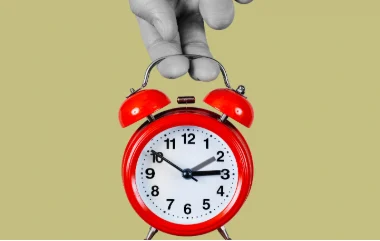
As the calendar turns toward November, millions of Americans prepare for the familiar, yet increasingly contentious, ritual of “falling back.” On Sunday, November 1, clocks across most of the United States will tick backward by one hour, signaling the official end of Daylight Saving Time (DST) and the return to Standard Time. While the prospect of an “extra hour” of sleep is often framed as a minor autumnal perk, the practice of shifting time twice a year has become a flashpoint for public frustration, legislative debate, and intense scientific scrutiny.
As public sentiment shifts toward abolishing the biannual clock change, Congress finds itself at a crossroads. Two competing legislative paths are currently vying for dominance, each promising a different version of a future without time shifts. However, as lawmakers deliberate, sleep medicine experts are sounding a clear alarm: not all “permanent” time solutions are created equal, and the wrong choice could have profound consequences for the nation’s health.
The Chronology of the Clock Change
The history of timekeeping in the United States is marked by volatility. Daylight Saving Time was first implemented as a wartime measure during World War I and again in World War II to conserve fuel by extending daylight hours into the evening. It was not until the Uniform Time Act of 1966 that the United States established a consistent, though not universal, system for the practice.
The current system—where clocks spring forward in March and fall back in November—was further refined by the Energy Policy Act of 2005, which extended the duration of DST. However, the modern era has seen a significant reversal in public appetite for the practice. According to recent data from Gallup, nearly half of Americans now favor sunsetting the practice of changing clocks entirely.
This fatigue is not merely anecdotal. In 1974, the United States attempted to move to permanent Daylight Saving Time in response to the energy crisis. The experiment was short-lived. By the following year, Congress reversed the decision after public outcry regarding dark winter mornings—which were associated with increased traffic accidents involving children—and the negative impact on the collective mood of the country. Today’s legislative landscape reflects a nation attempting to balance the desire for longer summer evenings with the physiological realities of the sun-cycle.
The Biological Clock: Why Timing Matters
To understand why sleep experts are so vehemently opposed to permanent Daylight Saving Time, one must look at the human circadian rhythm. The circadian rhythm is an internal, 24-hour biological clock that regulates the cycle of sleep and wakefulness. It is primarily synchronized by light exposure.
When we are exposed to sunlight, particularly in the morning, our bodies receive a biological signal to suppress melatonin and increase alertness. This light-dark cycle is the primary “zeitgeber,” or time-giver, that aligns our internal biology with the external world.
When we shift our clocks, we create a form of “social jetlag.” Even a one-hour shift forces the body to decouple from the natural solar cycle. During the transition into Daylight Saving Time, the sudden shift toward earlier mornings—relative to our internal clocks—leads to sleep deprivation. Conversely, the “fall back” shift can cause disruptions in sleep quality as our internal clocks struggle to adjust to the new timing of dusk and dawn. Research has consistently shown that the week following a time change is associated with an uptick in medical errors, workplace accidents, and cardiovascular events, including heart attacks and strokes.
Legislative Proposals: The Battle for Permanent Time
Congress is currently debating two primary legislative solutions to end the back-and-forth cycle.
The Sunshine Protection Act (H.R. 139)
The Sunshine Protection Act advocates for making Daylight Saving Time permanent. Proponents argue that the “extra” hour of evening light encourages economic activity, tourism, and physical activity during after-work hours. However, the scientific community warns that this would effectively force the country to live out of sync with the sun for most of the year. In many parts of the country, permanent DST would mean sunrise wouldn’t occur until 8:30 or 9:00 a.m. in the winter, leading to commutes and school start times occurring in total darkness.
The Sunshine for Our Kids Act (H.R. 9638)
In contrast, the Sunshine for Our Kids Act seeks to establish permanent Standard Time. This proposal is championed by the American Academy of Sleep Medicine (AASM) and other health organizations. The argument is simple: Standard Time aligns the sun’s peak at noon more closely with our natural internal clocks. By ensuring more sunlight in the morning, permanent Standard Time promotes better sleep onset, improved alertness for school-aged children, and a more stable alignment between human activity and the natural environment.
Supporting Data: The Case for Sleep Health
The implications of these legislative choices are not merely matters of preference; they are matters of public health. A significant body of research suggests that chronic sleep deficiency is a national epidemic. By permanently shifting the population’s wake times away from the sunrise, we risk exacerbating the existing sleep deprivation already plaguing the American workforce and student body.
Data from the Centers for Disease Control and Prevention (CDC) indicates that one in three adults does not get enough sleep. Sleep specialists argue that a permanent shift to Daylight Saving Time would push this number higher. Evidence from studies conducted in northern latitudes shows that when the sun rises significantly later than the population’s wake-up time, there is a measurable decline in cognitive performance and an increase in mood disorders, particularly Seasonal Affective Disorder (SAD).
Furthermore, the “social jetlag” created by seasonal time shifts has been linked to an increase in traffic fatalities. A study published in the New England Journal of Medicine noted a significant increase in heart attacks in the days following the spring time change, suggesting that the cardiovascular system is highly sensitive to even minor perturbations in the sleep-wake cycle.
Official Responses and Expert Consensus
The AASM has been an outspoken critic of permanent Daylight Saving Time, issuing official position statements that characterize the practice as a “misnomer.” They argue that “daylight saving” is an illusion; we are not creating more sunlight, but rather shifting the time of day that sunlight occurs, which disrupts the natural biological processes required for health.
“The evidence is overwhelming,” says Dr. Sarah Jenkins, a researcher in chronobiology. “We have a robust body of evidence showing that human beings function best when their activity levels are aligned with the solar cycle. By forcing our society to wake up and start the day in the dark, we are essentially fighting against millions of years of evolution. The negative impacts on safety, learning, and long-term health are too significant to ignore.”
While proponents of permanent DST point to the joy of long summer evenings, sleep experts argue that the trade-off is an entire season of chronic, low-grade exhaustion. They urge legislators to prioritize the “internal clock” over the “economic clock.”
Implications for the Future
The decision facing Congress is not just about the convenience of not changing a clock; it is a decision about how we, as a society, choose to interact with the environment. If the United States opts for permanent Standard Time, it will prioritize the alignment of biological health with the solar cycle. If it opts for permanent Daylight Saving Time, it will prioritize commercial and recreational convenience, potentially at the cost of public health.
As the nation prepares for the upcoming fall back, the dialogue serves as a reminder of how deeply our modern lives are still tethered to the movement of the sun. Regardless of the legislative outcome, individuals can mitigate the effects of the transition by:
- Gradually adjusting: Moving bedtimes 15 minutes earlier or later in the days leading up to the change.
- Prioritizing morning light: Seeking out natural sunlight as soon as possible upon waking to help reset the circadian rhythm.
- Maintaining consistency: Sticking to a regular sleep schedule even on weekends, which helps stabilize the internal clock.
Most people will adjust to the new time within a few days. However, for those who find the shift causes persistent fatigue, mood swings, or sleep disturbances, consulting an AASM-accredited sleep center is the recommended course of action.
Ultimately, the debate over time changes is a reflection of a society that has grown tired of being out of sync. As Congress continues to weigh the Sunshine Protection Act against the Sunshine for Our Kids Act, the hope is that the final decision will reflect the most rigorous science regarding the human need for consistent, restorative, and solar-aligned sleep. Until that day comes, the ritual of the clock remains a poignant reminder of our struggle to master time in a world governed by the light of the sun.