









For hundreds of thousands of legal immigrants residing in the United States, the promise of a fresh start has been eclipsed by a sudden, devastating administrative reality. A provision embedded within President Donald Trump’s signature tax and spending legislation—designed to slash federal Medicaid spending by an estimated $900 billion over the next decade—has resulted in the mass termination of health coverage for individuals who entered the country legally, including refugees, asylum recipients, and survivors of human trafficking.
As the dust settles on these policy shifts, the human toll is becoming starkly apparent. From Columbus, Ohio, to communities across the nation, vulnerable populations are finding themselves stripped of the medical support systems that once allowed them to live with dignity, now facing a future defined by financial ruin and deteriorating health.
The Human Cost: A Life Upended
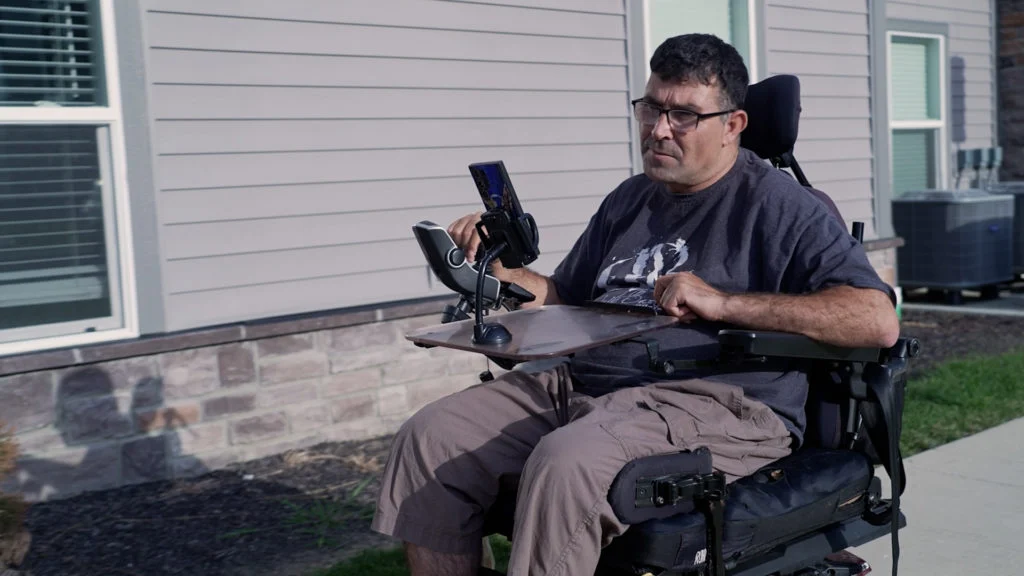
For 46-year-old Hasan Al-Omar, the loss of Medicaid is not merely a bureaucratic hurdle; it is a fundamental threat to his survival. After fleeing the horrors of the Syrian civil war and enduring over a decade of displacement in a Lebanese tent camp, Al-Omar and his family of seven arrived in the United States in 2024 via the U.S. Refugee Admissions Program.
For Al-Omar, who lives with significant physical disabilities, Medicaid was the lifeline that provided home-based caregivers, medical supplies, and the maintenance of his wheelchair. Last month, those services vanished.
"If I’m not able to get back on Medicaid, what will happen to me? Who will help me with the bathroom, with eating, with drinking, with medical treatment?" Al-Omar asks through an interpreter. "My wife works to pay the rent and bills. My children are in school. Just recently, I had an accident because I couldn’t hold it anymore. I had to call my boys to come home from school to help me. If they don’t return my Medicaid, death is better for me."
Al-Omar’s experience is echoed by Alvare Tyunibyan, a refugee from Armenia who arrived in the U.S. in 2024. While navigating the arduous, year-long backlog for permanent residency, she was diagnosed with bone marrow cancer. Her life-saving chemotherapy treatment, which was being covered by Medicaid, has now been postponed. "I was in shock," Tyunibyan says. "With such a disease and with my financial means, if my chemotherapy treatment stops, my doctors say my life will be shortened."
Chronology of a Policy Shift
The erosion of healthcare access for legal immigrants marks a significant departure from historical precedents. For decades, the United States has operated under a framework established by the Refugee Act of 1980—a bipartisan effort signed by President Jimmy Carter—which recognized the specific vulnerabilities of those fleeing persecution and provided a clear path to accessing medical care.
Even the Welfare Reform Act of 1996, which imposed a five-year waiting period for many legal immigrants seeking federal benefits, specifically exempted refugees and asylums, acknowledging that these individuals arrive with unique needs and often without the financial safety nets of traditional economic migrants.
The recent legislative shift, however, has effectively bypassed these historical protections. While the Congressional Budget Office (CBO) initially estimated that 100,000 immigrants would become uninsured by 2034 due to various policy changes, internal reporting from KFF Health News suggests the immediate impact is far more aggressive. Data indicates that over 280,000 legal immigrants were expected to lose their coverage in October alone, signaling a rapid and widespread disruption that far outpaces initial projections.
Supporting Data and Medical Implications
The medical community is sounding the alarm as they witness the practical consequences of these coverage gaps. Dr. Alan Bock, a physician at Lower Lights Health in Columbus, Ohio, notes that the sudden loss of insurance is creating a public health crisis at the local level.
"To have so many patients suddenly lose access to health insurance—this is new," Dr. Bock explains. "It affects the work we are trying to do to help the vulnerable population, and ultimately, it affects these families significantly."
According to Dr. Bock, the repercussions are both immediate and long-term. Without the ability to see a primary care physician, many of his patients have been forced to forgo routine medications for chronic conditions such as diabetes and hypertension.
"When these patients feel like they can no longer get care, they are just less likely to have controlled blood pressure or controlled diabetes," says Dr. Bock. "In the short term, that leads to complications. These patients will end up in the emergency room more often. If they aren’t getting even simple cholesterol medications, their long-term risk of cardiac events increases substantially."
The financial barrier is insurmountable for many. Hawo Jimale, a 79-year-old Somali refugee who arrived in the U.S. in 2024 after two decades in an Ethiopian refugee camp, now faces out-of-pocket costs of $150 per doctor’s visit—a sum she cannot afford. "I am asking the government to give back what they used to give me," she says. "They were the ones who brought us here as refugees."
Official Responses and Political Rhetoric
The White House has defended the administration’s stance by pointing to the necessity of fiscal discipline and alleging that previous administrations—and specifically Democratic-led states—have "abused their power" by expanding health care access. In communications with PBS News, the White House highlighted memos outlining instances where states attempted to provide coverage to undocumented immigrants, framing the current cuts as a necessary correction.
President Trump has consistently maintained that the U.S. cannot sustain a system that provides benefits to those who enter the country illegally. During recent speeches, he has reiterated claims that undocumented immigrants exploit taxpayer-funded health systems, asserting: "Our country can’t handle people that come into our country illegally, and they want to give them full health care benefits."
However, the administration’s rhetoric frequently conflates undocumented immigrants with those who have legal status, such as refugees and asylums. Legal experts point out that undocumented immigrants are already ineligible for federally funded Medicaid, making the current cuts specifically targeted at those who are legally authorized to be in the country.
Steve Camarota, director of research at the Center for Immigration Studies—a think tank that advocates for stricter immigration controls—argues that the policy is a strategic effort to "curtail welfare use" among specific subpopulations. "The best solution would be to have an immigration system that selects people who are unlikely to need welfare," Camarota argues. "You do that by having a system based on education, skills, and earnings potential, rather than our current system, which is very heavily weighted towards family reunification."
The Broader Implications
The disconnect between current immigration policy and the reality of the refugees already residing within U.S. borders has created a "bottleneck of vulnerability." With nearly 150,000 green card applications pending, thousands of individuals are trapped in a state of legal limbo. They are recognized by the state as being in the country legally, yet they are being denied the essential health services that would allow them to become productive, self-sufficient members of society.
The long-term implications of these cuts are twofold. Economically, the move may shift the burden from Medicaid to emergency room care, which is historically more expensive and less efficient, ultimately increasing the strain on local hospital systems and taxpayer-funded public health facilities.
Socially, the policy threatens the integration of refugees. When individuals like Hasan Al-Omar are forced to rely on their children to provide medical and personal care, it disrupts the children’s education and places an unsustainable burden on family units that are already struggling to establish themselves in a new country.
"I hope to get Medicaid back and to return to doing physical therapy, and to one day get back to walking and working," Al-Omar says. "I hope that my children will continue to study and will not be stopped from going to school to take care of me. And I hope that government officials will consider my health and financial situation and return my Medicaid coverage."
As the legal and political battles continue, the reality on the ground remains unchanged for thousands of families. Whether through legislative adjustment or administrative reform, the question of how the United States treats its most vulnerable legal residents—those it invited into the country with promises of safety and dignity—remains one of the most pressing ethical and policy dilemmas of the current era.