







As global social and economic shifts lead more individuals to delay childbearing, the biological realities of human reproduction are colliding with modern lifestyle timelines. At the center of this collision is a quiet, cellular crisis: the degradation of genetic integrity within the aging oocyte. For women entering their 40s, the dream of motherhood is frequently interrupted by a phenomenon known as aneuploidy—the failure of chromosomes to separate correctly during cell division. This condition is the primary driver of IVF failure, recurrent miscarriage, and age-related infertility.
However, a groundbreaking study published this week in Science by researchers at the Max Planck Institute for Multidisciplinary Sciences offers a flicker of hope. By engineering a synthetic protein system designed to restore chromosomal cohesion, scientists are challenging the long-held assumption that the cellular decay associated with aging eggs is an irreversible biological dead end.
The Mechanics of Failure: Why Chromosomes Lose Their Way
To understand the significance of this breakthrough, one must first understand the grueling longevity required of a woman’s egg cells. Unlike sperm, which are produced continuously throughout a male’s life, a female is born with her entire lifetime supply of oocytes—roughly 1 to 2 million immature cells.
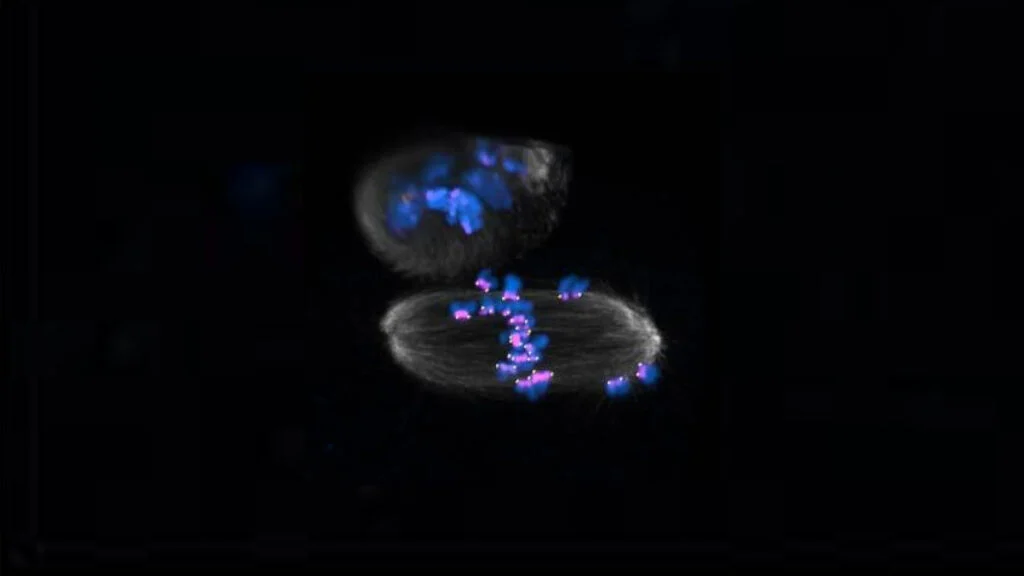
From birth until the moment of fertilization, these cells remain in a state of suspended animation. During this decades-long "wait," the chromosomes must remain tethered together by a protein complex called cohesin. Cohesin acts as a molecular glue, forming ring-like structures that trap DNA from sister chromatids to ensure they align perfectly when it is time to divide.
The problem, as identified by Dr. Melina Schuh and her team, is that this cohesin is not replenished. Over decades, the "glue" weakens or disappears entirely. When the cell finally prepares for the meiotic division required for fertilization, the weakened connection causes chromosomes to scatter prematurely or fail to segregate into the resulting embryo. The result is aneuploidy: an embryo with an incorrect number of chromosomes, which almost invariably leads to a failed pregnancy.
Chronology: Two Decades of Inquiry
The journey to this discovery has been marked by a slow, meticulous unraveling of cellular mysteries.
- 2005–2015: For years, Dr. Melina Schuh’s lab at the Max Planck Institute has peered into the inner workings of meiosis. In 2015, the team provided the first definitive visual evidence of how these chromosomal tethering structures deteriorate in human eggs as women age.
- 2016–2023: Armed with the knowledge that cohesin loss was the culprit, Schuh’s team began the ambitious task of engineering a "fix." They spent eight years testing various protein designs that could mimic the function of natural cohesin without causing secondary damage.
- 2024: The researchers successfully developed "TALhesins," a synthetic protein system that attaches to specific DNA regions near the centers of chromosomes, effectively replacing the lost "glue."
- 2025–2026: In experiments with aged mouse eggs, the TALhesin system proved remarkably effective, increasing the proportion of eggs with properly connected chromatids from 47% to 74%—a recovery to levels typically seen in young, fertile mice.
- Late 2026: The field saw rapid competition emerge, with startups like U-Ploid reporting promising data at the American Society for Reproductive Medicine meeting, indicating that their own candidate, Lyvanta, also improved chromosomal stability in human donor eggs.
Supporting Data: The Scale of the Crisis
The urgency behind this research is underscored by the stark reality of current fertility statistics. Studies have shown that between 50% and 80% of embryos derived from women in their 40s carry chromosomal abnormalities.
For the average patient, the math is sobering. While a woman in her late 30s may have a one-in-three chance of a successful pregnancy per IVF cycle, that probability drops to approximately one in ten for women over 40. This creates a "fertility saga" that is both financially and emotionally draining.
The data provided by the Max Planck Institute is compelling. By using TALhesins, the researchers managed to "rescue" mouse eggs that were otherwise destined for aneuploidy. While mouse models are not direct proxies for human physiology, the success in increasing correct chromatid alignment by nearly 30 percentage points provides a robust "proof of concept" that the process of chromosome degradation may be remediable.
Official Responses and Expert Analysis
The scientific community has reacted with a mix of cautious optimism and rigorous skepticism.
"There is still work ahead, but their proof of concept was highly successful," noted Dr. Rajiv McCoy, a biologist at Johns Hopkins University, whose own research focuses on the mechanics of pregnancy loss. McCoy emphasizes that because roughly half of all human conceptions are lost before birth—often due to aneuploidy—the societal impact of a successful therapy would be profound.
However, Dr. Eva Hoffman, a molecular geneticist at the University of Copenhagen, highlights the regulatory and ethical hurdles that remain. "The clinical potential depends upon regulatory aspects, including safety studies for embryonic development," Hoffman said. She points out that while the Max Planck study challenges the conventional view that age-related egg depletion is irreversible, researchers must now prove that introducing synthetic proteins into an egg does not trigger unforeseen side effects, such as long-term epigenetic damage to the resulting embryo.
Implications: A New Era for IVF?
The implications of this research extend far beyond the laboratory. If these technologies reach the clinic, they could fundamentally rewrite the IVF experience for millions.
The Rise of Biotech Startups
The race to commercialize this technology is already underway. Dr. Schuh has co-founded Ovo Labs, a startup aiming to bring TALhesin technology to market. Meanwhile, the U.K.-based U-Ploid is testing its own candidate, Lyvanta, which has already shown potential in stabilizing immature human eggs. These firms represent a shift in the fertility industry from "managing" infertility through repeated, expensive cycles to "treating" the underlying biological cause of egg aging.
Challenging the "Add-on" Culture
For years, the IVF industry has been plagued by "add-ons"—experimental, often unproven treatments sold to desperate couples at high premiums. Some clinics have even resorted to controversial, minimally vetted techniques like mitochondrial replacement therapy (MRT) to address maternal age. The emergence of rigorous, peer-reviewed molecular interventions like TALhesins offers a more scientific alternative to the current "fertility tourism" that sees women traveling to countries with lax regulations in hopes of a miracle.
The Remaining Hurdles
Despite the excitement, significant barriers remain. Most IVF protocols involve the retrieval of eggs that have already completed the first meiotic division. If the damage to the cohesin complex has already occurred by that stage, the intervention might arrive too late.
To be truly effective, the treatment may require the retrieval of immature eggs, followed by a maturation process in a lab dish—a technology that is currently inconsistent and not widely adopted. Dr. Schuh and her colleagues are now focused on refining this timeline, aiming to intervene at the precise moment in the first phase of meiosis when the intervention can yield the highest success rate.
Conclusion: A High-Stakes Frontier
The work being done by the Max Planck Institute and its counterparts is more than just an academic exercise; it is a direct response to a massive, unmet clinical need. By proving that the molecular architecture of the egg can be stabilized, researchers have opened a door that was previously thought to be bolted shut.
"The stakes are very high," as Dr. McCoy noted. With half of all conceptions ending in loss, the ability to restore chromosomal integrity could eventually offer a lifeline to women who have exhausted all other options. While the road from a laboratory proof-of-concept to a standard-of-care clinical treatment is long and fraught with regulatory scrutiny, the "molecular glue" discovery stands as a testament to the power of modern bioengineering to rewrite the biological constraints of human life. For the millions of women currently navigating the heartbreak of unexplained IVF failure, this research represents the first real light at the end of a very long, very difficult tunnel.