










For most of us, the alphabet is one of the earliest tools we acquire. From our first days in school, we use these twenty-six letters to build the foundation of our knowledge, articulate our thoughts, and connect with the world around us. Yet, while we are taught to read and write with proficiency, there remains a critical void in our primary education: the lexicon of emotional regulation. Specifically, most people are never provided with a structured framework for identifying, processing, and navigating anxiety.
Anxiety, in its biological essence, is a normal human emotion. It is an evolutionary safeguard designed to alert us to danger. However, when the mechanism intended to protect us begins to misfire—triggering in response to the mundane rather than the life-threatening—it can lead to chronic distress. Without the "ABCs" of anxiety, we are left to navigate these internal storms without a compass. To bridge this gap, experts like Dr. Carla Nasca, a neurobiologist at The Rockefeller University, are advocating for a structured approach to mental health: the ABCtracker™. By breaking down the complex physiological and psychological experience of anxiety into three manageable components—Alarm, Belief, and Coping—individuals can regain agency over their emotional lives.
The Anatomy of an Anxiety Spike: Main Facts
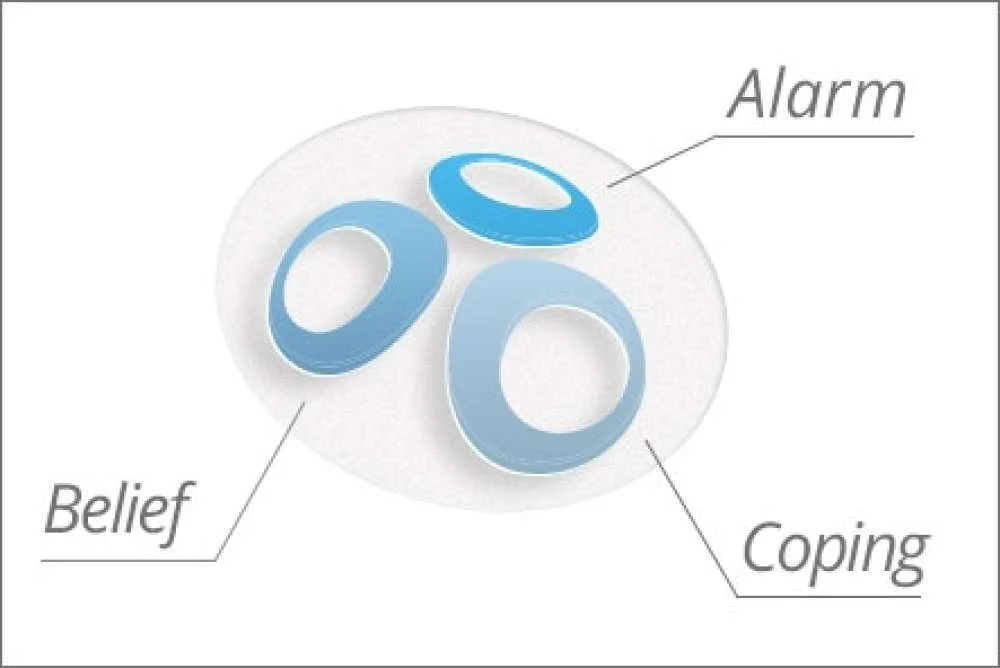
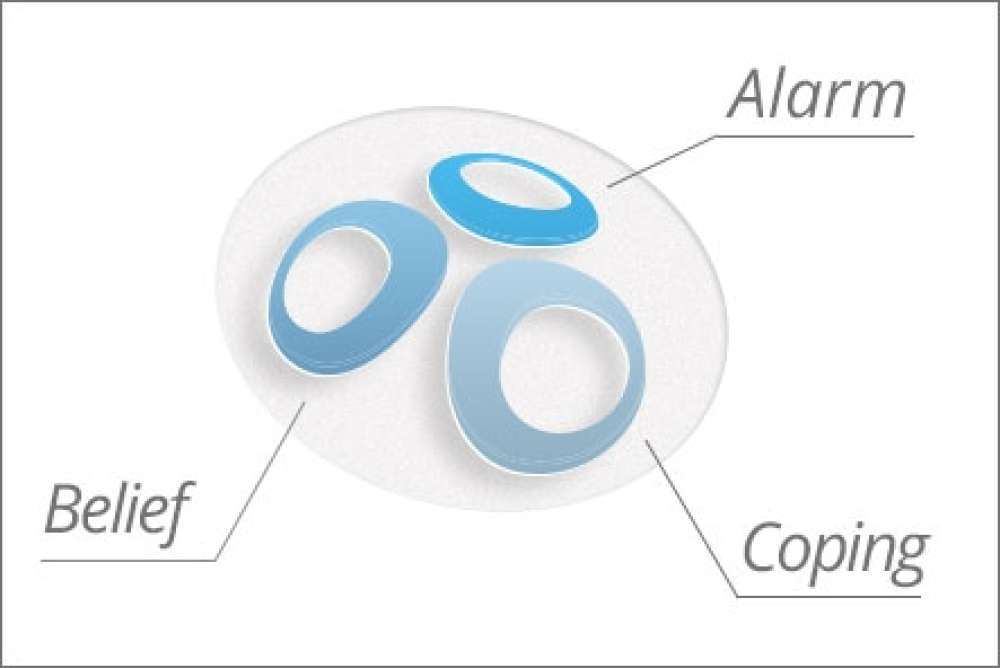
At its core, the ABCtracker™ is an acronym designed to demystify the internal process that turns a neutral situation into a full-blown anxiety attack. By categorizing our reactions into three distinct phases, we move from a state of reactive panic to one of observational analysis.
- Alarm (A): The physiological signal of perceived danger.
- Belief (B): The cognitive interpretation of that alarm.
- Coping (C): The behavioral response, which can either mitigate or exacerbate the situation.
This framework is not meant to replace professional medical advice; rather, it is a tool meant to be utilized in tandem with the guidance of psychologists, psychiatrists, and healthcare providers. It provides a shared language between patient and clinician, allowing for a more nuanced discussion of how anxiety manifests in day-to-day life.
Chronology of an Anxiety Episode: A Step-by-Step Breakdown
To understand how to manage anxiety, one must first understand the timeline of an emotional spike. The process often occurs in milliseconds, moving from a subconscious sensation to a conscious behavior.
1. The Onset of the Alarm
The "Alarm" phase is an instinctive, hard-wired response. Our ancestors relied on this biological siren to survive predators. In the modern world, however, the "predator" might be an overflowing email inbox, a social gathering, or a difficult conversation. For those with generalized anxiety, this alarm system is often hyper-sensitive. The body releases cortisol and adrenaline, elevating the heart rate and sharpening the senses, even when no objective threat is present.
2. The Cognitive Filter: Beliefs
Once the alarm sounds, the brain immediately attempts to make sense of the physical sensation. This is the "Belief" phase. The brain performs a split-second risk assessment: “Is this situation dangerous?”
For individuals with pervasive anxiety, this assessment is often biased. The brain may automatically default to the worst-case scenario. These distorted beliefs act as a feedback loop; by incorrectly labeling a safe situation as dangerous, the mind validates the initial alarm, preventing the body from returning to a state of calm.
3. The Behavioral Manifestation: Coping
The final stage is the "Coping" strategy. Once the belief has taken hold, the individual acts to restore a sense of safety. This is where the divide between "adaptive" and "maladaptive" coping occurs. Adaptive strategies—such as deep breathing, grounding exercises, or cognitive reframing—help dissipate the alarm. Maladaptive strategies—such as avoidance, substance use, or repetitive reassurance-seeking—may provide temporary relief but ultimately reinforce the cycle, making the anxiety more entrenched over time.
Supporting Data and Neurobiological Perspectives
The work of Dr. Carla Nasca, a post-doctoral fellow in the Laboratory of Neuroendocrinology, emphasizes that anxiety is not merely a "state of mind" but a complex interplay of neurobiology. Dr. Nasca’s background in molecular biology and electrophysiology provides a rigorous lens through which to view these emotional cycles.
Research suggests that the "extra-sensitive alarm" mentioned in the ABC model corresponds to a hyperactive amygdala—the brain’s emotional processing center. When the amygdala is over-stimulated, the prefrontal cortex—the part of the brain responsible for logical reasoning—is essentially bypassed.
By utilizing the ABCtracker™, individuals can consciously attempt to re-engage their prefrontal cortex. When a person writes down their "Beliefs" during an anxious moment, they are performing a cognitive task that forces the brain to shift from reactive, emotional processing to analytical, logical processing. This shift is the first step in "re-wiring" the brain’s response to triggers.
Official Perspectives on Behavioral Regulation
Mental health professionals have long utilized Cognitive Behavioral Therapy (CBT) as the gold standard for treating anxiety disorders. The ABC model is essentially a simplified, user-friendly derivative of the CBT "Thought Record."
Healthcare organizations and clinicians emphasize that the "C" (Coping) phase is where the most significant change occurs. By identifying "maladaptive" habits, patients can begin to replace them with "adaptive" ones. For example, if an individual realizes their "Coping" strategy for social anxiety is to avoid eye contact (maladaptive), they can work with a therapist to implement a more positive strategy, such as controlled exposure (adaptive).
Dr. Nasca’s research, while focused on the biological underpinnings of mental health, underscores the necessity of these psychological tools. Her work highlights that while biology sets the stage, the psychological narrative—our beliefs—determines the trajectory of our mental health outcomes.
The Implications: Why the ABCs Matter
The implications of adopting a structured framework like the ABCtracker™ are profound. For many, anxiety is a mysterious, overwhelming force. By demystifying the experience, the model restores a sense of autonomy.
Breaking the Cycle of Avoidance
Avoidance is perhaps the most common maladaptive coping mechanism. When we avoid triggers, we teach our brains that we are incapable of handling discomfort. This creates a shrinking life, where the comfort zone gets smaller and smaller. The ABCtracker™ encourages users to stay present during the "Alarm" and "Belief" phases, effectively training the brain to tolerate the sensation of anxiety without needing to flee.
Fostering Emotional Intelligence
Learning the ABCs is an act of emotional literacy. Just as we learn to identify our ABCs as children to navigate the world of language, learning the ABCs of anxiety allows us to navigate our inner world. This literacy reduces the shame often associated with anxiety. Understanding that "I am having an anxious response because my internal alarm is over-sensitive" is significantly different from believing "I am broken or weak."
Long-Term Mental Health Outcomes
The ultimate goal of mastering these steps is the cultivation of resilience. When an individual can accurately evaluate the validity of their beliefs, they stop responding to false alarms. Over time, this consistency can lead to a literal recalibration of the body’s stress response.
Conclusion: Starting Your Journey as a Beginner
Every master begins as a beginner. It is unreasonable to expect oneself to perfectly regulate an anxious nervous system overnight. However, the simplicity of the ABC model makes it accessible to anyone, regardless of their history with mental health treatment.
To begin, start by tracking your triggers. When you feel the familiar surge of anxiety:
- Acknowledge the Alarm: Say to yourself, "My alarm is going off."
- Examine the Belief: Ask, "What is my brain telling me about this situation? Is this belief based on facts or fear?"
- Choose your Coping: Ask, "Is the action I am about to take helping me in the long run, or is it just providing temporary relief?"
By implementing these steps consistently, you can transition from being a prisoner of your reactions to an architect of your own emotional stability. With the guidance of your healthcare professional and the structure provided by the ABCs, the path to mastering your anxiety is not just possible—it is an achievable reality. As Dr. Nasca and other leading researchers demonstrate, the intersection of biology and cognitive awareness is where healing begins.