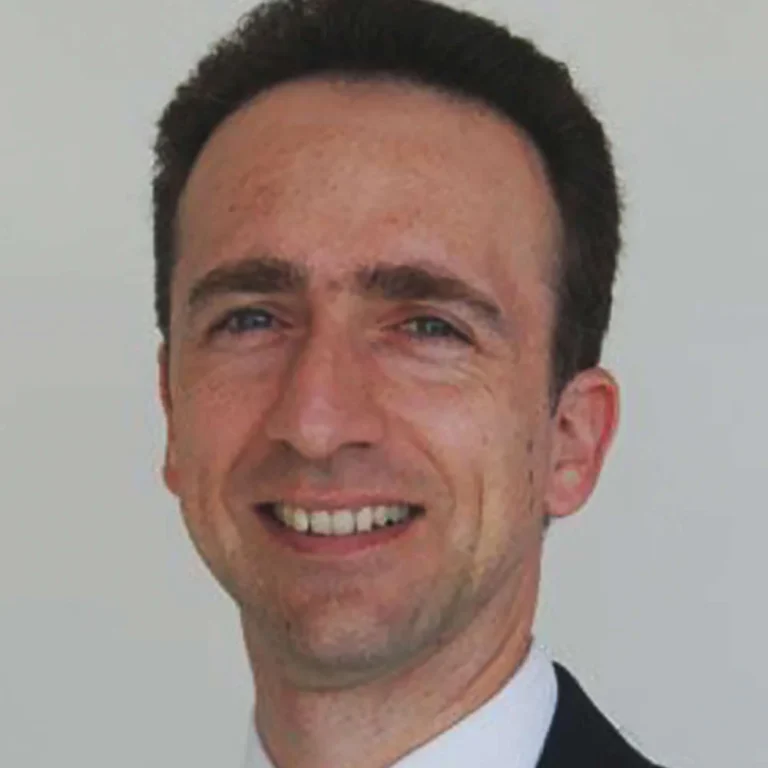










JACKSONVILLE, FL — In the landscape of American mental health advocacy, personal narratives often serve as the most potent catalysts for systemic change. James Price, a Jacksonville-based author and entrepreneur, has emerged as a central figure in this movement, transforming a life defined by the volatility of the foster care system and compounded personal loss into a mission of resilience. Through his memoir, Violet’s Light, and his business ventures, Price is challenging the stigma surrounding grief, particularly for young people navigating the complexities of the modern mental health crisis.
Price’s story is not merely one of survival; it is a blueprint for "post-traumatic growth." As the founder of Eternity Gravestones LLC and a vocal proponent of the Active Minds "A.S.K." (Acknowledge, Support, Keep-in-Touch) framework, Price is bridging the gap between personal tragedy and public policy, advocating for a world where grief is treated not as a clinical pathology, but as a testament to human connection.
The Chronology of Compounded Loss: From Ohio to Florida
James Price’s journey began in the foster care system of Ohio, an environment that often necessitates a "hardened" exterior for survival. Growing up without a father, Price found his emotional anchor in his mother, Violet. She was, as he describes, his "whole world." However, the stability he built alongside her was shattered in a devastatingly brief window of time.
In October 2016, Violet succumbed to cancer. The blow was catastrophic, but it was only the beginning of a period of profound "cascading grief." Just three days after his mother’s passing, Price lost his dog, Ace—a companion of seven and a half years who had provided the unconditional stability often missing in the foster system. The sequence of losses created a vacuum of support that Price struggled to fill.

The tragedy deepened a few years later when his brother-in-law died by suicide. This third wave of loss moved the experience of grief from the realm of natural illness to the complex, often silent struggle of mental health crisis. "Grief hit me like a wave that never went back out to sea," Price recalls. "There were mornings I didn’t want to get out of bed. Nights I wondered why I was still here when they weren’t."
It was during these "dark nights" that Price began to formulate a new understanding of his pain. He transitioned from a victim of circumstance to a student of his own sorrow, eventually moving to Jacksonville, Florida, to rebuild his life and document his experiences.
Supporting Data: The Rising Tide of the Youth Mental Health Crisis
Price’s personal struggles reflect a broader, alarming trend in national mental health statistics. According to data from the 988 Suicide & Crisis Lifeline and advocacy groups like Active Minds, the need for specialized crisis intervention has never been higher.
- Foster Care Vulnerability: Statistics show that youth transitioning out of foster care are at a significantly higher risk for depression, PTSD, and suicidal ideation compared to the general population. The lack of a permanent "safety net" means that losses, such as the death of a biological parent, can trigger severe mental health spirals.
- The 988 Lifeline Impact: Since its launch in 2022, the 988 Lifeline has served millions. However, recent policy changes have sparked concern among advocates. As of mid-2025, the specialized LGBTQ+ youth subnetwork of the 988 Lifeline—which had served 1.5 million young people—faced closure due to federal funding shifts.
- Suicide Disparities: Data from The Trevor Project indicates that LGBTQ+ youth are four times more likely to attempt suicide than their peers. Similarly, men and those in the foster care system often face cultural barriers to "talking out" their grief, leading to higher rates of "silent" suffering.
Price’s advocacy emphasizes that these numbers represent real lives. His decision to share his story through Violet’s Light is a direct response to these statistics, aiming to provide a "narrative lifeline" to those who feel unrepresented in traditional clinical settings.

Official Responses and Legislative Advocacy: The Campus Lifeline Act
The mental health community has responded to stories like Price’s with both practical frameworks and legislative pushes. Organizations like Active Minds have moved beyond awareness, focusing on "peer-powered" advocacy.
The A.S.K. Framework
Active Minds has championed the A.S.K. method as a tool for everyday citizens to support those in crisis:
- Acknowledge: Validating the person’s feelings without judgment.
- Support: Listening actively and offering help that meets the individual’s specific needs.
- Keep-in-Touch: Maintaining regular contact to ensure the individual feels a continuous sense of belonging.
Price integrates these principles into his public speaking and his business model, noting that "silence almost won" in his own life because he tried to be "strong" in isolation.
The Campus Lifeline Act
On the legislative front, the "Campus Lifeline Act"—a bill authored by Active Minds—is currently a focal point for youth advocates on Capitol Hill. The bill seeks to:

- Expand mental health crisis resources on college campuses.
- Require the inclusion of the 988 Suicide & Crisis Lifeline on all newly issued student ID cards.
- Increase federal investment in youth-informed mental health strategies.
During recent briefings in the Rayburn Building, young leaders like Ayaan Moledina and Amy Senkerik echoed Price’s sentiment: "You can’t make effective mental health policy for young people without young people." Price’s work provides the lived-experience backbone that these legislative efforts require to gain bipartisan support.
Implications: Transforming Grief into Legacy and Entrepreneurship
The most striking aspect of James Price’s evolution is his philosophy that "grief is love with nowhere to go." By reframing sadness as a redirection of love, Price has been able to build a life that honors the deceased through the actions of the living.
Eternity Gravestones LLC
Rather than retreating from the industry of death and loss, Price leaned into it. He founded Eternity Gravestones LLC, a company dedicated to helping families keep memories alive through personalized memorials. This venture serves as a form of "entrepreneurial therapy," allowing Price to help others navigate the same darkness he once inhabited. It represents a shift from seeing loss as a "weight" to seeing it as "fuel."
Ritual and Resilience
Price maintains a rigorous daily ritual to manage his mental health. Each morning, he spends 30 minutes in prayer and remembrance, saying the names of his mother, his brothers, and his dog Ace out loud.
"I try to live the day for them: to watch a sunrise they can’t see, to taste food they can’t taste, to be kind in ways that would make them proud," Price says. "I believe the life of the deceased is placed in the heart of the living."

The "Softer, Not Harder" Philosophy
For the millions of young people currently in the foster care system or dealing with the loss of a primary caregiver, Price’s message is one of radical vulnerability. He argues that the traditional American ideal of "toughening up" is often a barrier to healing. Instead, he advocates for becoming "softer"—more empathetic, more communicative, and more connected.
Conclusion: A Story Still Being Written
James Price’s transition from a foster child in Ohio to a respected author and business owner in Florida serves as a powerful reminder that "where you start doesn’t decide where you finish." However, his story is also a call to action for a more robust national mental health infrastructure.
As the 988 Lifeline faces specialized service closures and as college students fight for the Campus Lifeline Act, voices like Price’s are essential. They remind policymakers that mental health is not a political issue, but a human one.
"I’m not going to tell you the pain goes away. It doesn’t," Price concludes. "But it changes shape. It becomes fuel instead of weight—if you let it. Your story isn’t over. Someone out there needs the light that only you can shine."

For those currently struggling with grief or thoughts of self-harm, resources are available 24/7. You can call or text 988 to reach the Suicide & Crisis Lifeline, or text START to 678678 to reach The Trevor Project. James Price’s memoir, Violet’s Light, is available for those seeking a deeper exploration of faith, hope, and the foster care experience.