










A mantra is far more than a rhythmic repetition of words; etymologically derived from the Sanskrit man (mind) and tra (instrument), it is literally a "tool for the mind." While its origins are deeply rooted in ancient Vedic, Hindu, and Buddhist traditions, the practice of anchoring the psyche through specific linguistic focal points has transcended the spiritual realm. Today, mantras serve as essential components of cognitive behavioral therapy, nervous system regulation, and high-performance psychology.
For Army veteran and leadership coach Denny Giamazzo, this concept of the "instrumental mind" has been the singular thread weaving together a life defined by extraordinary challenges. From the instability of his childhood to the rigors of combat in Afghanistan, Giamazzo has refined a specific internal dialogue to navigate the darkest chapters of his existence. His guiding philosophy is simple, yet profound: "Someone else out there has had it worse. They have come back stronger, and they are doing more with less. I am not allowed to feel sorry for myself."
The Crucible: A Chronology of Survival
To understand the depth of Giamazzo’s resolve, one must look at the foundation upon which he was forced to build his life. Born two months premature in Worcester, Massachusetts, his early years were marked by systemic instability. He was raised by a mother who struggled with severe personal issues, leading to prolonged periods where a young Giamazzo was left to fend for himself. Neighbors were often the only line of defense for the child, providing what little stability they could.
The trajectory of his youth shifted irrevocably at age five, when his mother passed away due to complications from AIDS. Thrust into the foster care system, Giamazzo was eventually placed with his aunt. However, the respite he sought was short-lived. Living under the same roof as an abusive uncle, Giamazzo was subjected to persistent physical violence throughout his formative teenage years.
Rather than succumbing to the trauma of his upbringing, Giamazzo began to cultivate a paradoxical sense of purpose. "I think what I took from that was just an insane amount of resiliency," he reflects. This resiliency became his primary survival mechanism. During his adolescence, he discovered that he could escape the chaotic environment of his home through the discipline of athletics. Engaging in baseball, basketball, and football provided a structured outlet for his energy. It was here that he first fell in love with the process of self-improvement. "At a young age, I just loved putting my body through things and seeing what I was capable of," he says—a sentiment that would eventually define his adult career.
From School to the Frontlines: The Military Chapter
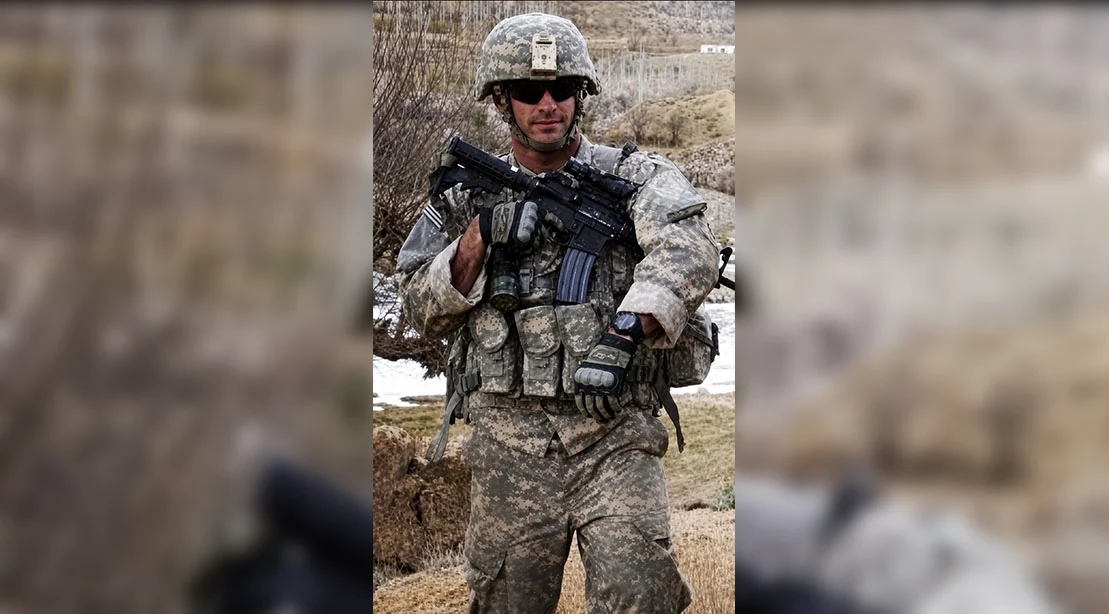
In 2006, seeking both purpose and a departure from his surroundings, Giamazzo enlisted in the United States Army. His seven-year tenure, which included a pivotal deployment to Afghanistan from 2010 to 2011, transformed him from a young man seeking direction into a battle-hardened infantry team leader.
"I really didn’t join with this burning desire to serve my country or anything like that," Giamazzo admits with characteristic honesty. "That’s what it turned into after really getting embedded in that lifestyle and working with the guys I got to work with every day."
The transition from civilian life to the infantry, and subsequently from the battlefield to civilian life again, proved to be a daunting task. Giamazzo returned from Afghanistan with significant physical trauma, requiring two separate surgeries on his right shoulder. Furthermore, he found himself grappling with the invisible wounds of war: Post-Traumatic Stress Disorder (PTSD).
The discipline he had honed in the gym—the same discipline that saved him in his youth—became his primary therapeutic intervention. By training five days a week, oscillating between heavy compound movements and high-intensity interval training (HIIT), Giamazzo found a way to externalize his internal turmoil.
Supporting Data: The Science of Movement
Giamazzo’s reliance on physical training as a mental health stabilizer is backed by a growing body of clinical evidence. A 2023 review published by researchers at Duke University and Mount Sinai underscores this reality, finding that regular exercise can be as effective as traditional pharmacological interventions in treating moderate depression and anxiety.
For veterans, the gym serves as a "positive and aggressive" outlet. It allows for the controlled release of adrenaline and the physical manifestation of discipline—two things often stripped away during the transition out of a combat environment. For Giamazzo, this isn’t just theory; it is his daily lived experience. "It really has been probably the most integral part of addressing my PTSD," he notes. His preference for high-intensity benchmarks, such as the CrossFit workout "Cindy," serves as a metric for his mental and physical fortitude.
Wired for Action: Spreading the Philosophy
Today, Giamazzo has transitioned into the role of an educator and guide. His autobiography, Wired for Action, is designed to be more than a chronicle of his past; it is a tactical manual for anyone struggling to find their footing.
"It’s easy sometimes to feel like we’re on an island by ourselves," Giamazzo observes. "That’s just not the case."
This message of connection and accountability is the cornerstone of his Be the Standard podcast, which he co-hosts with Mike Barnes. The show explores the intersection of masculinity, mental health, and leadership. By inviting experts and veterans to discuss combat trauma, personal responsibility, and the struggle for identity, Giamazzo is actively dismantling the stigma surrounding men’s mental health.
Implications for Personal Leadership
The core of Giamazzo’s coaching philosophy is the concept of radical personal agency. He rejects the notion that past trauma dictates future outcomes, provided the individual is willing to put in the work.
"I would say that for each individual, it’s on them," Giamazzo explains. "It comes down to: ‘What type of person do I want to be? What action do I need to take to reach those objectives?’ If you know what you want out of life, you know exactly the type of person you want to be, and you’re willing to put the work in, I think that’s going to give you a substantial amount of purpose."
This is the essence of his message: purpose is not found; it is constructed through action. In a world increasingly prone to paralysis, his mantra remains a clarion call for progress: “Take action. Keep moving.”
Appendix: The "Cindy" Benchmark
For those looking to adopt Giamazzo’s regimen, "Cindy" remains one of the most effective, accessible benchmarks for fitness and mental resilience. It requires no equipment other than a pull-up bar.
The Protocol:
Perform as many rounds as possible (AMRAP) in 20 minutes of:
- 5 Pull-ups
- 10 Push-ups
- 15 Air Squats
Standards:
- Beginner: 8 rounds.
- Intermediate: 12–15 rounds.
- Rx (Competitive): 20 rounds.
- Elite: 25+ rounds.
By tracking these numbers, individuals can monitor their progress, providing a tangible way to measure their commitment to the goal of "getting better every day."
As Denny Giamazzo continues to influence the lives of those navigating their own traumas, his legacy serves as a testament to the idea that no matter how difficult the beginning, the end is defined by the actions we take in the present. Whether through his book, his podcast, or his physical training, Giamazzo remains committed to the idea that we are all, ultimately, the architects of our own resilience.