










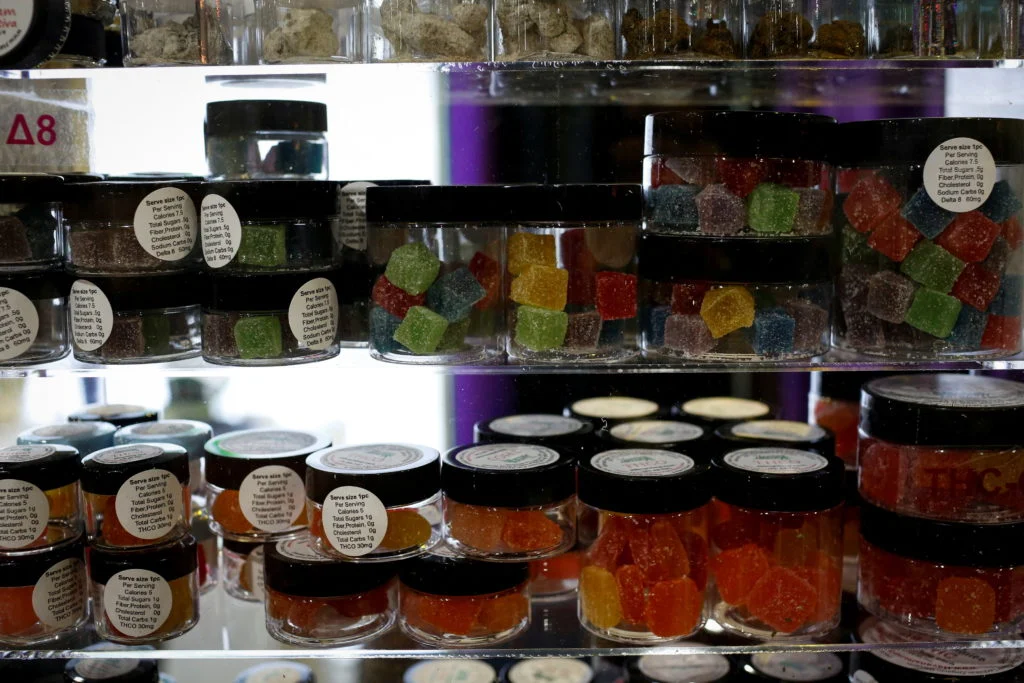
For the past several years, a quiet revolution has been taking place in convenience stores, gas stations, and online storefronts across the United States. Consumers in states with strict marijuana prohibitions have found themselves with easy access to intoxicating THC-infused gummies, sparkling waters, and tinctures—products that, by all appearances, function like recreational cannabis.
This market, a $28 billion powerhouse, has thrived on a legal technicality born from the 2018 Farm Bill. However, that era of ambiguity is rapidly drawing to a close. With a hard deadline of December 11, the federal government is moving to shutter the loophole that allowed hemp-derived intoxicants to flourish. As retailers scramble to clear their shelves and industry lobbyists make desperate pleas for a stay of execution, the landscape of American drug policy is bracing for a significant, albeit chaotic, shift.
The Genesis of a Regulatory Gray Area
To understand why this massive industry is now facing an existential crisis, one must look back at the 2018 Farm Bill. In an effort to revitalize American agriculture, Congress legalized "hemp," defined as cannabis containing no more than 0.3% delta-9 THC by dry weight. The intent was to support industrial hemp production for fiber, textiles, and CBD oil.
However, the bill’s drafters failed to anticipate the creativity of chemists and entrepreneurs. Because the law specifically defined hemp by its delta-9 THC concentration, it left the door wide open for other cannabinoids. Manufacturers began isolating CBD—which is non-intoxicating—and chemically converting it into delta-8 and delta-10 THC, or extracting high concentrations of THCA. These substances, which can produce a high similar to traditional marijuana, were technically not "delta-9 THC" and thus, according to many industry advocates, remained compliant with the federal definition of hemp.
"The industry essentially drove a tractor-trailer through a loophole," says Jason Klimek, a lawyer specializing in cannabis regulation. "While the 2018 Farm Bill provided the language, the explosion of intoxicating hemp products was the result of aggressive interpretation coupled with a profound lack of federal enforcement. It was never a settled legal reality; it was an exercise in regulatory arbitrage."
Chronology of the Impending Ban
The trajectory toward this December deadline has been a multi-stage process involving both legislative maneuvering and regulatory tightening.
- 2018: The Farm Bill is signed into law, creating the legal distinction between hemp and marijuana.
- 2021–2023: The market for delta-8 and other hemp-derived cannabinoids explodes, moving from niche online shops to mainstream retail shelves.
- Late 2023: Congress, realizing the unintended consequences of the 2018 bill, begins drafting language for a government funding package that includes a recalibration of the hemp definition.
- November 12, 2025: The first phase of the federal crackdown goes into effect, banning synthetic cannabis compounds that do not occur naturally in the plant.
- December 2, 2025: The final shipping date for major hemp-THC brands, such as Cann, as they prepare for the imminent cessation of their business models.
- December 11, 2025: The new, stricter definition of hemp is set to become law. Unless Congress intervenes or postpones the enforcement date, all products exceeding the new, low THC threshold will technically be considered illicit substances.
The New Definition: Closing the Net
The regulatory shift arriving on December 11 is comprehensive. It does not merely tweak the current law; it fundamentally changes the metrics by which hemp is measured.
Under the new regulations, hemp will no longer be defined solely by its delta-9 THC content. Instead, the law will account for the total amount of THC in a product. This encompasses a wide range of variations, including delta-8, delta-10, and THCA. Furthermore, the law explicitly excludes any compounds—even those found naturally in the plant—if they have been synthesized or processed outside of the plant’s natural biological structure.
Perhaps most damaging to the current business model is the new "total THC" cap: 0.4 milligrams per container. This limit is so low that even a single standard-sized gummy or a 12-ounce beverage would be rendered illegal under the new guidelines. For the industry, this is not just a restriction; it is a total prohibition of the current product catalog. Because the legislation does not include a "sell-through" provision, retailers are theoretically required to remove all non-compliant inventory from their shelves by the deadline.
Economic and Public Health Implications
The economic footprint of this industry is staggering. By some estimates, the hemp-derived THC market has grown into a $28 billion sector, supporting thousands of jobs in manufacturing, logistics, and retail. Proponents of the industry argue that this ban will devastate small businesses and cut off a legitimate revenue stream for farmers.
However, public health experts and state regulators offer a different perspective. They point to the "Wild West" nature of the current market, where products are often sold without the rigorous testing, security, and age-verification protocols required of licensed, state-legal cannabis dispensaries.
"Licensed cannabis businesses operate under an umbrella of state oversight," Klimek notes. "They pay taxes, they test for pesticides and heavy metals, and they ensure products don’t reach minors. Hemp-derived THC products have largely bypassed these guardrails, creating a significant safety concern for consumers who may not know what they are ingesting."
The impact of this ban will be felt unevenly across the country. In states where marijuana is already fully legalized, the effect may be muted as consumers simply migrate to the state-regulated market. But in states where cannabis remains prohibited, the hemp-THC market has been the only legal, accessible source of intoxicating products. For these consumers, the ban represents a total return to the illicit market.
Enforcement Uncertainty: Will the DEA Act?
Despite the looming deadline, many industry insiders remain skeptical about the level of federal enforcement that will follow December 11.
Katharine Harris, a drug policy fellow at the Baker Institute, suggests that the federal government may lack the appetite for a nationwide sweep. "I haven’t seen any indication at the federal level that there is a big intent to pursue hemp products sold within a state," she says. "Federal cannabis enforcement has generally not been a priority in recent years, and the DEA has its hands full with the opioid crisis and other priorities."
This leaves the door open for a fragmented enforcement landscape. It is likely that enforcement will fall to individual states and counties. Some states have already enacted their own bans or strict regulations on hemp-derived cannabinoids, while others may choose to treat the federal law as a suggestion rather than a mandate.
The Political Tug-of-War
As the deadline approaches, the situation remains fluid. The hemp industry is lobbying heavily to postpone the enforcement date, hoping to turn the issue into a political bargaining chip during the high-stakes negotiations over the broader government funding bill.
"This is not a dead issue," says one industry lobbyist who requested anonymity. "We are in a race against the clock. If we can get legislators to see the economic impact of shuttering this industry, we might be able to carve out a path for a more regulated, legal future for hemp-derived products rather than an outright ban."
For the consumer, the countdown is literal. Websites like Cann are already displaying "THE BAN IS COMING" warnings, urging customers to stock up before the final shipping dates pass. Whether this represents the final breath of a loophole-driven market or merely the opening salvo in a longer, more complex legislative battle remains to be seen. What is clear, however, is that the era of "hemp-derived" intoxication as an unregulated commodity is coming to a definitive end.