









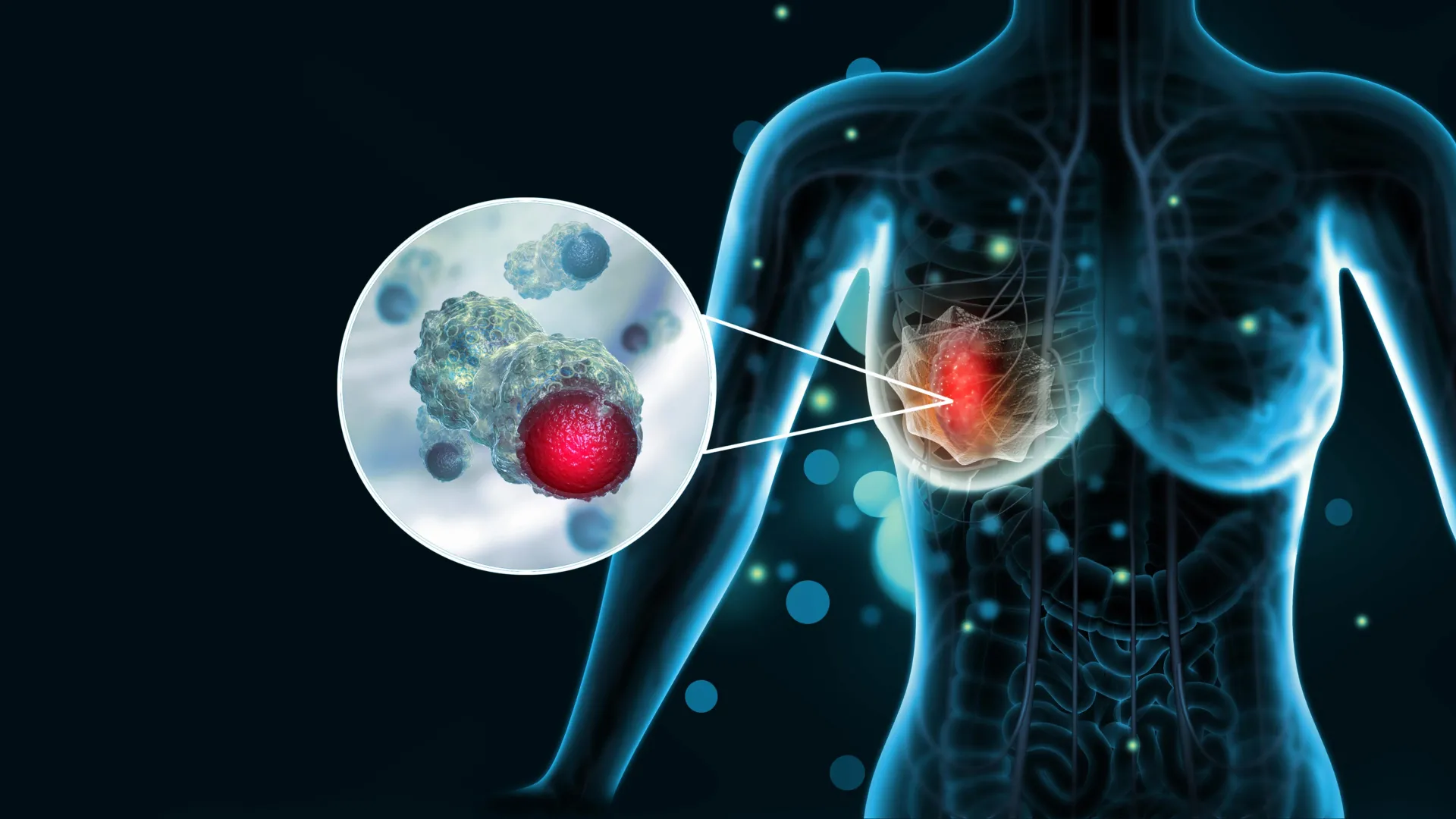
In a significant development for environmental health research, a study conducted by the National Institutes of Health (NIH)—part of the U.S. Department of Health and Human Services (HHS)—has uncovered a troubling correlation between long-term exposure to per- and polyfluoroalkyl substances (PFAS) and an increased risk of developing a highly aggressive form of breast cancer.
The research, published in the Journal of Clinical Oncology, focuses on estrogen receptor-negative (ER-negative) breast cancer, a particularly virulent subtype of the disease. While the study does not definitively prove that these chemicals—widely known as "forever chemicals"—directly cause the cancer, the statistical strength of the association has prompted urgent calls for further investigation into the environmental factors contributing to women’s health outcomes.
The Nature of the Threat: Understanding PFAS
PFAS represent a vast family of synthetic chemicals that have been ubiquitous in consumer products since the mid-20th century. Engineered for their durability, heat resistance, and ability to repel water, oil, and stains, these chemicals are found in everything from non-stick cookware and food packaging to waterproof clothing and firefighting foams.
The term "forever chemicals" is derived from their chemical structure, which features strong carbon-fluorine bonds that resist natural degradation. Once released into the environment, they do not break down; instead, they persist in water supplies, soil, and wildlife. Furthermore, these substances are bioaccumulative, meaning they enter the human bloodstream through ingestion or inhalation and can remain there for years, potentially interfering with biological systems.
While manufacturers have largely phased out two of the most infamous legacy compounds—perfluorooctanoic acid (PFOA) and perfluorooctanesulfonic acid (PFOS)—their legacy persists in the human body, as they are still detectable in the blood of the vast majority of the population.
Chronology of the Research: From Data Collection to Discovery
The study’s findings are rooted in a long-term observational project known as the "Sister Study." Conducted by the National Institute of Environmental Health Sciences (NIEHS), the Sister Study is one of the most comprehensive investigations into breast cancer risk ever undertaken.
- 2003–2009: The NIEHS enrolled 50,884 women across the United States and Puerto Rico. All participants were aged 35–74 and were initially free of breast cancer, though they all shared a critical risk factor: each had a full or half-sister who had been diagnosed with the disease.
- Methodology: To investigate the PFAS connection, researchers isolated a subset of the cohort: 1,609 women who had received a breast cancer diagnosis after enrollment and a control group of 2,269 women who remained cancer-free.
- Analysis: Scientists measured the concentrations of 17 different PFAS compounds in blood samples collected years prior to the cancer diagnoses. By correlating these historical exposure levels with subsequent health outcomes, researchers were able to identify distinct patterns in tumor development.
- Verification: To ensure the validity of their findings, the NIH team performed a meta-analysis of existing literature, which ultimately reinforced the link between high-level PFAS exposure and the development of ER-negative tumors.
Supporting Data: Quantifying the Risk
The findings indicate that the risk profile for ER-negative breast cancer shifts significantly based on the concentration of PFOA and PFOS in the bloodstream. The data revealed a stark divergence in cancer rates when comparing women in the highest exposure quartiles to those in the lowest.
Statistical Findings
- PFOA Impact: Women in the highest exposure group for PFOA experienced a 67% higher rate of developing ER-negative breast cancer compared to those in the lowest exposure group.
- PFOS Impact: The association for PFOS was even more pronounced, with the highest exposure group showing a 93% higher rate—nearly double that of the lowest exposure group.
It is critical to note that these figures represent relative differences between groups, not the absolute probability of an individual developing the disease. Nevertheless, the scale of these increases suggests a robust statistical link that warrants deeper mechanistic study.
Why ER-Negative Breast Cancer is Uniquely Dangerous
The focus on ER-negative breast cancer is significant because it represents a "clinical gap" in oncology. Unlike hormone-receptor-positive breast cancers, which are driven by estrogen or progesterone and can be treated with targeted hormonal therapies, ER-negative tumors lack these receptors.
This makes them notoriously difficult to treat. Because they do not respond to standard endocrine therapies, patients are often limited to more aggressive interventions, such as chemotherapy and radiation. Furthermore, these tumors tend to grow and spread faster, leading to poorer long-term outcomes for patients. Despite the severity of this disease, scientists have historically struggled to identify the specific environmental or genetic triggers that lead to its development. This new research suggests that persistent environmental chemicals may be a critical, previously overlooked piece of the puzzle.
Official Responses and Political Implications
The release of the study has ignited a discourse on federal oversight and environmental justice. HHS Secretary Robert F. Kennedy, Jr. emphasized that the findings underscore the need for greater transparency regarding environmental pollutants.
"Women deserve clear answers about how chemicals in their environment may affect their health," Secretary Kennedy stated. "This NIH study links two forever chemicals to a higher risk of ER-negative breast cancer and demands further investigation. Under President Trump’s leadership, we will pursue the evidence, confront environmental health risks, and give women the information they need to protect their health."
The study is being framed not merely as a scientific breakthrough, but as a call to action for policy reform. The government’s commitment to investigating these findings suggests that the EPA and other regulatory bodies may face increased pressure to set more stringent limits on chemical pollutants in drinking water and consumer goods.
Implications: Can Exposure be Managed?
While the persistence of PFAS is a daunting environmental challenge, the researchers involved in the study maintain a note of cautious optimism. Dr. Che-Jung Chang, the study’s first author, noted that while these chemicals remain in the environment, exposure is not an immutable fate.
"Although PFAS are persistent in the environment and in our bodies, exposure to them is still potentially modifiable," Dr. Chang explained. Identifying the specific pathways through which these chemicals affect cellular biology could eventually lead to new preventative strategies.
Future Research Directions
The research team has identified several key areas that require immediate attention:
- Biological Mechanisms: The study did not determine how these chemicals promote cancer. Potential theories include alterations in immune system function or changes in gene expression that favor tumor growth. Future studies will focus on these pathways.
- Replacement Chemicals: As PFOA and PFOS are phased out, manufacturers have introduced "replacement" PFAS compounds. Scientists must now urgently determine if these newer, less-studied chemicals carry similar carcinogenic risks.
- High-Risk Populations: There is an ongoing need to study vulnerable populations—specifically those living near industrial zones or in areas with known water contamination—to see if the association between PFAS and ER-negative cancer is amplified in these groups.
Conclusion: A New Frontier in Oncology
The NIH study represents a landmark step in understanding the environmental origins of breast cancer. By linking legacy forever chemicals to the most aggressive forms of the disease, the research provides a clear roadmap for future public health initiatives.
As the scientific community shifts its focus toward the biological mechanisms of PFAS-induced cancer and the safety profile of newer, replacement chemicals, the primary objective remains the same: to mitigate environmental risks and improve the long-term health prospects for women. For now, the study stands as a powerful reminder that our environmental footprint, no matter how distant it may seem, is intrinsically linked to the health of our bodies.
The research received support from NIEHS grants Z01ES044005, Z1AES103332, and R01ES032831.