











From the high seas to the halls of Congress and the blizzard-stricken plains of Colorado, Wednesday proved to be a day defined by turbulence. As international health officials scramble to contain a rare hantavirus outbreak aboard a cruise vessel, domestic political tensions have reached a fever pitch in Washington, D.C., where Commerce Secretary Howard Lutnick faced intense scrutiny. Meanwhile, global markets reacted with volatility to geopolitical shifts, and extreme weather patterns continued to disrupt daily life across the United States.
I. Hantavirus Outbreak: A Vessel Under Siege
The Escalation at Sea
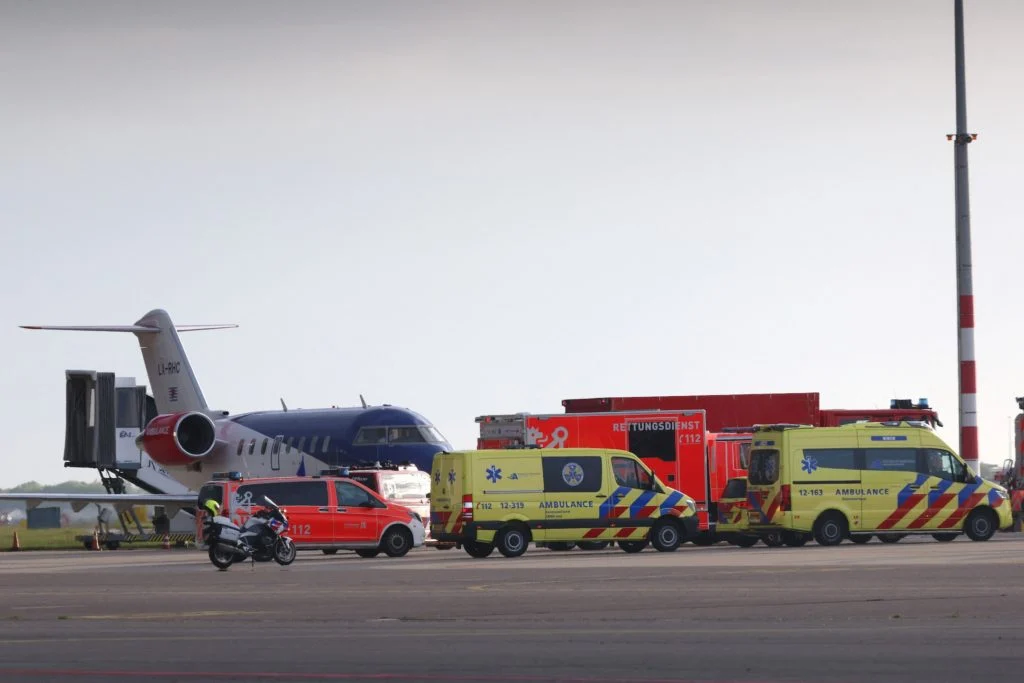
The situation aboard the MV Hondius has reached a critical juncture. On Wednesday, three individuals—including the ship’s British physician—were evacuated via emergency medical airlift and transported to a specialized facility in the Netherlands. The evacuation was conducted by health workers in full protective gear, underscoring the severity of the threat posed by the pathogen. Two of the three patients have been confirmed positive for hantavirus, a rare, rodent-borne disease that can cause severe respiratory distress. The third patient remains under observation as a suspected case.
Chronology of the Crisis
The crisis began when the vessel, currently bound for Spain’s Canary Islands, reported an unexplained illness among its passengers. According to the World Health Organization (WHO), there have been at least eight recorded cases of the infection, with five laboratory-confirmed diagnoses and three confirmed fatalities. Passengers have expressed deep frustration regarding the ship’s communication protocols. Ruhi Cenet, a passenger on board, described a climate of uncertainty, noting that the lack of transparency in the early stages of the outbreak prevented passengers from taking necessary precautions. "Since we were not informed of any contagious disease, everyone was relaxed," Cenet remarked. "Regulations should be updated regarding this."
The Path Forward
Spanish Health Minister Monica Garcia announced that upon the ship’s arrival in the Canary Islands, a rigorous joint health assessment will be initiated. Current plans dictate that, barring medical disqualification, all foreign nationals will be repatriated. Meanwhile, health authorities across Europe and Africa are tracing the travel history of those who may have come into contact with the passengers, though the WHO maintains that the broader public risk remains contained.
II. Political Storm: Howard Lutnick’s Capitol Hill Testimony
The Epstein Connection
Commerce Secretary Howard Lutnick, a prominent figure in the Trump administration, faced a high-stakes, closed-door session with the House Oversight Committee on Wednesday. The focus of the interrogation was Lutnick’s documented ties to the late financier and sex offender Jeffrey Epstein. Despite tight security surrounding his arrival, the nature of the testimony leaked quickly to the press.
Contradictory Statements
Sources familiar with the proceedings confirmed that Lutnick admitted to meeting with Epstein three times over the years, including a visit to Epstein’s infamous private island. These admissions stand in stark contrast to previous statements made by the Secretary. Committee Chairman James Comer (R-KY) addressed the discrepancy ahead of the hearing, noting that while no immediate evidence of wrongdoing in the email correspondence was found, the lack of transparency regarding the island visit was "not 100 percent truthful."
The Partisan Divide
The atmosphere outside the meeting room was charged with partisan animosity. Democratic members of the committee expressed outrage over the decision to hold the hearing behind closed doors, with several calling the move an "egregious cover-up." The rhetoric escalated quickly, with some Democrats labeling the Secretary a "pathological liar." As the first current Trump administration official to appear before this specific panel, the political implications of Lutnick’s testimony could reverberate throughout the administration’s legislative agenda.
III. Legal & Economic Ripples: Apple’s Massive Settlement
In a significant development for consumer technology law, Apple has agreed to a $250 million settlement to resolve a class-action lawsuit regarding "false advertising." The suit centers on claims that the company misled consumers regarding the capabilities of its artificial intelligence suite, "Apple Intelligence."
The settlement affects an estimated 37 million devices, including iPhone 16 models purchased between June 2024 and March 2025, and select iPhone 15 units. If a judge approves the settlement, it would represent one of the largest payouts in Apple’s corporate history. While the company continues to deny any wrongdoing, the scale of the settlement suggests a strategic move to avoid protracted litigation and restore consumer trust in their AI branding.
IV. Environmental Extremes: Colorado’s May Blizzard
While much of the country prepares for the summer, Colorado has been gripped by a historic late-season winter storm. The weather system has effectively paralyzed travel, leading to widespread flight cancellations, school closures, and shuttered businesses.
Data on the Storm
Several regions reported record-breaking snowfall, with some areas receiving up to 28 inches. For Denver, this event marks the heaviest May snowfall in decades. While the timing is unconventional, state officials noted a silver lining: the heavy moisture provides a much-needed reprieve from one of the most severe droughts in the state’s history. Meteorologists expect the system to dissipate by Thursday, with a rapid return to warmer temperatures anticipated.
V. Geopolitical Tension: The Fragile Ceasefire
International headlines remain dominated by the ongoing conflict in Ukraine. A unilateral ceasefire, announced by Kyiv and intended to take effect Tuesday night, has effectively collapsed amid mutual accusations of bad faith.
Escalation of Violence
Russia reported that its air defenses successfully intercepted over 50 Ukrainian drones, though one such strike resulted in five fatalities in occupied Crimea. Simultaneously, Ukrainian officials confirmed a Russian drone strike on a kindergarten in the city of Sumy, which claimed two lives. The United Nations has released harrowing data, estimating that Russian attacks have resulted in at least 70 civilian deaths and over 500 injuries since last Friday alone.
Market Volatility
The economic impact of the conflict continues to be felt on Wall Street. On Wednesday, markets experienced a sharp rally, fueled by optimistic reports that the Strait of Hormuz might soon be reopened, easing fears of global supply chain disruptions. The Dow Jones Industrial Average surged by more than 600 points, while the Nasdaq climbed 2 percent, and the S&P 500 closed significantly higher, reflecting the market’s sensitivity to energy and trade corridor security.
VI. Synthesis and Implications
The convergence of these events highlights a world increasingly defined by interconnected fragility. The MV Hondius outbreak reminds us of the persistent threat posed by zoonotic diseases in an era of global travel. The Lutnick testimony reflects the deep-seated polarization within the American political apparatus, where questions of personal integrity are increasingly weaponized for partisan gain.
Furthermore, the simultaneous occurrence of severe climate events and regional conflict underscores the volatility of the current global landscape. As policymakers and health officials move forward, the common thread remains the need for robust, transparent, and international cooperation—whether in the form of updated maritime health regulations, greater accountability for public officials, or the delicate diplomacy required to sustain a ceasefire in an active war zone.
As the week progresses, the focus will shift toward the outcome of the Apple settlement hearings and the continued monitoring of the health status of those still aboard the Hondius. Investors and citizens alike remain on high alert, waiting to see if these disparate crises will find resolution or if the turbulence experienced on Wednesday is merely a prelude to a more unstable period ahead.