By Kari McBride
The milestones of motherhood are often etched into our collective consciousness as grand, cinematic events: the first smile, the first word, the first day of school. I remember my daughter’s first steps as if they were a vivid, high-definition photograph hanging in the gallery of my mind. After 18 months of grueling medical appointments, sterile hospital stays, and rigorous physical therapy, those little feet finally took flight. Watching her swagger and sway down the hallway, I was engulfed in an overwhelming tide of joy. It was a moment of pure, unadulterated triumph—a snapshot of life I vowed to hold onto forever.
At the time, well-meaning friends and family often remarked, "Savor this moment; it won’t happen again." I nodded, believing I understood the weight of that advice. I thought "savoring" was a luxury reserved for the pinnacle of achievement. I did not realize then that, years later, the act of savoring would become a survival strategy for a life reshaped by the relentless, invisible weight of chronic pain.
The Evolution of a Domestic Ritual
My daughter is a teenager now, and the landscape of our lives has shifted dramatically. Our days are no longer defined by the developmental markers of early childhood, but by the complex, often unpredictable rhythm of managing chronic health conditions. In the midst of this reality, she recently proposed a project that initially struck me as another logistical burden: she insisted we install bird feeders.
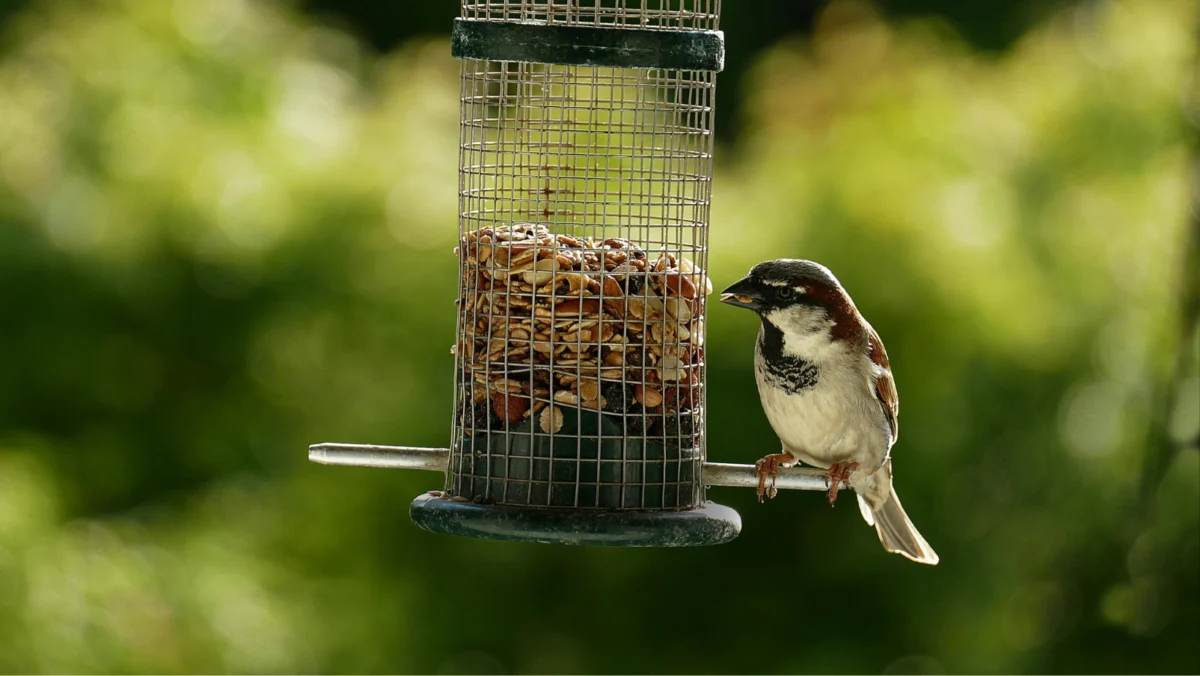
After a brief, weary negotiation—balancing her enthusiasm against my limited energy reserves—I relented. We installed feeders in both the front and back yards. I fully expected this to become yet another task on an already bloated to-do list, a chore requiring maintenance, cleanup, and constant monitoring. Instead, the feeders have evolved into something entirely different: a tether to the present moment.
Chronology of a Quiet Transformation
To understand how a simple backyard project became a cornerstone of mental health, it is necessary to examine the trajectory of our transition from a world of clinical chaos to one of deliberate stillness.
The Era of Intervention: For the first decade of my daughter’s life, our schedule was dictated by the medical industrial complex. We lived by the calendar of specialists, pharmacies, and therapy sessions. The "first steps" were not just a developmental milestone; they were a hard-won victory against a diagnosis that threatened to limit her mobility. During this phase, time was something to be conquered, managed, and optimized.
The Onset of Chronic Reality: As she entered her teenage years, the nature of our challenges changed. Chronic pain became a permanent resident in our household. It is a quiet, eroding force—one that doesn’t always have a "first step" to celebrate. The intensity of pain is rarely a singular event; it is a persistent, low-frequency hum that vibrates beneath the surface of every conversation, every meal, and every quiet evening.
The Bird-Feeder Pivot: The decision to invite nature into our perimeter was a subtle shift in philosophy. By choosing to observe the local ecosystem, we inadvertently created a boundary against the chaos of our health struggles. The feeders act as a focal point. They demand nothing of us but our attention.
Supporting Data: The Science of "Savoring"
While the experience of observing birds is deeply personal, it is supported by a growing body of psychological research regarding "savoring"—the process of attending to, appreciating, and enhancing the positive experiences in one’s life.
According to researchers at the University of California, Riverside, the ability to savor positive experiences is a significant predictor of psychological well-being. Unlike "hedonic consumption" (the pursuit of pleasure), savoring involves a deliberate cognitive process of prolonging the enjoyment of an event. For those living with chronic pain, this is not merely a "feel-good" exercise; it is a physiological intervention.
- Stress Reduction: Studies have shown that observing nature—a concept known as Biophilia—can lower cortisol levels and heart rate. When we watch the rhythmic movement of a bird, our nervous system begins to transition from the "fight-or-flight" sympathetic response to the "rest-and-digest" parasympathetic state.
- Cognitive Reframing: For individuals in pain, the brain is often hyper-fixated on discomfort (a phenomenon called "pain catastrophizing"). By shifting focus to the external environment, patients can create a momentary "cognitive break," effectively dampening the neurological signal of pain.
- Micro-Moments of Joy: Dr. Barbara Fredrickson’s "Broaden-and-Build" theory suggests that experiencing small, positive emotions can expand our capacity for resilience, allowing us to better handle the stressors of a chronic condition.
Official Perspectives: The Role of Mindfulness in Pain Management
Medical professionals are increasingly integrating mindfulness and intentional observation into standard care for chronic pain patients. Dr. Elena Rodriguez, a clinical psychologist specializing in chronic health, notes that the "tyranny of the to-do list" is often a source of secondary suffering for patients.
"When you are in pain, your world naturally shrinks," Dr. Rodriguez explains. "You focus on the pain, the medication, the appointments. The challenge is to expand that field of vision, even just by a few inches. Whether it’s a bird, a sunset, or a piece of music, the act of ‘noticing’ is a radical act of self-care. It doesn’t fix the underlying pathology, but it changes the patient’s relationship with their own existence."
The "savoring" approach is not about ignoring pain—a tactic that often backfires—but about acknowledging that the human experience is capable of holding both pain and beauty simultaneously.
Implications: A New Definition of "Firsts"
There is a distinct, bittersweet quality to the realization that life is no longer defined by the grand, developmental "firsts" of infancy. The implication of my daughter’s teenage years, combined with the reality of our health journeys, is that we have entered a season of "small moments."
The mockingbird that hops along the edge of the fence, the dove that settles into the grass with a gentle rustle—these are not "firsts." They are repetitions. They are mundane. Yet, in their fleeting existence, they hold the power to anchor me. When I stand at the window, watching, breathing, and noticing, the sharp, jagged edges of the day’s pain begin to soften.
The birds fly away, as they always do. Reality, with its appointments and its discomforts, inevitably draws me back inward. The pain does not vanish. However, the reprieve provided by these brief, intentional pauses creates a reservoir of resilience. I have learned that I do not need to look for the "big" moments to find meaning.
Savoring is not about holding onto a moment so tightly that you crush it; it is about acknowledging that the moment is happening now. It is the intentional choice to stop, to look, and to recognize that even in a life shaped by chronic struggle, there is still room for observation.
Conclusion: The Quiet Art of Being
As I reflect on that young mother in the hallway, watching her daughter take those first, shaky steps, I realize I was looking for a permanent state of joy. I thought "savoring" meant keeping that moment in a jar, preserved and unchanging. I know now that the joy of the first step was beautiful because it was fleeting.
Life, especially when marked by chronic pain, is a series of arrivals and departures. The birds at the feeder are a perfect metaphor for this existence. They arrive, they offer a brief song or a flicker of movement, and then they are gone. My daughter is growing, our health continues to fluctuate, and the seasons turn.
Maybe this is the true meaning of savoring: not the preservation of the past, but the active, courageous participation in the present. It is the ability to stand still in the middle of a difficult day and admit that, despite the pain, there is a bird in the yard. And for that second, that is enough.