







At the 2026 American Association for Cancer Research (AACR) Annual Meeting, the global scientific community turned its attention to a singular, transformative figure in immunology. The Cancer Research Institute (CRI) and the AACR jointly bestowed the prestigious AACR-CRI Lloyd J. Old Award in Cancer Immunology upon Kenneth M. Murphy, MD, PhD.
The award, which honors visionaries who have fundamentally altered our understanding of the immune system’s interaction with cancer, serves as a capstone to Dr. Murphy’s decades of rigorous inquiry. His work—particularly regarding the identity, development, and function of dendritic cells (DCs)—has provided the essential biological blueprint upon which many modern immunotherapies are now constructed.
The Architect of Immune Intelligence: Main Facts
Dr. Kenneth Murphy’s career is defined by his relentless pursuit of the "how" and "why" behind immune orchestration. For years, the scientific community recognized that the immune system possessed the capacity to destroy tumors, but the mechanisms by which that process was triggered remained elusive.
Dr. Murphy’s primary contribution lies in his characterization of dendritic cells. Often described as the "generals" of the immune system, DCs are responsible for identifying threats and priming T cells to launch a targeted attack. His seminal discovery regarding the cDC1 (conventional dendritic cell type 1) subset revealed that these specific cells are uniquely equipped to prime CD8+ T cells—the "killer" cells of the immune system. This revelation changed the trajectory of oncology, explaining why some patients respond to checkpoint inhibitors while others do not: the success of these therapies is inextricably linked to the presence and efficacy of functional cDC1 cells.
A Legacy of Discovery: The Chronology of Impact
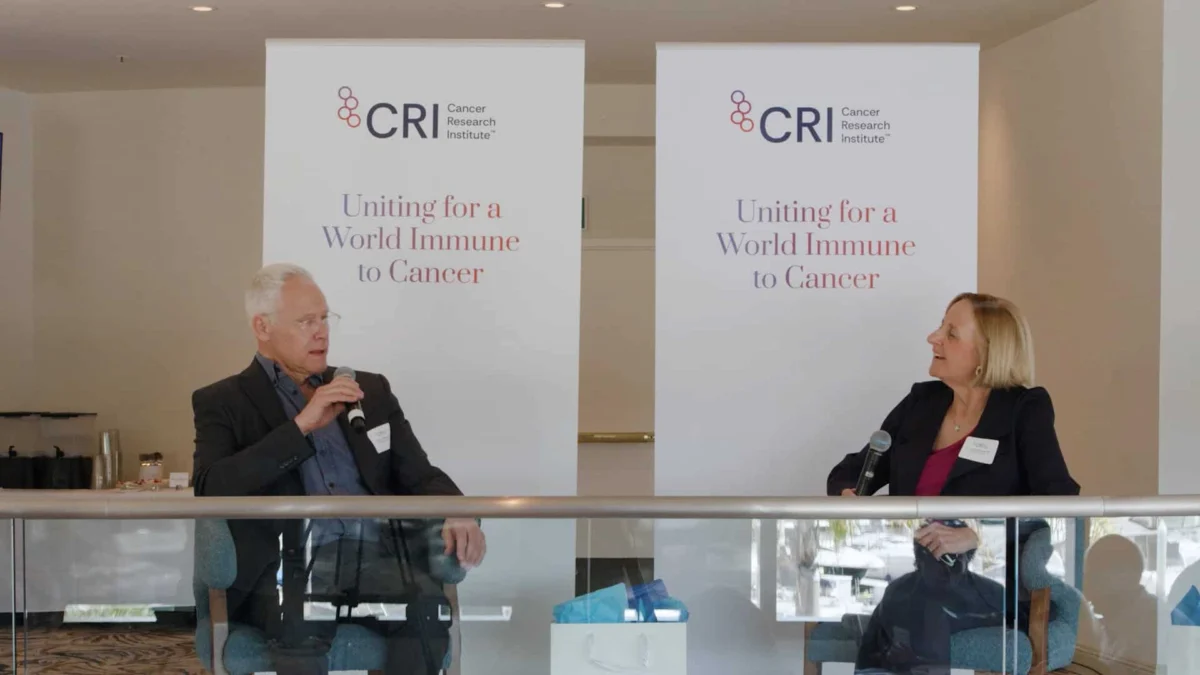
The narrative of Dr. Murphy’s research is one of nonlinear progress. During a fireside conversation at the 2026 AACR meeting, he shared the stage with 2025 award recipient Dr. Crystal Mackall, a pioneer in CAR T-cell therapy. The dialogue served as a candid retrospective on the evolution of immunology.
The Formative Years
Dr. Murphy’s journey began not with a grand master plan, but with a series of fundamental questions about immune cell differentiation. In the early stages of his career, the field was heavily focused on the final output of the immune response—the activated T cell. Murphy, however, looked upstream. He sought to understand how the immune system chooses between different types of responses, a process he has spent his entire career dissecting.
Mid-Career Breakthroughs
Throughout the 2000s and 2010s, the Murphy Lab moved from broad observations to granular genetic analysis. By utilizing sophisticated mouse models, his team identified the transcription factors and signaling pathways that govern DC development. This period solidified his reputation as a researcher who followed the biology rather than forcing a hypothesis to fit a current clinical trend.
The Current Landscape
Today, Murphy’s work is at the heart of the next generation of cancer vaccines. By demonstrating that mRNA and cDNA platforms rely heavily on the activation of specific DC subsets, his research has provided a roadmap for engineers working to improve vaccine potency.
Beyond the Bench: Supporting Data and Scientific Insights
The depth of Dr. Murphy’s impact is evidenced by the clinical realities of modern oncology. Current data indicates that while immune checkpoint blockade (ICB) has revolutionized treatment for cancers like melanoma and non-small cell lung cancer, resistance remains a significant hurdle.
The cDC1-T Cell Axis
Supporting data from Murphy’s lab demonstrates that the interaction between cDC1 cells and CD8+ T cells is a limiting factor in the tumor microenvironment. His research proves that:
- Antigen Presentation: Without the precise antigen presentation offered by cDC1s, T cells fail to achieve the level of activation necessary to penetrate dense tumor stroma.
- Sustainability: The transition of T cells from a "stem-like" state to a fully differentiated effector state is highly dependent on the initial signaling cues provided by dendritic cells.
- Therapeutic Efficacy: The efficacy of mRNA vaccines is directly correlated with the recruitment of DCs to the site of administration, reinforcing that these vaccines are, in essence, "DC-targeting" therapies.
Perspectives from the Field: Official Responses
The fireside chat between Dr. Murphy and Dr. Crystal Mackall offered a rare, unscripted look at the challenges facing modern science.
"We’re still asking the same question that we started off with," Dr. Murphy noted during the discussion. This sentiment—a humility toward the complexity of biology—was echoed by Dr. Mackall, who emphasized the importance of mentorship in an era where data volume can overwhelm young researchers.
Regarding the role of Artificial Intelligence (AI) in the laboratory, both laureates offered a tempered, professional assessment. While they acknowledged that AI is an indispensable tool for processing the massive datasets generated by single-cell sequencing and spatial transcriptomics, they warned against over-reliance.
"AI can manage the data," Dr. Murphy stated, "but it cannot identify the core question. The human element—the ability to interpret biological context and understand the nuance of a failing experiment—remains the true driver of innovation."
The Path Forward: Implications for Clinical Oncology
The implications of Dr. Murphy’s work are profound, signaling a shift in how we approach the "next wave" of cancer immunotherapy.
1. Precision Vaccine Development
The future of cancer vaccines will likely move away from "one-size-fits-all" antigens toward platforms specifically engineered to recruit and activate the patient’s own cDC1s. This shifts the focus from merely identifying tumor mutations to ensuring those mutations are "seen" by the most potent immune cells available.
2. Overcoming Resistance
By understanding the specific stages of T cell differentiation that are hindered in the tumor microenvironment, researchers can now design combination therapies. These might involve pairing checkpoint inhibitors with agents that specifically stimulate or stabilize the cDC1 population, thereby "priming" the tumor for destruction.
3. The Future of Basic Science
Perhaps the most critical takeaway from the 2026 AACR meeting is the reaffirmation of basic research. In a climate where funding is often tied to immediate, translational "wins," Dr. Murphy’s career serves as a powerful testament to the necessity of foundational science. His decades-long investigation into dendritic cells—a project that initially seemed removed from clinical practice—is now the very thing that makes the most advanced cancer vaccines possible.
4. Mentorship in the Data Age
The discussion between Drs. Murphy and Mackall highlighted a looming challenge: how to train the next generation of scientists. With the sheer volume of information available, the risk of "analysis paralysis" is high. The consensus from the dais was clear: the future of science lies in the ability to synthesize disparate findings into a coherent narrative. Mentorship must evolve to emphasize critical thinking and the ability to filter out noise, ensuring that the "right" questions continue to be asked.
Conclusion: Following the Biology
As the 2026 AACR Annual Meeting concluded, the overarching message remained clear. Breakthroughs in cancer immunotherapy are not the result of rigid, top-down planning; they are the fruit of a patient, iterative process of following the biology.
Dr. Kenneth M. Murphy’s receipt of the AACR-CRI Lloyd J. Old Award is not merely a celebration of past achievements. It is a recognition of a mindset—a commitment to understanding the fundamental mechanics of the immune system. As we look toward the next decade of cancer research, the path forward is illuminated by the same principle that guided Dr. Murphy: one question at a time, moving deeper into the complexities of the human immune system to unlock the next generation of cures.