











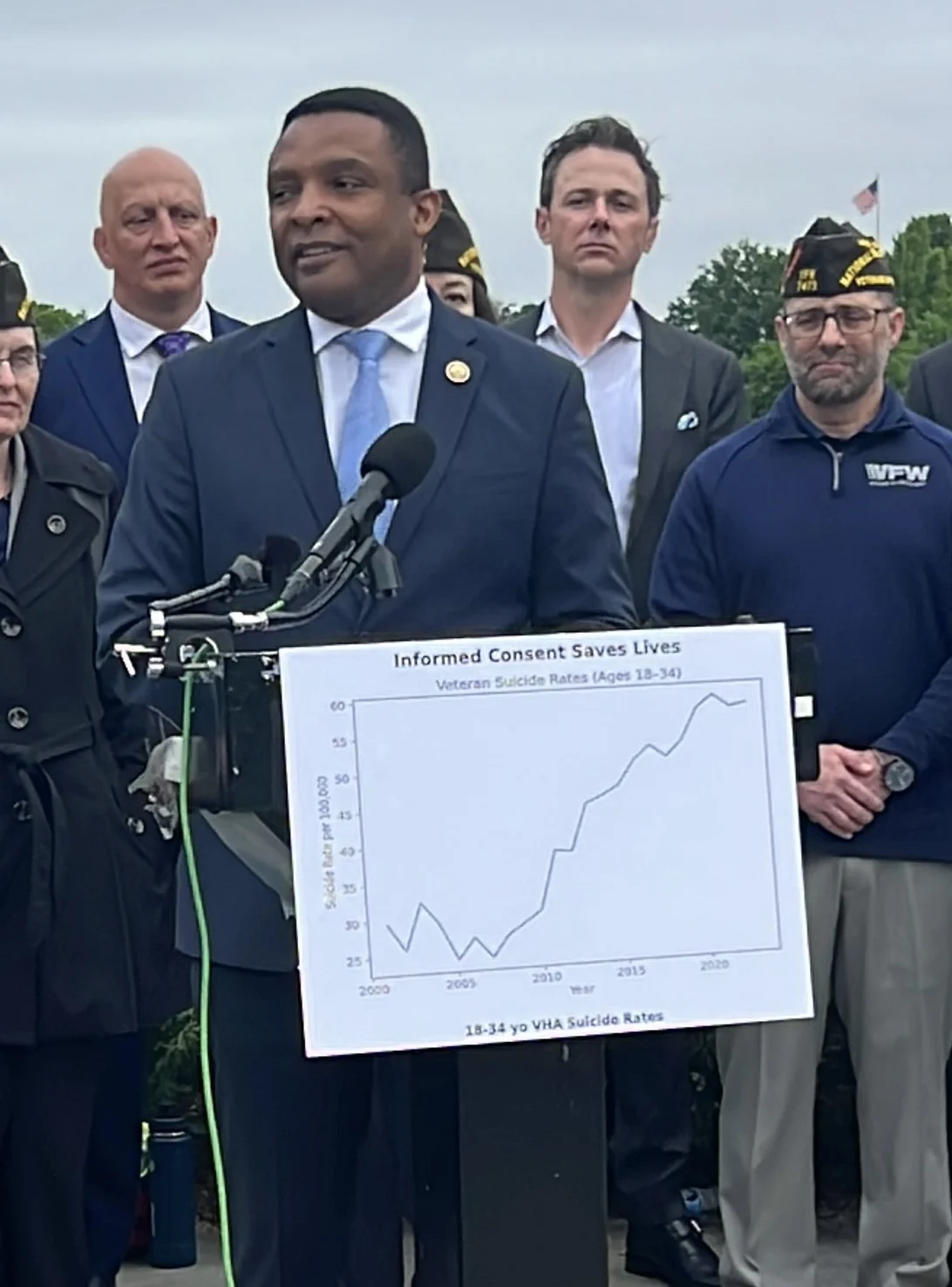
WASHINGTON, D.C. — On a somber, overcast morning on April 29, the landscape of veteran healthcare advocacy shifted as a massive coalition of 35 veterans’ service organizations (VSOs) converged on Capitol Hill. Their mission was singular and urgent: to demand that Congress pass the Written Informed Consent Act (H.R. 4837 / S. 3314).
The proposed legislation seeks to fundamentally overhaul how the Department of Veterans Affairs (VA) manages high-risk psychotropic medications. While the VA currently maintains a written informed consent protocol for long-term opioid prescriptions, this bill aims to expand those protections to include antipsychotics, stimulants, antidepressants, anxiolytics, and narcotics—drugs that veterans’ advocates argue are being overprescribed with devastating consequences.
The Main Facts: A Unified Front for Medical Transparency
The Written Informed Consent Act is not merely a request for more paperwork; it is a demand for a cultural shift within the VA’s clinical practice. Sponsored by a bipartisan trio—Representatives Gus Bilirakis (R-FL), Don Davis (D-NC), and Tom Barrett (R-MI)—the bill addresses what many in the community call the “polypharmacy nightmare.”
Currently, many veterans are prescribed powerful, mind-altering medications without a comprehensive written explanation of the potential side effects, including “Black Box” warnings, withdrawal risks, and long-term cognitive impacts. H.R. 4837 would mandate that VA clinicians provide clear, written documentation of these risks and obtain a veteran’s signature before treatment begins.

The press conference held on the Hill served as a showcase of "unified support," a rare occurrence in a polarized legislative environment. According to a press release from Rep. Bilirakis’ office, the bill is rapidly gaining co-sponsors as the veteran community mobilizes to ensure that "no veteran has to navigate their care in the dark."
Chronology: The Eight-Year Journey to the Hill
The momentum witnessed on April 29 did not materialize overnight. It is the culmination of nearly a decade of grassroots organizing, personal tragedy, and legislative persistence.
2018–2019: The Awakening
The movement traces its roots back to 2018, when Air Force veteran Derek Blumke emerged from a personal struggle with polypharmacy. Having been prescribed a rotating door of psychiatric drugs that left him in a "nightmare" state, Blumke began organizing. In 2019, he co-authored a landmark report with Robert Whitaker, titled “Screening + Drug Treatment = Increase in Veteran Suicides.” The report challenged the prevailing medical narrative, suggesting that the very treatments intended to help veterans were, in some cases, exacerbating the suicide epidemic.
2022: The PACT Act Victory
The coalition’s power was proven with the passage of the PACT Act in 2022. This legislation, which expanded healthcare for veterans exposed to toxic burn pits in Iraq and Afghanistan, was driven by many of the same organizations now backing the Written Informed Consent Act, including Burn Pits 360 and the Veterans of Foreign Wars (VFW). With the PACT Act victory secured, the coalition pivoted its focus toward the “invisible wounds” of war and the VA’s prescribing practices.

2024–2025: The War Cry for Change
By June 2024, the GruntStyle Foundation (GSF) launched the "War Cry for Change" campaign. This initiative was designed to bridge the gap between veteran families and lawmakers. In June 2025, a daylong summit on Capitol Hill brought together military families impacted by suicide, rallying support from administration officials. This led to a critical hearing by the U.S. Senate Committee on Veterans’ Affairs in December 2025, where medication management in VA healthcare was scrutinized under the national spotlight.
Supporting Data: The High Cost of the ‘Combat Cocktail’
The urgency of the legislation is underscored by a series of alarming statistics that paint a picture of a system in crisis. During the press conference, Derek Blumke, now a veteran impact fellow at GSF, stood before a graph showing a fever line trending sharply upward.
- Suicide Rates: There has been a 108% increase in suicide rates for veterans aged 18 to 34 over the last twenty years.
- Prescription Prevalence: Nearly 70% of veterans under VA care are prescribed at least one psychotropic medication. This is more than three and a half times the rate of the civilian population.
- The "Combat Cocktail": Polypharmacy—the practice of prescribing multiple drugs simultaneously—is so common that it has earned a colloquial nickname among veterans. It is not unusual for a single veteran to be prescribed a dozen or more medications for PTSD, depression, sleep, and pain, often without a clear understanding of how these chemicals interact.
- Fiscal Investment vs. Outcomes: Blumke noted that despite nearly $200 billion invested in veteran mental health and suicide prevention, the outcomes have not improved. "What our nation has been doing is not working," Blumke stated.
The data suggests that the VA’s current "medication-first" approach may be failing the youngest and most vulnerable generation of veterans, who are entering the system at higher rates than their predecessors.
Official Responses: Bipartisan Resolve and VSO Testimony
The presence of lawmakers from both sides of the aisle provided a sense of political weight to the event. The sponsors emphasized that this is a matter of basic human rights and medical ethics rather than a partisan squabble.

Congressman Gus Bilirakis (R-FL) framed the bill as a matter of respect. "This legislation is about something very simple but incredibly important: Respecting our veterans with full transparency when it comes to their medical care," he said. "They deserve accountability, clarity, and respect."
Congressman Don Davis (D-NC), an Air Force veteran, addressed the VSO representatives directly, acknowledging their role as the conscience of the nation. "A unified voice sends a clear message. The least we can do is ensure that when veterans come home, their care is grounded in transparency," Davis remarked.
Congressman Tom Barrett (R-MI), an Army veteran and former helicopter pilot, was blunt about the failure of previous efforts. "We can’t continue to do the exact same thing and expect different results and just run more TV commercials about veteran suicide awareness. People are aware of the problem… we need to confront the underlying risk factors."
The Human Toll
The most poignant moments of the day came from the VSO representatives who shared stories of those lost or nearly lost to the system.

- Megan Coleman (VFW): Shared the story of "Eric," a veteran who ended up on 30 separate medications. "He reached a breaking point… because he didn’t understand [his care]. He couldn’t tell what was happening from his conditions and what was coming from the medications." Eric eventually recovered after a drastic reduction in his prescription load, but Coleman noted that the "informed consent" conversations should have happened years earlier.
- Le Roy Torres (Burn Pits 360): Recounted his own struggle with an undiagnosed toxic brain injury that was mismanaged with multiple medications. He described a moment of near-fatal despair that was only interrupted by his service dog, Hope. "This bill can save thousands more through transparency and respect for the veterans’ right to know," Torres said.
- Candace Wheeler (TAPS): Reported that 29% of the survivors seeking care from her organization in 2025 were suicide loss survivors. She argued that informed consent empowers families to recognize red flags before it is too late.
Implications: A New Era for Veteran Healthcare?
If passed, the Written Informed Consent Act could serve as a blueprint for broader medical reform. However, the path forward is not without obstacles. Historically, the American Psychiatric Association (APA) and other medical bodies have resisted "written" mandates, citing administrative burdens or arguing that such requirements might discourage patients from seeking necessary treatment.
Advocates for H.R. 4837 counter that the "administrative burden" of a signature is negligible compared to the life-altering consequences of unmanaged polypharmacy. They emphasize that the bill does not restrict a doctor’s ability to prescribe; it simply ensures the patient is an active participant in the decision.
The implications of this bill extend beyond the VA. It challenges the "standard of care" that often prioritizes rapid symptom suppression through chemistry over holistic or therapeutic interventions. By mandating transparency regarding "Black Box" warnings—the FDA’s most serious medication alerts—the bill forces a dialogue about the potential for increased suicidal ideation, a known side effect of several antidepressants and antipsychotics in young adults.
As the press conference concluded, VSO representatives hand-delivered their joint letter to Congressional leadership. The message was clear: the veteran community is no longer willing to accept "awareness" in place of "accountability."

Reflecting on the eight-year journey, Derek Blumke expressed a mix of exhaustion and resolve. "I don’t think any of us imagined that we’d be working on this for so long," he told Mad in America. "Because we all agree that it’s common sense. It’s absurd that we’re having to fight for this. Our ‘dangerous’ ask is: ‘Make sure you tell us about the treatment you’re going to give us.’"
With 35 organizations standing behind that "dangerous ask," the Written Informed Consent Act now heads into a critical legislative window, carrying the hopes of thousands of families who believe that transparency is the first step toward healing.