





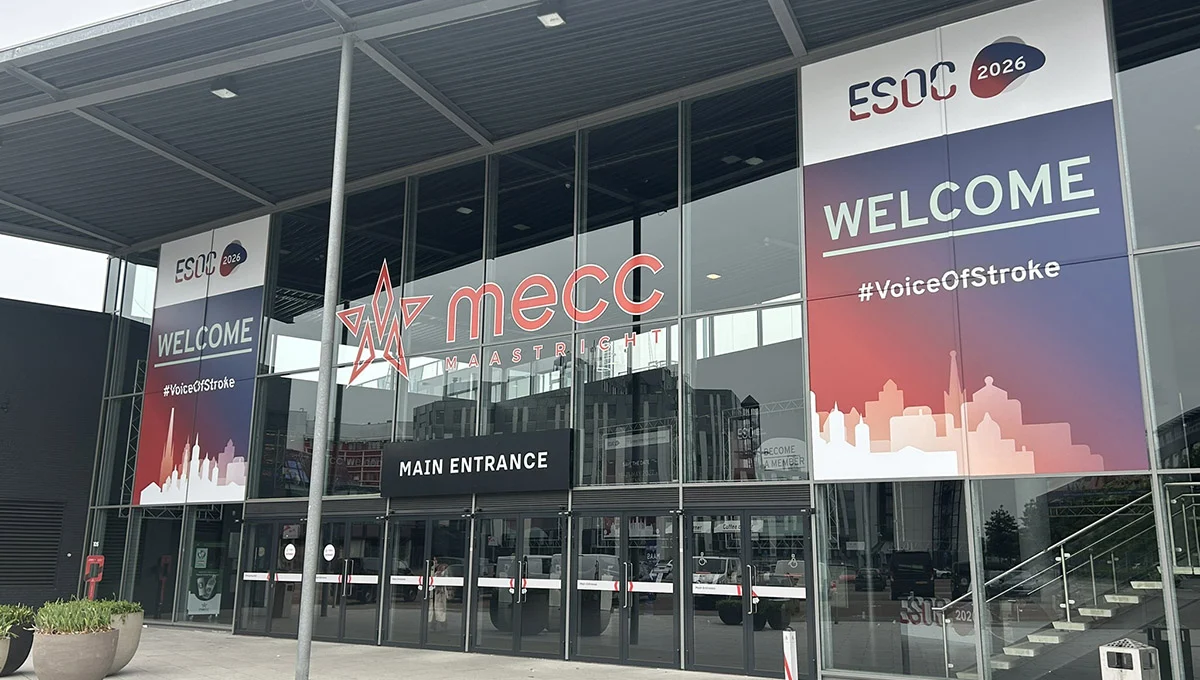
MAASTRICHT, the Netherlands — The quest for effective adjunctive therapies in acute ischemic stroke (AIS) has reached a critical, if somewhat ambiguous, juncture. At the 2026 European Stroke Organisation Conference (ESOC), the medical community was presented with two large-scale randomized controlled trials (RCTs) investigating the role of intra-arterial (IA) hypothermia during mechanical thrombectomy. The findings, however, have left experts divided: while the CHILL-ART trial suggests a clear path toward improved functional independence, the FOCUS trial reports neutral results, casting a shadow of uncertainty over the clinical utility of localized cooling.
The discrepancy between these two studies highlights the inherent complexity of neuroprotection research. As mechanical thrombectomy has become the gold standard for large vessel occlusion (LVO) stroke, roughly half of all patients still fail to achieve meaningful functional independence, leaving a desperate need for secondary treatments that can mitigate reperfusion injury and preserve the blood-brain barrier.
The Evolution of Hypothermia: From Systemic to Focal
For decades, the concept of therapeutic hypothermia—lowering the body’s temperature to reduce metabolic demand and slow ischemic cascade processes—has been a cornerstone of neuroprotective theory. However, systemic cooling has consistently failed to move the needle in clinical trials, often marred by significant systemic adverse events, including pneumonia, coagulopathy, and cardiac arrhythmias.
The emergence of IA hypothermia represents a pivot toward precision medicine. By delivering chilled saline directly into the ischemic territory, researchers hope to achieve neuroprotection while avoiding the systemic morbidity that historically plagued whole-body cooling protocols. The logic is compelling: by limiting the cold insult to the brain itself, physicians might protect the neurovascular unit, limit reperfusion injury, and maintain the integrity of the blood-brain barrier during the high-stress period of recanalization. Yet, as the latest data from ESOC 2026 suggests, the transition from theory to bedside application remains fraught with challenges.
Chronology of a Scientific Crossroads
The journey to these trials began with smaller pilot studies, most notably work led by Dr. Zhi-Xin Huang, which suggested that regional brain cooling could be achieved safely and might yield biological benefits. These initial signals provided the impetus for the two major Chinese trials presented this year.
CHILL-ART: A New Paradigm?
The CHILL-ART trial, presented by Dr. Zhi-Xin Huang of the Affiliated Guangdong Second Provincial General Hospital of Jinan University, was an open-label, phase III study involving 262 patients across 26 centers in China. The study design was rigorous, targeting patients presenting within 24 hours of stroke onset with a National Institutes of Health Stroke Scale (NIHSS) score of 6 or higher.
Patients were randomized to receive either a specialized IA hypothermia protocol or a sham procedure. The protocol was specific: 50 mL of saline cooled to 4°C was infused via microcatheter immediately prior to thrombectomy, with a subsequent 300 mL infusion following the procedure. The control group received an identical infusion of room-temperature saline, effectively masking the intervention during the procedure.
The primary endpoint—functional independence (mRS score 0-2 at 90 days)—was met by 54.7% of the cooling group, compared to 39.8% in the sham group. This translates to an adjusted relative risk (RR) of 1.36, a result Dr. Huang characterized as a “clinically meaningful adjunctive effect.” Furthermore, the cooling group showed a reduction in infarct volume by 8.77 mL, providing a mechanistic explanation for the improved clinical outcomes.
FOCUS: Testing the Boundaries
In contrast, the FOCUS trial, led by Dr. Shen Li of Beijing Shijitan Hospital, provided a more conservative outlook. Also conducted in China, this 12-center trial enrolled 258 patients with similar demographic characteristics and stroke severity profiles. However, the FOCUS protocol diverged in key technical areas: post-thrombectomy cooling was delivered in two 10-minute bursts with a 10-minute rest interval, and, crucially, cooling was withheld if the patient failed to achieve successful recanalization (mTICI > 2b).
The primary endpoint of FOCUS was the distribution of mRS scores at 90 days. The trial failed to show a significant difference between the intervention and control arms, with functional independence rates of 50.8% and 46.9%, respectively (P = 0.57).
Comparative Analysis: Why the Discrepancy?
The discordant results have triggered intense debate among neuro-interventionalists. Dr. Marieta Peycheva, a commentator not involved in either study, points to the “controversial” nature of these findings. She suggests that the differences in cooling protocols—specifically the timing and volume of the saline infusion—may be the primary culprits for the variance.
“We are dealing with a delicate balance of cooling the brain tissue without triggering systemic reactions,” Dr. Peycheva noted. “The CHILL-ART protocol’s continuous approach versus the FOCUS trial’s intermittent infusion strategy may have created different physiological environments within the penumbra.”
Furthermore, the control arms differed significantly. CHILL-ART utilized a sham infusion, ensuring that the act of flushing the artery was controlled for, whereas FOCUS compared cooling against standard medical management. This methodological difference might have masked or accentuated the benefits of the cooling intervention.
Safety and Practical Implications
One of the most encouraging takeaways from both trials is the safety profile. Unlike the systemic hypothermia of the past, IA cooling was not associated with the dreaded increase in pneumonia, nor did it result in systemic hypothermia or increased rates of deep vein thrombosis.
In the FOCUS trial, there was even a statistically significant reduction in intracranial hemorrhage (ICH) at 24 hours (26.9% in the cooling group vs. 45.3% in the control; P = 0.003), hinting that localized cooling may indeed stabilize the blood-brain barrier during the vulnerable window of reperfusion. This suggests that while the "functional independence" outcome was neutral, the biological signal for neuroprotection remains strong and warrants further investigation.
Looking Forward: The Future of Neuroprotection
The implications of these trials extend beyond the immediate question of whether to cool the brain during surgery. If proven effective, IA hypothermia would be an incredibly attractive global intervention. Unlike expensive neuroprotective drugs or complex mechanical devices, the "CHILL-ART" approach relies solely on refrigerated saline and standard thrombectomy hardware—making it a cost-effective, scalable solution for hospitals worldwide.
However, the medical community remains cautious. The consensus at ESOC 2026 was that these results are not yet ready to change clinical practice. The field now looks toward:
- Standardization of Protocols: A global effort is required to define the ideal "cooling dose," duration, and timing of infusion.
- Diverse Population Studies: As both trials were conducted in China, experts are calling for large-scale, international trials to confirm that these results hold across different genetic and ethnic backgrounds.
- Advanced Delivery Methods: Dr. Shen Li and her team are already looking ahead, exploring extracorporeal cooling and oxygenation of blood before reinfusion—a more sophisticated, potentially more effective, iteration of the focal cooling concept.
Conclusion
The jury remains out, but the conversation has undoubtedly shifted. We have moved from the era of "systemic cooling" (which was largely abandoned) to a more sophisticated era of "targeted, regional neuroprotection." The CHILL-ART trial has provided a glimmer of hope, while FOCUS has provided a necessary reality check.
For the stroke patient, the ultimate goal remains the same: maximizing the number of survivors who can return to their daily lives without disability. Whether intra-arterial hypothermia will be the tool that bridges that gap remains to be seen, but as Dr. Li noted, these findings have undoubtedly "paved the way for future studies with larger sample sizes and more refined patient selection." Until then, the focus must remain on perfecting the procedure and ensuring that any intervention is proven superior to our current, albeit limited, standard of care.