From the algorithmic depths of TikTok to the bestseller lists of health-conscious bookstores, "seed oils" have become the latest boogeyman of the nutrition world. Often labeled as "toxic sludge," "motor oil," or "the hateful eight," these industrial vegetable oils are being blamed for everything from the rise in chronic disease to systemic inflammation. But is the panic justified by the science, or are we witnessing the latest iteration of nutritional fear-mongering?
To understand the truth, one must look beyond the viral memes and examine the biochemistry of processing, the nuances of fatty acid profiles, and the broader context of modern dietary patterns.
The Core Arguments: Why the Hate?
The anti-seed oil movement—frequently championed by proponents of the "carnivore diet" and ancestral eating patterns—relies on a narrative of biological mismatch. The logic is as follows:
- The Evolutionary Mismatch: Animal fats have been a cornerstone of the human diet for millennia. In contrast, industrial seed oils (like soybean, corn, and cottonseed oil) were introduced on a mass scale only in the last century.
- The Industrial Processing Argument: Critics argue that these oils are manufactured using high-heat, chemical-heavy processes that result in a product that is not only unnatural but fundamentally inflammatory.
- The "Toxic" Comparison: Often compared to margarine—the failed "health food" of the late 20th century—these oils are accused of being hidden culprits behind the modern epidemic of obesity, depression, and metabolic syndrome.
Conversely, mainstream nutrition science often paints a different picture, suggesting that when consumed in moderation, these oils are not only harmless but can be a source of essential fatty acids. To sort the science from the pseudoscience, we must first define exactly what we are discussing.
A Brief Chronology of the Oil Industry
The history of cooking fats is a story of industrial innovation. Historically, humans relied on animal fats (lard, tallow, butter) and fruit-derived oils (olive, coconut). The 20th century changed this landscape dramatically.
- The Early 1900s: The rise of chemical engineering allowed for the extraction of oils from seeds that were previously considered waste products of the agricultural industry, such as cottonseed and soy.
- The Mid-20th Century: Seed oils were aggressively marketed as "heart-healthy" alternatives to saturated animal fats. This era saw the birth of margarine and a national push to replace butter with vegetable-based fats.
- The 2018 Pivot: The Food and Drug Administration (FDA) officially moved to ban partially hydrogenated oils (the primary source of artificial trans fats) from the food supply, acknowledging that the very processing methods used to create these stable, shelf-ready fats had created a significant public health hazard.
This pivot created a vacuum of trust. Consumers realized they had been sold a health claim that was, in fact, scientifically flawed. This realization is the catalyst for the current "seed oil" backlash.
How Oils Are Processed: The Mechanical vs. The Chemical
Not all oils are created equal. The distinction between "fruit oils" and "seed oils" is fundamental to their nutritional profile.

Fruit Oils (The Mechanical Extraction)
Oils like olive, avocado, and coconut come from the fleshy part of a fruit. Because the fruit is naturally fatty, these oils can be extracted through mechanical pressing—a cold-press process that preserves the polyphenols, antioxidants, and nutrients inherent to the plant.
Seed Oils (The Industrial Extraction)
Seeds contain very little oil by volume. To extract it, manufacturers must employ a rigorous multi-step process:
- Cleaning and De-hulling: Removing the outer seed coat.
- Mechanical Crushing/Expelling: A first pass to extract some oil.
- Chemical Solvent Extraction: Using solvents like hexane to "wash" the remaining oil out of the meal.
- Degumming and Refining: Removing impurities.
- Bleaching and Deodorizing: Using steam and chemical filters to create a neutral-colored, odorless product.
During these high-heat stages, some unsaturated fats can oxidize, and a small percentage can even convert into trans fats. While the FDA ban on trans fats has cleaned up the supply chain significantly, the refining process undeniably strips away the "protective" phytochemicals found in raw, unprocessed plant foods.
Supporting Data: The Omega-6/Omega-3 Conundrum
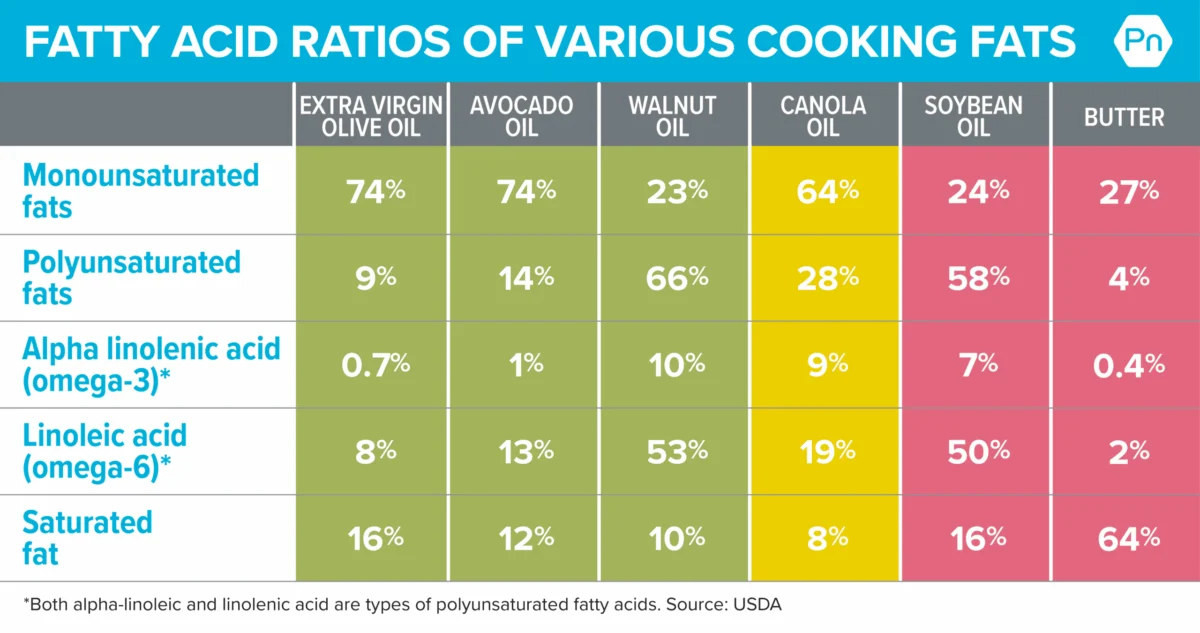
A major point of contention is the high omega-6 content in refined vegetable oils. The typical Western diet provides an omega-6 to omega-3 ratio of nearly 20:1.
Critics argue that this imbalance is the driver of chronic inflammation. However, the scientific consensus is more nuanced. While excessive omega-6 intake is not ideal, omega-6 fats are technically essential fatty acids. Harvard Health and the American Heart Association have both published reviews noting that when consumed as part of whole foods (like nuts and seeds), omega-6 fats are actually associated with lower risks of heart disease.
The danger, therefore, may not be the omega-6 fats themselves, but the context in which they are consumed. A handful of walnuts provides omega-6s, but it also provides fiber, protein, and minerals. A gallon of refined soybean oil in a deep fryer provides only the fat, stripped of its protective matrix.
Official Responses and Nutritional Guidelines
Public health organizations, including the American Heart Association (AHA), continue to maintain that replacing saturated fats (butter, lard) with polyunsaturated fats (like those found in seed oils) lowers LDL cholesterol and reduces cardiovascular risk.

However, there is a growing consensus that the quality of the fat matters more than the specific label. The "Eat Less" category in most dietary guidelines is increasingly focused on ultra-processed foods rather than specific oils. When you consume a deep-fried snack, you are getting oxidized fats, high sodium, and refined carbohydrates. Pinpointing the seed oil as the sole villain ignores the "package" of the food.
Implications for Your Kitchen
If you are looking to optimize your diet, the following hierarchy of fats is widely supported by nutritional researchers:
1. The Gold Standard: Extra Virgin Olive Oil (EVOO)
EVOO remains the clear winner in every nutritional study. It is rich in monounsaturated fats (MUFAs) and polyphenols. Furthermore, contrary to older myths, EVOO is surprisingly stable when heated, making it excellent for both dressing and sautéing.
2. The Budget-Friendly Alternative: Expeller-Pressed Oils
If you need a neutral-flavored, affordable oil for baking or high-heat cooking, opt for "expeller-pressed" canola or high-oleic sunflower oil. These avoid the harsh chemical solvent extraction process, preserving more of the oil’s integrity.
3. The "Limit" Category: Refined Oils and Butter
Both highly refined vegetable oils and butter should be used in moderation. Butter is not "toxic," but it is high in saturated fat; refined seed oils are not "toxic," but they are often the markers of ultra-processed, nutrient-poor foods.
Final Advice: Look at the Big Picture
The most significant takeaway from the current debate is the "food matrix" theory. Your health is not dictated by a single ingredient in your frying pan, but by the overall quality of your diet.
- Prioritize Whole Foods: Get your fats from the source—olives, avocados, nuts, seeds, and fatty fish—rather than relying solely on extracted oils.
- Limit Ultra-Processed Foods: The vast majority of problematic seed oils in the American diet come from processed snacks, fast food, and packaged goods. By eliminating these, you will automatically slash your consumption of highly refined oils.
- Don’t Fear the Fat, Fear the Process: A home-cooked meal using a moderate amount of canola or corn oil is vastly superior to a diet reliant on processed, store-bought, shelf-stable foods.
In conclusion, while the "seed oil is toxic" narrative serves as an effective, high-engagement social media hook, it is a gross oversimplification. Nutrition is a science of context. By focusing on whole, minimally processed ingredients, you bypass the entire debate, ensuring your diet remains both health-promoting and sustainable.