











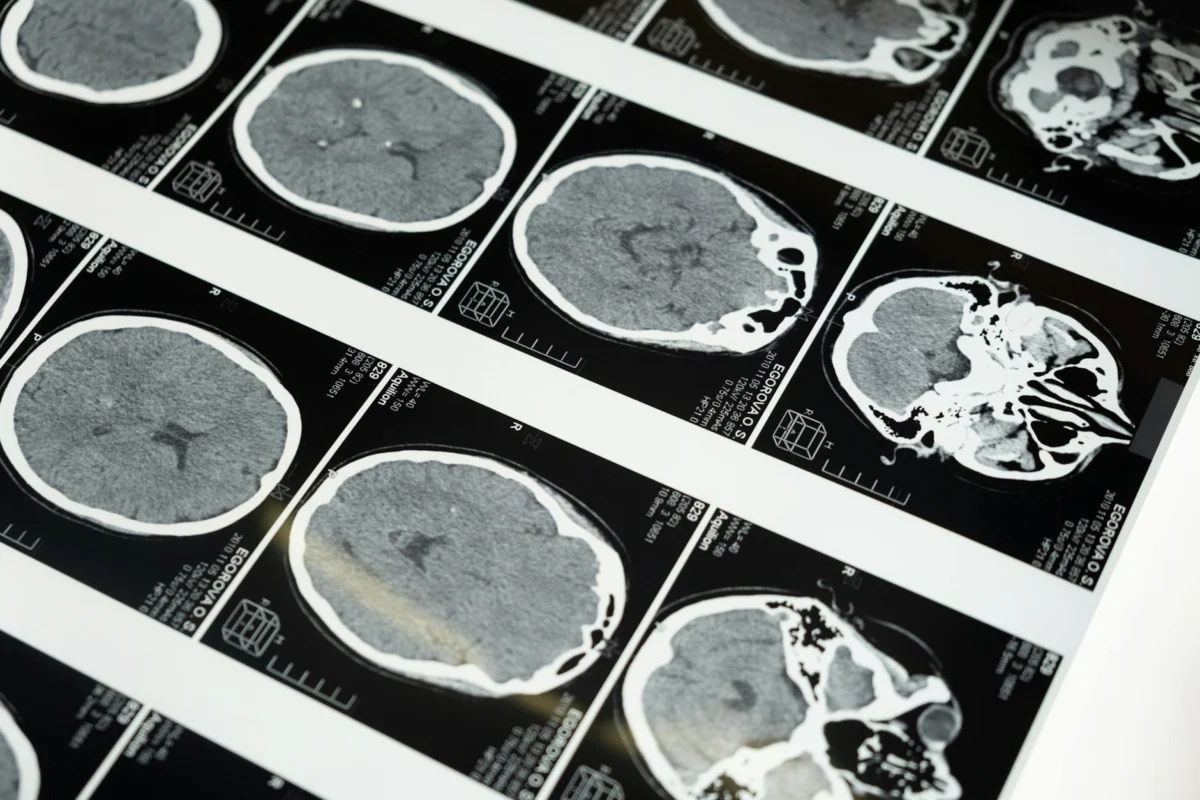
For decades, patients living with hypermobile Ehlers-Danlos syndrome (hEDS) have navigated a frustrating medical landscape. They report debilitating symptoms—chronic headaches, severe dizziness, vertigo, brain fog, visual disturbances, and neck pain—only to be told by clinicians that their imaging appears "normal." Too often, these patients are left feeling that their medical team views their suffering as psychosomatic.
However, the medical consensus surrounding the head and upper cervical spine is finally undergoing a long-overdue shift. Recent breakthroughs in 2025 have provided, for the first time, a rigorous framework for identifying structural abnormalities in the craniocervical junction. By moving away from subjective, anecdotal observations toward standardized, peer-reviewed measurements, these two pivotal studies are bridging the gap between patient experience and objective diagnostic medicine.
Main Facts: Standardizing the "Normal"
The core of the diagnostic crisis for hEDS patients has been the absence of a standardized definition of "normal." Without a universal reference point, doctors have relied on internal, often varying metrics, leaving patients trapped in a diagnostic limbo. If a patient’s anatomy fell just outside a doctor’s personal "normal" range, they might be dismissed; if it fell within, they might be ignored despite severe clinical symptoms.
Two seminal papers published in 2025 have begun to rectify this. The first study, titled Radiographic Indicators of Craniocervical Instability: Analyzing Variance of Normative Supine and Upright Imaging in a Healthy Population, sought to define the baseline for seven critical measurements in the neck. By analyzing 72 healthy individuals, researchers established that not only do specific anatomical measurements matter, but the position of the patient during imaging—whether supine, neutral, flexed, or extended—is fundamentally transformative to the data.
Chronology of the Diagnostic Shift
- Historical Context: For years, the diagnosis of Craniocervical Instability (CCI) and related conditions was hindered by a lack of standardized, peer-reviewed "normal" ranges. Clinical interpretation was largely subjective, leading to inconsistent outcomes for hEDS patients.
- January 2025: The publication of Radiographic Indicators of Craniocervical Instability introduces the first multi-positional normative data set, allowing for a more consistent cross-center comparison of cervical spine imaging.
- Late 2025: The publication of Head Posture and Upper Spine Morphological Deviations in People With Hypermobile Ehlers–Danlos Syndrome shifts the focus from "posture" to "structural deviation," finding that hEDS patients exhibit a significantly higher rate of congenital anomalies in the C1 and C2 vertebrae compared to the general population.
- Present Day: These findings provide a new foundation for clinicians to evaluate symptoms that were previously labeled as "functional" or "psychogenic," shifting the focus toward objective structural anatomy.
Supporting Data: The Complexity of the Cervical Junction
The first study highlighted that the measurement of the Clivo-axial angle (CXA)—the angle where the base of the skull meets the top of the spine—is the most reliable metric across different imaging types. Previous experts often cited a generic range of 145°–160° as "normal." The 2025 research provides a more nuanced table of expected ranges, emphasizing that a value considered "normal" on a CT scan might be highly abnormal when captured during a flexion or extension X-ray.
Key Measurements and Their Clinical Significance
| Abbreviation | Measurement Name | Function |
|---|---|---|
| CXA | Clivo-axial angle | Determines skull-spine alignment. |
| BDI | Basion-dens interval | Measures space between skull base and C2. |
| BAI | Basion-axis interval | Measures front-to-back skull alignment. |
| ADI | Atlanto-dental interval | Measures space between C1 and C2. |
| pbC2 | Perpendicular basion to C2 | Measures skull base proximity to the spinal canal. |
| HPC1/HPC2 | Hard palate to C1/C2 | Measures relationship of the face/nasal cavity to the spine. |
The study’s findings suggest that clinical interpretation must be context-aware. Relying on a single, static image (like a standard supine CT) is insufficient for patients with suspected instability, as the mechanical stress of movement (flexion/extension) can reveal deviations that are otherwise "hidden."
The Structural vs. Postural Debate
The second major 2025 study, Head Posture and Upper Spine Morphological Deviations in People With Hypermobile Ehlers–Danlos Syndrome, challenged the assumption that hEDS patients suffer from symptoms due to "bad posture."
Researchers compared 27 individuals with hEDS against 39 without, utilizing lateral cephalograms and cone-based computed tomography (CBCT). The results were striking:
- Posture is not the culprit: There was no significant difference in head or neck posture between the hEDS and control groups.
- Structural deviations are the key: While postural angles were similar, the structural anatomy was not. More than 51.9% of the hEDS cohort exhibited structural anomalies in the upper cervical spine, compared to only 15% of the non-hEDS control group.
- Posterior Arch Deficiencies (PAD): The study noted a higher prevalence of PAD—specifically, gaps in the C1 (atlas) arch—among the hEDS group. These "hidden" developmental anomalies, sometimes categorized as spina bifida occulta, appear to be a hallmark of the hEDS anatomy rather than a mere coincidence.
Implications for Clinical Care
The implications of these two studies are profound for both the medical community and the patient population.
For the Physician
The transition from subjective observation to evidence-based measurement is critical. Doctors can now utilize the standardized reference ranges established in the 2025 studies to justify further investigation. When a patient presents with "invisible" symptoms—dizziness, visual disturbance, and chronic head pressure—clinicians are now encouraged to look beyond the "all-clear" of a standard supine MRI or CT and consider the dynamic, positional nature of the cervical spine.
For the Patient
For patients, this research acts as a form of validation. It acknowledges that while the symptoms are indeed "in the head and neck," they are not a result of psychological distress. Instead, they are the result of physical, measurable structural differences. The presence of developmental gaps (like PAD) suggests that for many in the hEDS community, the structural foundation of the skull-spine junction is inherently different from birth.
Future Directions
While these studies provide a much-needed baseline, they are not a "finish line." The researchers acknowledge that these findings are based on relatively small sample sizes and that further large-scale, longitudinal research is required. Moreover, the current data highlights a significant gap in medical research: the inclusion of diverse populations, including transgender and non-binary individuals, remains a critical necessity to ensure these diagnostic metrics are universally applicable.
Conclusion
The path toward a definitive diagnosis for hEDS patients has been fraught with systemic disbelief and diagnostic error. By establishing that "normal" is a dynamic value that changes with movement, and by identifying that structural anomalies are significantly more common in those with hEDS, these new studies provide the first concrete steps toward a more compassionate and accurate standard of care.
For the patient who has spent years being told that their pain is "all in their head," the scientific reality is finally catching up to their lived experience: the problem is indeed in the head and the upper spine—and it is finally being seen for what it is.