

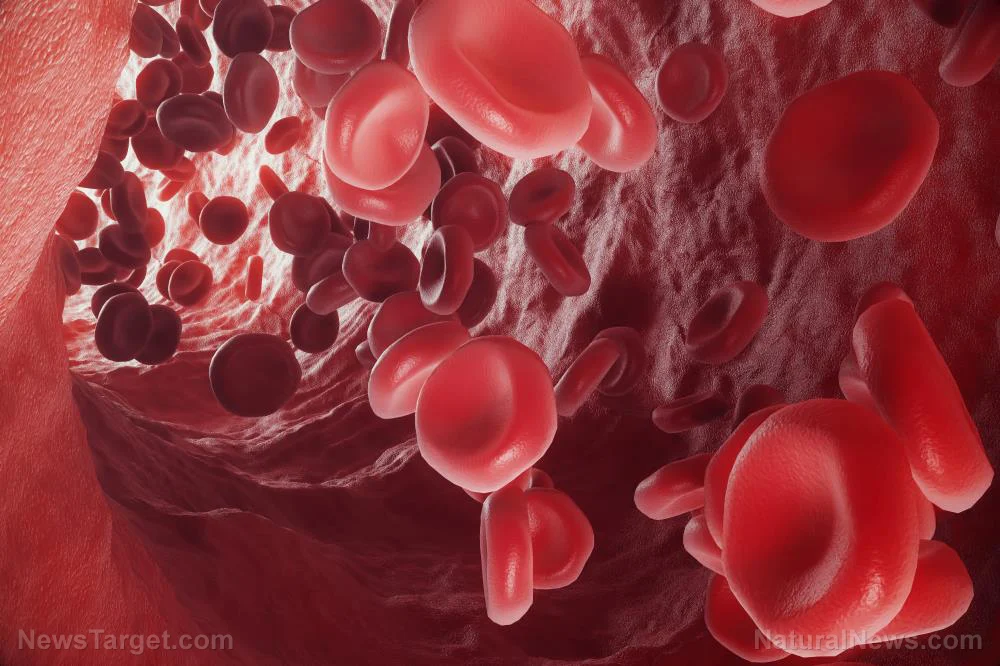
In the conventional medical narrative, the platelet is a humble, one-dimensional worker. It is the body’s emergency responder, tasked solely with plugging leaks in the vascular system—a cellular "bandage" that prevents hemorrhage. However, a revolutionary perspective is emerging, one that reframes these tiny cellular fragments not merely as clotting agents, but as the sophisticated, intelligent master conductors of the body’s entire healing architecture.
This paradigm-shifting exploration is the focus of "Beyond The Diagnosis," a groundbreaking documentary series spearheaded by filmmaker Jonathan Otto and hosted on Brighteon University. As the series reaches its conclusion, it brings to light a body of research that challenges the foundational understanding of chronic disease, suggesting that the medical establishment may have overlooked, or actively suppressed, the true functional potential of the human platelet for over a century.
Main Facts: The Intelligence of Cellular Fragments
The central premise presented by researcher Tapley Holland, featured in the 12th episode of the series, is that platelets are the primary messengers of the body’s internal surveillance system. Far from being passive debris floating in the plasma, platelets are dynamic, information-rich vessels.
According to Holland, platelets are the primary carriers of Brain-Derived Neurotrophic Factor (BDNF), a protein essential for nerve survival, growth, and synaptic plasticity. While the brain is often seen as the source of neurological health, it is the platelets that facilitate the delivery of the building blocks required for nerve regeneration. Furthermore, platelets are loaded with Vascular Endothelial Growth Factor (VEGF), which orchestrates the development of new blood vessels, ensuring that injured or starving tissues receive the oxygen and nutrients necessary for recovery.
The most striking claim is that the bone marrow does not produce a generic, "one-size-fits-all" platelet. Instead, when the body sustains a specific injury or faces an immune threat, the marrow manufactures platelets customized with the precise proteins and growth factors required to address that particular damage. This suggests a level of biological intelligence that operates continuously, yet silently, beneath the threshold of our conscious awareness.
Chronology of Discovery and Neglect
The timeline of this medical insight is perhaps the most provocative aspect of the research. During his presentation, Tapley Holland challenges medical professionals with a historical artifact: a scientific paper on platelet function. He asks them to guess the date of publication, with most modern practitioners assuming the research is contemporary.
When Holland reveals the date—1915—the audience is consistently stunned. This discrepancy between the historical awareness of platelet capabilities and modern clinical practice raises a haunting question: Has the medical establishment ignored this information, or has it been systematically sidelined in favor of pharmaceutical-centric models?
A Century of Overshadowing
- 1915: Early researchers identify sophisticated functions of platelets that extend beyond simple coagulation.
- Mid-20th Century: The medical field pivots toward a focus on pharmacology and surgical intervention, largely relegating platelets to the domain of hematology and clotting disorders.
- The Modern Era: With the rise of regenerative medicine, the "hidden" functions of platelets—immune surveillance and neuro-repair—are being rediscovered, often outside the walls of mainstream institutional medicine.
- May 2024: "Beyond The Diagnosis" brings this information to a global audience, contextualizing these century-old findings within the framework of modern chronic illness recovery.
Supporting Data: From Clinical Theory to Tangible Results
The documentary moves beyond abstract biology, presenting clinical case studies that appear to defy the limitations of conventional medicine. The series highlights patients previously diagnosed with "irreversible" conditions—including cerebral palsy, Parkinson’s disease, autism, and stroke-related neurological decay—who have seen measurable, life-altering improvements following platelet-based therapies.
One poignant example recounted by Holland involves a 52-year-old man suffering from the lasting effects of cerebral palsy. Despite being a store manager, he lived with significant limitations: he could not read left-to-right, he could not type, and he was terrified of public speaking. His condition was viewed by conventional standards as a permanent neurological deficit.
Following treatment focusing on the restoration of platelet function, the man’s recovery was both rapid and profound. Within a single day, his visual tracking improved, allowing him to read fluidly. Within three months, he had successfully delivered a presentation to his staff, reading directly from a PowerPoint display—a task that had been physically and neurologically impossible for him just months prior. This is not characterized by the series as a "miracle," but as the result of providing the body with the right biological signals to initiate its own inherent repair mechanisms.
Implications for Chronic Disease
The overarching narrative of "Beyond The Diagnosis" is that chronic disease—ranging from autoimmune collapse to metabolic dysfunction—is not a "mystery" or a stroke of bad luck. Instead, it is the result of a breakdown in the body’s communication network.
Key Implications:
- Terrain over Symptoms: The medical model often focuses on "chasing symptoms." The platelet-centric approach focuses on "strengthening the terrain," ensuring that the body has the energetic and signaling capacity to self-repair.
- Immune Surveillance: Platelets act as the bridge between tissue damage and immune activation. Without optimal platelet function, the body cannot effectively distinguish between areas that need inflammation to heal and chronic, unchecked inflammation that causes disease.
- Mitochondrial Resilience: The series posits that the common denominator in all chronic illness is a lack of cellular energy. Platelets serve as the conduits for the signals that govern mitochondrial health and resilience.
By viewing the body as a self-correcting organism, the researchers argue that we shift the paradigm from "managing decline"—which requires lifelong medication—to "cultivating resilience," which aims to restore the body’s native ability to heal itself.
Official Responses and the Future of Medicine
While the medical establishment has yet to fully integrate these findings into standard protocols, the discourse surrounding regenerative medicine is shifting. Practitioners involved in the "Beyond The Diagnosis" series suggest that the current resistance to these concepts is a symptom of a systemic preference for symptomatic management over biological restoration.
However, the proliferation of data regarding platelet-rich plasma (PRP) therapies and similar regenerative interventions in sports medicine and orthopedics has begun to force a conversation within the broader medical community. As more patients experience outcomes that were once deemed impossible, the pressure on institutions to acknowledge the "intelligence" of the cellular fragments they once dismissed as mere "clots" will only continue to mount.
Conclusion: Reclaiming Biological Agency
"Beyond The Diagnosis" serves as a call to action for patients and practitioners alike. It urges a departure from the belief that our bodies are fragile, decaying machines that require constant pharmaceutical intervention to function. Instead, it advocates for a deep respect for the body’s internal intelligence.
As Jonathan Otto emphasizes throughout the series, the goal is to empower the individual to understand their own biology. By recognizing the platelet as a master conductor of repair, individuals can begin to ask better questions of their healthcare providers and seek treatments that focus on restoration rather than suppression.
For those interested in exploring these findings, the series is available through Brighteon University. The premium packages provide an extensive deep dive into the research, including expert interviews, health assessments, and specialized guidance on resetting the nervous system.
In a medical landscape often dominated by fear and the inevitability of aging, the research presented by Tapley Holland and his colleagues offers a different, more optimistic trajectory: one where the body, when properly supported, is capable of extraordinary feats of repair, provided we give it the tools—and the signals—it needs to do the job.