










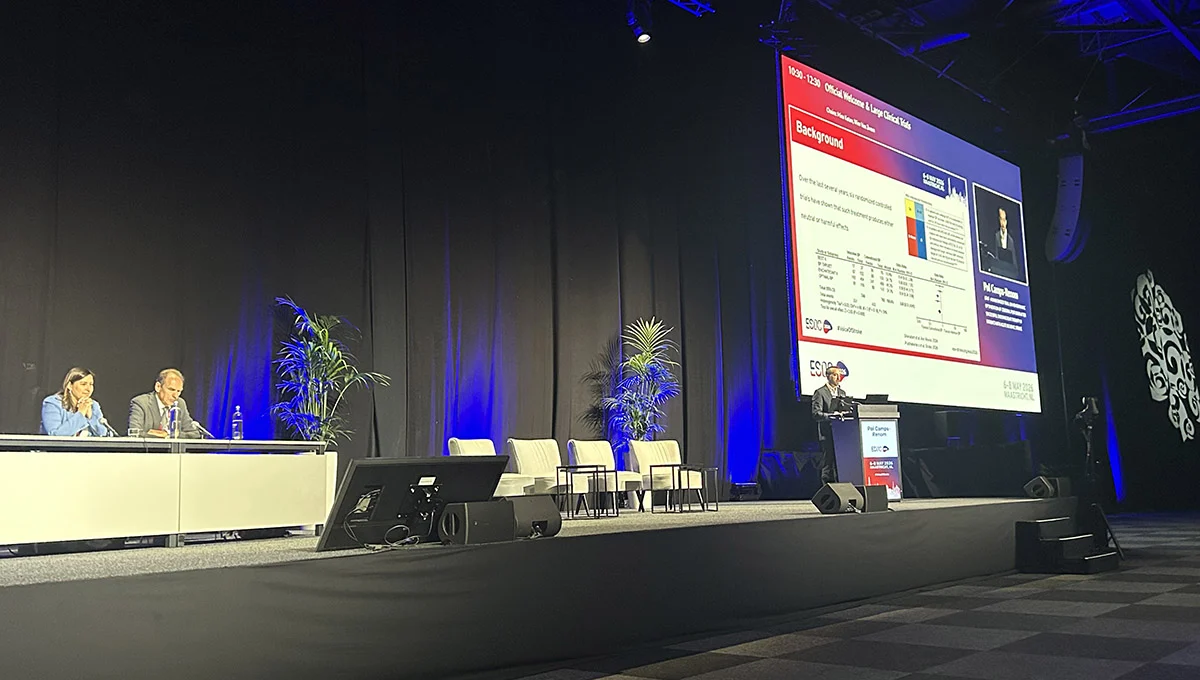
MAASTRICHT, the Netherlands — For years, the stroke community has operated under a standardized paradigm for managing blood pressure (BP) following endovascular thrombectomy (EVT). However, recent findings from the HOPE trial, presented at the 2026 European Stroke Organisation Conference, suggest that the prevailing "one-size-fits-all" approach may be hindering patient recovery. While the study indicates that tailoring BP targets based on the quality of vessel recanalization could improve functional independence, experts remain cautious, labeling the findings as hypothesis-generating rather than a definitive call for a change in clinical practice.
The Core Findings: A Shift Toward Precision Medicine
The randomized HOPE trial challenged the long-standing guideline-recommended approach, which generally mandates keeping systolic blood pressure (SBP) below 180 mm Hg after a successful thrombectomy. Researchers, led by Dr. Pol Camps-Renom of the Hospital de la Santa Creu i Sant Pau in Barcelona, hypothesized that the degree of reperfusion achieved—measured by the modified Treatment in Cerebral Infarction (mTICI) score—should dictate the intensity of blood pressure management.
The results were striking. Patients who received individualized, reperfusion-guided BP management experienced a 13.3% higher absolute rate of functional independence at 90 days compared to those managed under the standard guideline approach. Furthermore, this personalized strategy appeared to lower the risk of hemorrhagic transformation, a common and dangerous complication in the immediate aftermath of stroke intervention.
"I would suggest that the optimal BP management requires a more individualized approach than we have thought," Dr. Camps-Renom stated during his presentation. He noted that while these results align with observational data, they stand in stark contrast to previous large-scale clinical trials that often showed no benefit—or even harm—associated with intensive blood pressure lowering.
Chronology of the Clinical Debate
The history of post-thrombectomy BP management is marked by a series of trials that have left clinicians in a state of professional hesitation.
The Legacy of Neutrality
Over the last decade, high blood pressure following thrombectomy has been consistently linked to poor outcomes in observational studies. This naturally led to the hypothesis that aggressively lowering blood pressure would protect the brain from injury. However, this theory failed to translate into clinical success in major trials:
- BEST-II: Investigated intensive BP lowering but failed to demonstrate a clinical advantage.
- BP-TARGET: Examined specific SBP targets, yielding neutral results.
- ENCHANTED2/MT: A pivotal study that raised alarms by suggesting that overly aggressive BP lowering might actually be harmful to patients.
- OPTIMAL-BP: Further reinforced the complexity of the issue, showing that "too much" lowering could increase the risk of neurological decline.
These trials collectively influenced professional societies, such as the American Heart Association/American Stroke Association, to advise against overly aggressive BP management, creating the current, conservative "less-is-more" landscape. The HOPE trial enters this space as a potential "outlier," attempting to reconcile why previous efforts failed by focusing on the specific physiological state of the patient immediately after surgery.
Methodology: What Made HOPE Different?
The HOPE trial, conducted across 11 stroke centers in Spain, enrolled 440 patients with a mean age of 75. The trial’s design was uniquely structured to address the pitfalls of its predecessors.
Tailoring to Reperfusion
The cornerstone of the HOPE methodology was the use of the final mTICI score. The researchers operated on the premise that patients with an mTICI 2b score (partial reperfusion) rely more heavily on collateral blood flow to maintain brain perfusion. Therefore, these patients are inherently more vulnerable to the effects of intensive BP lowering. In contrast, those with an mTICI 2c or 3 score (complete or near-complete reperfusion) might safely tolerate lower BP levels.
The Protocolized Intervention
In the intervention arm:
- mTICI 2b patients: Targeted an SBP of 140–160 mm Hg.
- mTICI 2c/3 patients: Targeted a more aggressive SBP of 100–140 mm Hg.
Crucially, the study incorporated the protocolized use of vasopressors. This was a response to the "danger zone" of hypotension; investigators used vasopressors to protect patients against sudden drops in BP, a factor often neglected in previous trials.
Population Selection
The investigators also tightened their inclusion criteria to exclude patients with non-revascularized intracranial or extracranial stenosis. By removing patients with impaired cerebral autoregulation—who are notoriously difficult to manage—the HOPE trial focused on a population that was primarily cardioembolic. This distinction, according to Dr. Camps-Renom, likely accounts for the success of the intervention compared to previous studies that included a wider, more heterogeneous mix of patients.
Supporting Data: Efficacy and Safety
The primary efficacy endpoint—functional independence at 90 days, defined as a score of 0–2 on the modified Rankin Scale (mRS)—was met by 60.0% of the tailored intervention group, compared to 46.7% in the control group. The adjusted odds ratio was 1.71 (95% CI 1.11–2.63), suggesting a statistically significant improvement.
Safety outcomes provided further encouragement. There were no statistically significant differences between the two groups regarding:
- Symptomatic intracerebral hemorrhage at 24 hours.
- Neurological deterioration at 24 or 72 hours.
- 90-day mortality (which remained at 15% in both groups).
While the rate of hemorrhagic transformation was significantly lower in the intervention group (22.2% vs. 31.6%), the researchers remained cautious about interpreting these safety markers as definitive proof of the strategy’s superiority, given the trial’s mid-stream termination due to funding issues.
Expert Perspectives: The Skeptical Consensus
While the stroke community has reacted with interest, the response from leading researchers is characterized by tempered enthusiasm. Dr. Eva Mistry, who led the BEST-II trial, expressed that while the HOPE approach is "intriguing," it is premature to integrate it into daily clinical workflows.
"I think that this trial is an outlier and has to be taken in the context of that," Dr. Mistry told TCTMD. She pointed out that the subjective nature of mTICI grading—which is often prone to inter-observer variability—could have introduced bias into the trial’s results.
Moreover, Dr. Mistry raised a broader, systemic concern regarding the allocation of research capital. She argued that the field has already exhausted significant resources on the question of acute BP targets with very little return. "I’m not 100% convinced that putting many more resources into studying acute blood pressure targets gives enough ‘bang for the buck,’" she noted. She suggested that rather than launching new, expensive trials, the medical community should focus on pooling existing data from completed trials to reach a meta-analytical consensus.
Implications for Future Research
The HOPE trial leaves the medical community at a crossroads. On one hand, it provides a compelling rationale for why previous trials failed: they were too rigid and failed to account for the patient’s specific vascular anatomy and the success of the mechanical intervention. On the other hand, the inconsistency with previous findings suggests that the "personalized" strategy may be difficult to scale or replicate in broader, more diverse patient populations.
Moving Forward
The researchers themselves acknowledge that the study is "hypothesis-generating." The primary takeaway for clinical researchers is that future trial designs must incorporate more nuanced markers of cerebral perfusion and autoregulation. The use of protocolized vasopressor support is likely to become a standard inclusion in any future stroke trials, regardless of whether the primary focus remains on blood pressure.
As it stands, the HOPE trial does not change the current American Heart Association/American Stroke Association guidelines. For now, the standard of care remains cautious, avoiding overly aggressive blood pressure reduction. However, the trial has successfully reignited the debate, proving that the search for the "optimal" BP in the post-thrombectomy window is far from over—even if the consensus is moving toward consolidating current knowledge rather than chasing new, potentially marginal, gains.
The path forward, according to the consensus of experts, lies not in more of the same, but in more sophisticated, integrated approaches to stroke recovery that account for the individual biological realities of the patient, rather than just the pressure in their arteries.