










As the geopolitical landscape surrounding the Strait of Hormuz remains in a state of volatile flux, the global energy map is being redrawn in real-time. In a historic shift, the United States has solidified its position as the world’s "supplier of last resort," with American fuel exports hitting an unprecedented 8.2 million barrels per day (bpd) last week. This surge, led by record-breaking volumes of diesel, jet fuel, and gasoline, marks a fundamental departure from decades of energy dependency, placing Washington at the center of a high-stakes balancing act between global market stabilization and domestic economic preservation.
The Hormuz Crisis: A Global Chokepoint Under Siege
The Strait of Hormuz, a narrow waterway that serves as the transit point for approximately 20% of the world’s total oil consumption, has become the epicenter of a profound energy security crisis. Persistent shipping disruptions and escalating military posturing have effectively severed the flow of Persian Gulf crude and refined products to key international markets.
The sudden evaporation of Gulf-based supply has triggered a frantic scramble among energy-importing nations. Europe, currently facing a precarious shortfall in jet fuel, is bearing the brunt of this instability. According to recent data from the International Energy Agency (IEA), European reserves of aviation fuel have dwindled to levels that could sustain operations for only six weeks. Simultaneously, surging industrial demand across Asia has forced buyers to look toward the U.S. Gulf Coast to plug the gap, creating a global suction effect that is pulling American energy stocks away from domestic shores.
Chronology of an Energy Shift
The current crisis did not emerge in a vacuum. The trajectory toward record U.S. exports can be traced through a series of escalating events:
- Initial Disruptions: The crisis began with sporadic maritime incidents and the implementation of restrictive security zones, which led to a spike in insurance premiums for tankers navigating the Strait.
- The Supply Pivot: As major Middle Eastern producers curtailed output or faced logistical blockades, global refiners began to bid aggressively for American cargoes.
- The Export Surge: Within weeks, U.S. export volumes for refined products began to climb steadily, shattering previous weekly records as refineries optimized their output for international delivery.
- The Inventory Crunch: By mid-month, the sustained export pace began to drain domestic inventories. With the Strategic Petroleum Reserve (SPR) already significantly depleted, the U.S. has been forced to draw down commercial storage to maintain the pace of outbound shipments.
- Current State: The market is now in a "tension-peak" phase, where infrastructure bottlenecks at U.S. ports are colliding with relentless global demand, forcing policy makers to weigh the benefits of energy diplomacy against the risks of domestic inflation.
Supporting Data: The Anatomy of a Record
The scale of the U.S. export engine is staggering. Beyond the 8.2 million bpd of refined products, the U.S. is currently exporting over 5 million barrels per day of crude oil. This massive outflow is testing the limits of American midstream infrastructure.
Bottlenecks and Infrastructure Strains
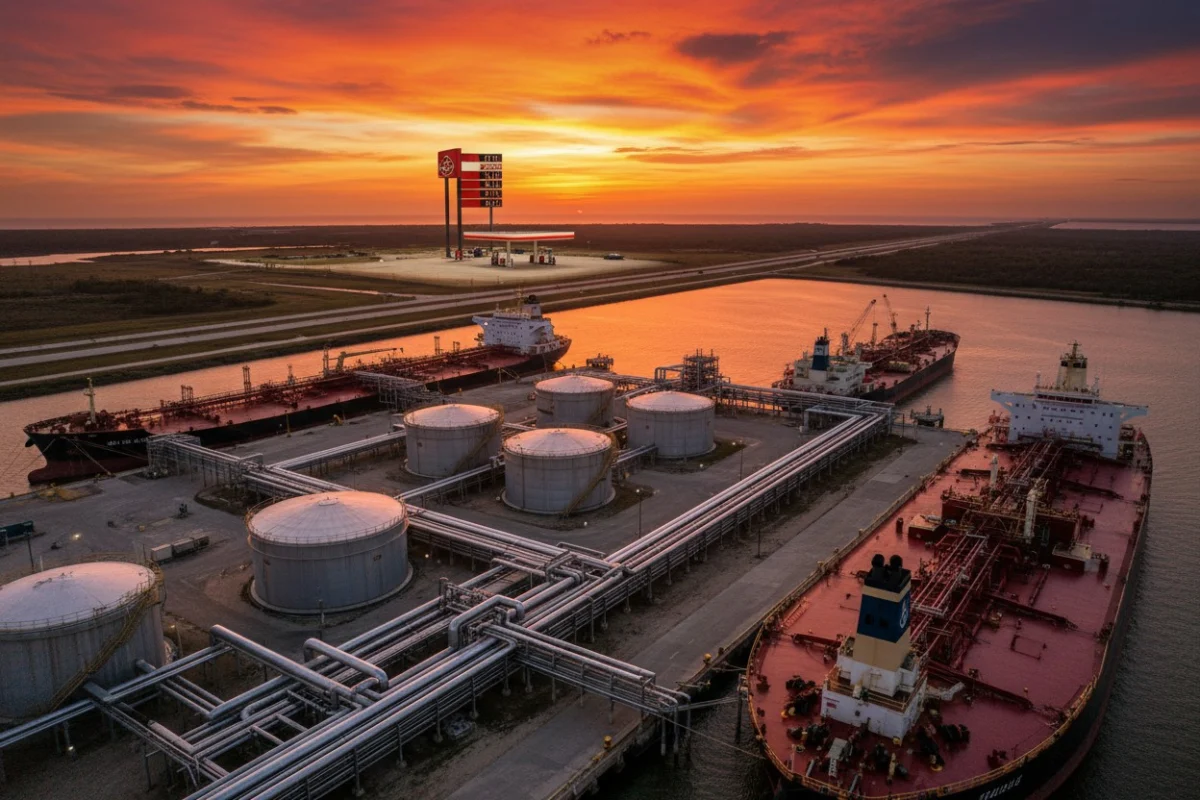
Analysts monitoring the Gulf Coast report that port and terminal operations are functioning at near-capacity. The limitations are twofold:
- Pipeline Capacity: Limited throughput capacity from major shale basins like the Permian to the coast is preventing the volume of crude from matching the capacity of export terminals.
- Port Congestion: The sheer volume of tanker traffic is leading to delays in loading, creating a "logjam" that is inflating shipping costs and creating further volatility in pricing.
Experts argue that without immediate capital investment in new storage facilities and terminal expansion, the U.S. will hit a "ceiling" in its ability to influence global markets. The current infrastructure was designed for a different era of trade; its inability to handle the current surge is a primary factor in the tightening of domestic supply balances.
Official Responses and the Political Tightrope
The intersection of high export volumes and rising domestic costs has created a combustible political environment. With national average gasoline prices topping $4.50 per gallon—and California prices surging past the $6 mark—the White House is facing immense pressure from consumer advocacy groups and legislative factions to curb exports.
The Debate Over Export Restrictions
Inside the Beltway, the debate is becoming increasingly polarized. Proponents of export restrictions argue that the federal government has a primary duty to protect American motorists from the ripple effects of global instability. They contend that the U.S. cannot afford to be the "global hero" while domestic inflation erodes the purchasing power of the middle class.
Conversely, cabinet secretaries and industry leaders have largely resisted these calls. In recent briefings, administration officials have signaled that restricting exports would likely backfire, triggering retaliatory measures from trading partners and potentially causing a global energy price spike that would be even more damaging to the U.S. economy in the long run. However, officials have admitted that these assurances are conditional; should prices continue to climb, the prospect of emergency government intervention remains on the table.
Implications: A New Era of Energy Geopolitics
The crisis in the Strait of Hormuz has exposed the fundamental fragility of a centralized energy supply chain. By relying on a single, vulnerable chokepoint for a significant portion of global trade, the world has invited the type of systemic shock currently being observed.
The Price of Global Leadership
As the U.S. assumes the role of the global supplier of last resort, it is effectively exporting its own price stability. Every barrel of diesel or jet fuel that leaves the U.S. to prevent an aviation or industrial crisis in Europe or Asia is a barrel removed from the domestic pool, inevitably pushing up prices for American consumers.
This creates a paradox: the more the U.S. asserts its influence on the global stage, the more vulnerable it becomes to domestic backlash. The political fallout is compounded by the timing, with midterm elections serving as a catalyst for heightened sensitivity toward energy costs.
Looking Ahead: Sustainability and Security
The duration of the Hormuz disruption is the "known unknown" that will dictate the policy outlook for the coming year. If the situation remains unresolved, the U.S. will be forced to choose between:
- Infrastructure Expansion: A massive, long-term investment in energy infrastructure to bridge the gap between production and export capacity.
- Demand Side Management: Potential (though politically unpopular) efforts to curb domestic consumption to free up more fuel for export or to maintain domestic price ceilings.
- Strategic Realignment: A pivot toward securing alternative supply routes and diversifying energy partnerships to reduce the world’s reliance on the Strait of Hormuz.
The current situation is not merely a supply chain failure; it is a fundamental stress test of the globalized energy model. The decisions made in Washington over the next few months will likely determine the trajectory of energy security for the next decade. As the U.S. navigates the twin pressures of global demand and domestic affordability, it finds itself in a position of unprecedented power, but also one of significant, and perhaps unsustainable, vulnerability.
In conclusion, the surge in U.S. energy exports is a testament to the resiliency and scale of the American energy sector, yet it underscores the dangers of being the primary buffer for a broken global system. Whether the U.S. can sustain this pace without sacrificing its own economic stability remains the most critical question in global energy policy today. As the world waits for a resolution in the Middle East, the U.S. remains the anchor of the global market—an anchor that is currently pulling at its own moorings.