








In the modern landscape of wellness, where "self-care" has become a ubiquitous buzzword, the ancient Indian tradition of Ayurveda offers a profound, time-tested framework for health that transcends mere relaxation. Ayurvedic massage is not simply a luxurious indulgence; it is a sophisticated, individualized therapeutic system designed to harmonize the body and mind. Rooted in millennia of Vedic wisdom, this practice functions as a cornerstone of both palliative (Shamana) and purificatory (Shodhana) therapies, utilizing intentional touch to guide the human constitution back to a state of equilibrium.
The Foundations: A History Rooted in Vedic Wisdom
The methodologies of Ayurvedic massage are not recent inventions but are documented in the brhat trayi—the "Great Three" texts of Ayurveda: the Caraka Samhita, the Sushruta Samhita, and the Ashtanga Hridaya of Vagbhata. These foundational treatises, later supplemented by the Bhavaprakasha and the Yogaratnakara, detail a diverse array of massage techniques used for everything from supporting the physical demands of warriors and athletes to fostering virility, providing specialized postpartum care, and serving as a robust preventative medicine for the general population.
Historically, this healing art was viewed as a vital component of daily living (Dinacharya). By understanding that the body is a microcosm of the universe, composed of five great elements—space, air, fire, water, and earth—Ayurvedic practitioners recognized that touch could directly influence the energetic state of an individual.
The Theoretical Framework: Elements, Doshas, and Balance
At the heart of Ayurvedic therapy lies the concept of the Tridosha. These are the biological forces derived from the five elements:
- Vata: Formed from space and air, governing movement and communication.
- Pitta: Formed from fire and water, governing metabolism and transformation.
- Kapha: Formed from water and earth, governing structure and lubrication.
Every Ayurvedic treatment is a calculated response to the specific state of these doshas. The core philosophy is "like increases like." If an individual has an excess of Vata (which is cold, dry, and light), the practitioner will select warming, heavy, and grounding oils to neutralize that imbalance. This diagnostic precision is what separates Ayurvedic massage from generalized Western spa treatments; it is a clinical intervention tailored to the unique constitution (Prakruti) and the current state of imbalance (Vikruti) of the recipient.
Individualized Care: The Precision of Ayurvedic Diagnosis
An Ayurvedic practitioner does not perform a "one-size-fits-all" massage. Before a single stroke is applied, the practitioner assesses the individual’s Agni (digestive fire) and the presence of Ama (metabolic toxins).
The choice of medium is as critical as the technique. Oil selection is an intentional act of herbal pharmacy. Sesame oil, with its heavy and warming properties, is the gold standard for pacifying Vata. Cooling coconut or sunflower oils are selected for Pitta, while mustard oil is frequently utilized for Kapha conditions. The amount of oil used is also scaled: generous amounts for Vata, moderate for Pitta, and minimal for Kapha.
When Ama is high, traditional oil massage may be contraindicated because the unctuous, heavy nature of oil can trap toxins. In these instances, practitioners utilize Udvartana—a vigorous dry massage using herbal powders—to scrape away congestion and improve lymphatic flow.
The Therapeutic Role of Touch and the Mind
According to Samkhya philosophy, the air element is intrinsically linked to Sparshendriya (the sense of touch). Because Vata is composed of air and space, it is uniquely susceptible to the soothing influence of human touch. This is why Ayurvedic massage is exceptionally effective for mental health concerns, anxiety, and nervous system dysregulation.
The skin (Tvak) is viewed as an organ of digestion and absorption. It is governed by Bhrajaka Pitta, which maintains the luster and complexion of the skin. When oils infused with specific herbs are applied, they do not merely sit on the surface; they are understood to nourish the skin’s Agni, eventually penetrating to the deeper tissues, including muscles, bones, and organs.
Categories and Techniques: From Abhyanga to Marma
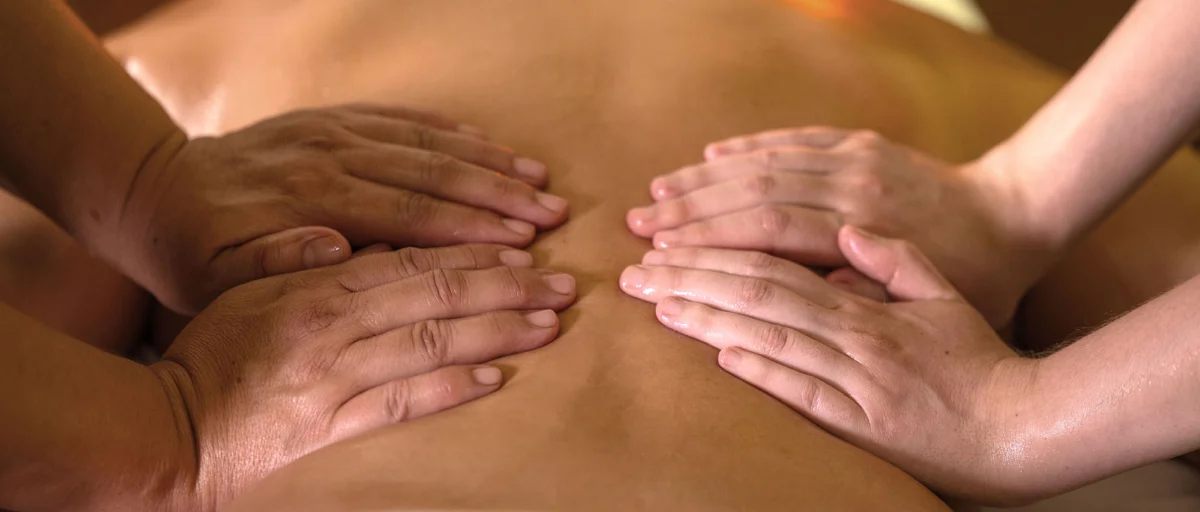
The most iconic practice in this field is Abhyanga, the application of warm, herbalized oil. Whether performed as self-massage or administered by two practitioners in a four-handed, synchronous session, Abhyanga is a profound act of Snehan. In Sanskrit, Snehan translates to both "oil" and "love." The practice is designed to harmonize the cells of the body with a vibration of radiance.
Specialized Modalities
- Udvartana & Udsadana: These involve dry or paste-based massages used for detoxification, cellulite reduction, and skin beautification.
- Deha Samvahana: The classic full-body massage.
- Kesha Mardana: Specialized scalp and head massage, often vital for balancing the mind.
Strokes and Directionality
The direction of the stroke carries specific physiological implications. Anuloma (moving away from the heart) is grounding and calming, ideal for Vata. Pratiloma (moving toward the heart) is stimulating, often used to improve circulation and lymph flow. The vocabulary of these strokes—Peedana (kneading), Udvesthana (twisting), Praharana (percussion), and Sandhi Calana (joint mobilization)—provides a comprehensive toolkit for addressing physical stagnation.
Marma Therapy: The Energetic Pharmacy
Perhaps the most sophisticated aspect of Ayurvedic massage is Marma Therapy. Marmani are specific anatomical points where the physical and energetic layers of the body intersect. Often compared to acupuncture points, Marma points are frequently larger and act as "switches" for the body’s internal pharmacy. By stimulating these points, a practitioner can release stored emotional trauma, improve organ function, and restore the flow of Prana (life force).
This is not merely anecdotal; it is a structured science. For those looking to deepen their practice, professional masterclasses—such as those offered by the Ayurvedic Institute—provide the necessary training to navigate these subtle points safely and effectively.
Implications for Modern Healthcare
The implications of integrating Ayurvedic massage into modern healthcare are significant. As chronic stress and lifestyle-related disorders continue to rise, the need for therapies that address the whole person—rather than just symptom management—has never been greater.
Ayurvedic massage offers:
- Systemic Regulation: By targeting the nervous system, it aids in stress reduction and hormonal balance.
- Detoxification: Through Udvartana and oil-based therapies, it supports the lymphatic system and metabolic health.
- Preventative Longevity: By maintaining the health of the skin and tissues, it slows the aging process and improves structural integrity.
Conclusion
Ayurvedic massage remains a testament to the fact that the most effective medicines are often those that have been refined by human experience over thousands of years. It is an art form that demands both technical proficiency and deep, intuitive empathy. By viewing the body not as a machine, but as a dynamic, ever-changing energetic field, Ayurvedic practitioners continue to offer a path to wellness that is as relevant today as it was in the age of the great Vedic sages. Whether one seeks to alleviate chronic pain, soothe a restless mind, or simply cultivate a deeper connection to the body, this ancient science of touch provides a timeless, holistic solution.
About the Expert:
Beatrice Voss, CAP, is a distinguished Ayurvedic Practitioner trained at The Ayurvedic Institute under the guidance of Vasant Lad. She specializes in the subtle therapies of marma, pranayama, and meditation, advocating for a heart-centered approach to holistic healing.