











The American healthcare landscape is currently navigating a precarious intersection of record-high costs and deepening patient dissatisfaction. As employers face the most significant spike in health benefit expenditures in 15 years, the traditional "black box" of medical billing and provider quality has become an untenable liability. For patients, plans, and payers alike, the opacity of the current system is not merely a bureaucratic nuisance—it is a barrier to accessing high-quality care and a primary driver of financial instability.
In response, industry experts are increasingly pointing toward comprehensive price and quality transparency as the essential framework for a sustainable future. However, as the industry begins to shift, it is becoming clear that simple compliance with government mandates is not enough. To truly transform the system, stakeholders must embrace a value-based, data-driven approach that empowers consumers to act as informed stewards of their own health and finances.
The Visibility Gap: A System Stalled by Complexity
Despite federal transparency mandates designed to open the curtain on healthcare pricing, the reality on the ground remains stubbornly fragmented. Data continues to be siloed within disparate organizations, presented in formats that are often unintelligible to the average consumer. For plan members—many of whom grapple with low healthcare literacy—the administrative burden of navigating these "transparency" tools is immense.
Recent research underscores the depth of this challenge, revealing that as few as 10% of plan members actively utilize existing transparency platforms. When they do, the experience is often suboptimal. Most tools decouple estimated pricing from clinical quality indicators, forcing patients to make significant medical decisions without a full picture of the trade-offs involved. This creates a dangerous misconception: that price is a reliable proxy for quality. In reality, the inverse is often true, with studies repeatedly showing that higher costs for elective surgeries do not necessarily correlate with better clinical outcomes.
The persistence of the fee-for-service model—an incentive structure that rewards volume over value—further exacerbates this "more is better" mentality. When patients are nudged toward providers based solely on a "lowest price" metric without regard for quality, the long-term clinical and financial costs to employers and plans can be catastrophic.
A New Paradigm: The Value-Based Approach
To move beyond the limitations of current offerings, health plan designers must pivot toward integrated transparency strategies. A truly effective transparency tool does not just list prices; it provides a holistic view of the provider, integrating objective quality metrics alongside cost estimates.
By unifying these data points, platforms like the Valenz Bluebook are redefining the "shopping" experience in healthcare. Rather than relying on potentially biased, self-reported data from facilities, these tools leverage objective, risk-adjusted data sets to provide an accurate, high-fidelity picture of provider performance.
The Role of Behavioral Economics and Education
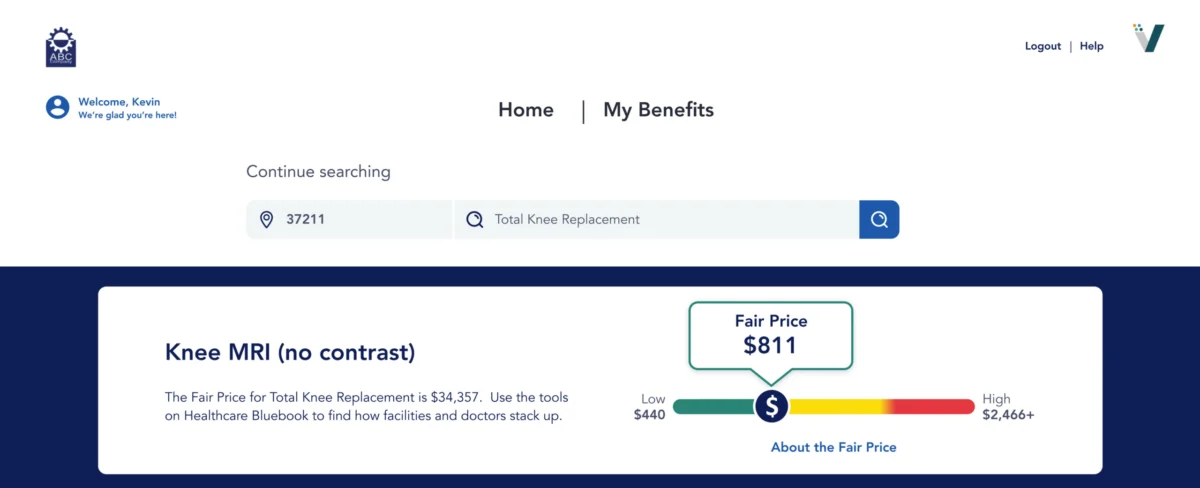
Technology alone is insufficient. The most successful transparency initiatives pair robust data with active member engagement. By utilizing intuitive visual aids—such as the "green-yellow-red" rating systems used by leading platforms—members are guided toward high-value providers without needing an advanced degree in health administration. This proactive education transforms the patient from a passive recipient of care into an active, empowered participant.
Chronology of the Transparency Movement
- Pre-2020: The Era of Opacity. Healthcare costs rise consistently, with little to no consumer awareness of market variations. Provider pricing remains largely proprietary, and quality data is hidden behind closed-door hospital systems.
- 2021-2022: The Mandate Wave. The U.S. government introduces the Transparency in Coverage (TiC) rules, requiring insurers to publicly disclose negotiated rates and allowed amounts. While a milestone, the data is voluminous and largely unusable for the average consumer.
- 2023-2024: The Implementation Struggle. Organizations grapple with the technical challenges of data machine-readability. Meanwhile, adoption rates remain low as users report frustration with the complexity of the information provided.
- 2025-Present: The Shift to Value-Based Integration. Industry leaders pivot toward "second-generation" transparency. The focus shifts from merely dumping raw data to creating user-centric, decision-support tools that integrate quality, cost, and educational outreach to drive actual behavioral change.
Data-Driven Implications for Employers and Payers
The economic implications of this shift are profound. When transparency is executed correctly, it triggers a positive feedback loop. As members engage with these tools to select high-value providers, the demand for high-quality, cost-effective care increases, compelling the provider market to compete on value.

Financial Impact: A Case for Savings
For employers, the financial benefits are tangible. Data indicates that when employees are guided to high-quality, efficient providers, plans can see significant reductions in claim costs. For instance, platforms that actively guide users can achieve average procedure savings of up to 50% per episode. These savings are not achieved through "denying care," but through steering members toward providers who offer better outcomes at lower costs.
Clinical Impact: Quality Control
Quality is not an abstract concept; it is the absence of complications, readmissions, and diagnostic errors. By selecting providers with high performance ratings, members inherently reduce their personal health risks. For the employer, this translates to a healthier, more productive workforce and a reduction in long-term "hidden" costs associated with poor-quality care and medical complications.
Addressing the "Expert" Consensus
Industry analysts and HR leaders are increasingly calling for a move away from "check-the-box" compliance. In a recent analysis of employer-sponsored benefit strategies, HR leaders emphasized that communication is the missing link. Providing a portal is not enough; employers must actively educate their workforce on how to utilize these tools.
"The goal is not to force patients into the cheapest care," says one industry expert. "The goal is to ensure they are not being overcharged for substandard services. True transparency gives the power back to the consumer, allowing them to make choices that align with their personal values and health needs."
Looking Ahead: The Future of the American Healthcare System
The movement toward value-based transparency is the cornerstone of the next generation of American healthcare. As we look toward the future, several trends are poised to accelerate this transition:
- Advanced Data Analytics: The use of AI to synthesize vast amounts of claims data into actionable insights for the average user.
- Incentivized Navigation: Employers are increasingly layering financial incentives (such as reduced copays or HRA contributions) for members who choose high-value, transparent providers.
- Regulatory Evolution: Expect further legislation that demands not just price disclosure, but "decision-support" capabilities that make data understandable.
Conclusion: A Practical Path Forward
In the face of rising healthcare prices, cost control does not have to mean a reduction in access to care or a narrowing of provider networks. The current, broken system thrives on the consumer’s inability to distinguish between cost and value. By providing clear, objective, and integrated data, employers can effectively dismantle this barrier.
The path forward is clear: Organizations that invest in comprehensive, user-friendly transparency tools—and pair them with robust education and engagement strategies—will be the ones to thrive in the coming decade. By putting the power of information into the hands of the consumer, we do not just save money; we fundamentally improve the quality of the American healthcare journey.
For those ready to move beyond the status quo, the technology exists today to foster a more transparent, equitable, and efficient system. The question is no longer whether we can achieve transparency, but whether we have the collective will to adopt the tools that make it a reality for every plan member.
Valenz Health® remains at the forefront of this evolution, providing the tools and insights necessary to help employers and plan sponsors navigate the complexities of modern healthcare. By integrating clinical, financial, and administrative data, Valenz is helping to build a future where every patient can make informed, value-based decisions.