In the highly regulated pharmaceutical landscape, the mention of "social media" and "user-generated content" (UGC) has traditionally triggered a defensive reflex. For years, legal and compliance teams have viewed online patient and caregiver interactions primarily through a risk-mitigation lens: How do we monitor for adverse events? How do we ensure off-label claims are flagged and mitigated? How do we protect the brand from reputational volatility?
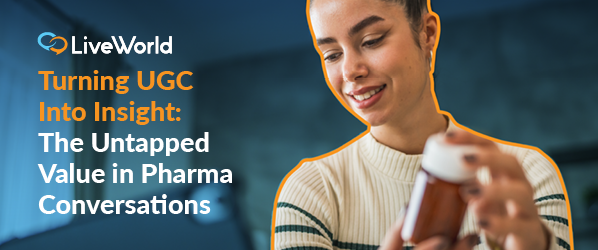
While these concerns remain foundational, a growing consensus among digital health strategists suggests that this defensive posture is leaving immense value on the table. A new white paper from LiveWorld, titled Turning UGC into Insight: The Untapped Value in Pharma Conversations, argues that the comments section is no longer just a regulatory burden—it is the industry’s most sophisticated, real-time focus group.
The Paradigm Shift: From Risk Management to Strategic Intelligence
For decades, pharmaceutical companies have spent millions on formal market research, patient journey mapping, and focus groups. These methodologies, while robust, are inherently reactive and snapshot-oriented. By the time a report is synthesized, the clinical landscape—and the patient sentiment surrounding it—may have already shifted.
In contrast, social media conversations provide an unfiltered, longitudinal view of how patients, caregivers, and healthcare professionals (HCPs) interpret medical information in real time. These digital spaces are where questions surface spontaneously, where misinformation takes root, and where the nuances of treatment adherence are debated without the formal constraints of a clinical setting.
The core argument presented by LiveWorld is that by shifting the internal perspective from "monitoring for risk" to "mining for insight," pharmaceutical brands can transform their social media presence into a strategic asset that informs product development, content creation, and patient support strategies.
Chronology: The Evolution of Pharma’s Digital Engagement
To understand why this shift is necessary, one must look at the historical trajectory of pharma’s digital maturity:
Phase 1: The "No-Comment" Era (2005–2012)
During the early adoption of social media, the pharmaceutical industry adopted a "walled garden" approach. Fearing the complexities of FDA and EMA regulations regarding fair balance and adverse event reporting, most companies avoided social platforms entirely or limited engagement to strictly controlled, one-way corporate messaging.
Phase 2: The Compliance-Led Monitoring Era (2013–2020)
As social platforms became essential to daily life, pharma was forced to engage. However, the mandate was clear: "Listen, but don’t touch." Teams were built primarily to monitor for Pharmacovigilance (PV) signals. If a user mentioned a side effect, the system triggered a report. This era was defined by defensive infrastructure and limited, highly sanitized engagement.
Phase 3: The Insight-Driven Era (2021–Present)
We are currently in the midst of a pivot. With the integration of AI-driven sentiment analysis and natural language processing (NLP), companies are finally able to synthesize high-volume social data into actionable business intelligence. The focus is shifting from "What did they say that might get us in trouble?" to "What are they saying that can help us improve the patient experience?"
Supporting Data: The Anatomy of Digital Conversations
The data contained in LiveWorld’s analysis underscores the depth of the insight available to those who know how to look. When companies monitor UGC with an analytical eye, they can identify patterns that aren’t apparent in clinical trial data:
- The "Misinformation Velocity" Metric: Misinformation often moves faster than formal education. By tracking where and how misinformation about symptoms or treatment efficacy takes hold, companies can preemptively release content that addresses these gaps, effectively "vaccinating" their patient communities against falsehoods before they become entrenched.
- The Adherence Gap: Patients often disclose their struggles with medication regimens—such as dosing frequency, side-effect management, or administration difficulty—in forums long before they report these issues to their HCPs. Analyzing this data can lead to more effective patient support programs and improved educational materials.
- HCP Discourse Patterns: When HCPs discuss treatment decisions online, they reveal the real-world barriers to prescribing. Whether it’s reimbursement challenges, insurance prior authorization hurdles, or concerns about comparative efficacy, these discussions provide a roadmap for sales and medical affairs teams to tailor their interactions.
Official Perspectives: The Role of Moderation
One of the most critical aspects of this strategy is the role of moderation. Contrary to the belief that moderation is merely a "delete button," it is actually a vital touchpoint for data gathering.
"When you moderate effectively, you aren’t just cleaning up a comment section," noted one digital strategy lead. "You are engaging in a conversation that helps you understand the ‘why’ behind the ‘what.’ If a patient is complaining about a treatment, the moderator isn’t just flagging it for risk—they are identifying a recurring theme that informs our entire education strategy."
Moderation teams, when properly trained, act as the bridge between the patient voice and the corporate office. They are the frontline workers who categorize sentiments, identify recurring themes, and flag systemic issues that may require a change in communication strategy or even a shift in clinical trial design.
Implications for the Future of Pharma Marketing
The implications of this shift are far-reaching. If companies embrace the model of "UGC as insight," several key areas of the business will see immediate benefits:
Content Strategy and Personalization
Generic, one-size-fits-all educational content is increasingly ineffective. By analyzing the recurring questions in social comments, brands can build content "hubs" that directly address the specific anxieties and information gaps of their target audience. This creates a feedback loop: content answers a question, the patient responds, and that response informs the next iteration of content.
Response Planning and Crisis Management
Most crisis management plans are built for "black swan" events. However, a brand that is constantly analyzing its UGC landscape will see a crisis coming months in advance. A subtle shift in sentiment regarding a specific drug class or a rising tide of questions about a new generic competitor is a signal. Proactive response planning, informed by this data, is significantly more effective than reactive crisis control.
Medical Affairs and Clinical Trial Recruitment
Clinical trial recruitment remains one of the most expensive and time-consuming aspects of drug development. Social listening allows companies to identify where patients are already talking about their unmet needs. By understanding the language patients use to describe their conditions—which often differs significantly from medical terminology—companies can create recruitment materials that resonate on a human level, leading to higher conversion rates and better-informed participants.
The Challenge of Integration: Breaking Silos
Despite the obvious advantages, the primary barrier to adopting this model remains internal organizational structure. In most pharmaceutical firms, social media is housed in Marketing, Pharmacovigilance is in Safety, and insight generation is in Market Research.
The "UGC-as-Insight" model requires these departments to break down silos. A comment about a side effect shouldn’t just be an entry in a PV database; it should be an aggregated data point that triggers a marketing response, informs an education piece, and alerts the medical science liaison (MSL) team.
Conclusion: The New Imperative
The pharmaceutical industry is at a crossroads. As patients become increasingly empowered and digital communication continues to accelerate, the companies that thrive will be those that view their audience not as a source of risk, but as a source of truth.
The LiveWorld white paper, Turning UGC into Insight: The Untapped Value in Pharma Conversations, serves as a call to action. It posits that the data necessary to improve patient outcomes, optimize treatment pathways, and build brand trust is already being generated every second of every day. The question is no longer whether the industry can afford to listen, but whether it can afford to continue ignoring what is being said.
By integrating social intelligence into the heart of the business, pharmaceutical companies can evolve from being mere suppliers of medication to becoming partners in the patient journey. UGC is, ultimately, the raw material for a more empathetic, effective, and evidence-based future for healthcare.
For those looking to transition from reactive monitoring to strategic intelligence, the path forward is clear: start by listening, learn by analyzing, and lead by responding.
To dive deeper into the methodology of turning online conversations into actionable business intelligence, you can download the full white paper, Turning UGC into Insight: The Untapped Value in Pharma Conversations, through the provider’s official resource portal.