






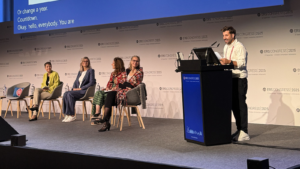



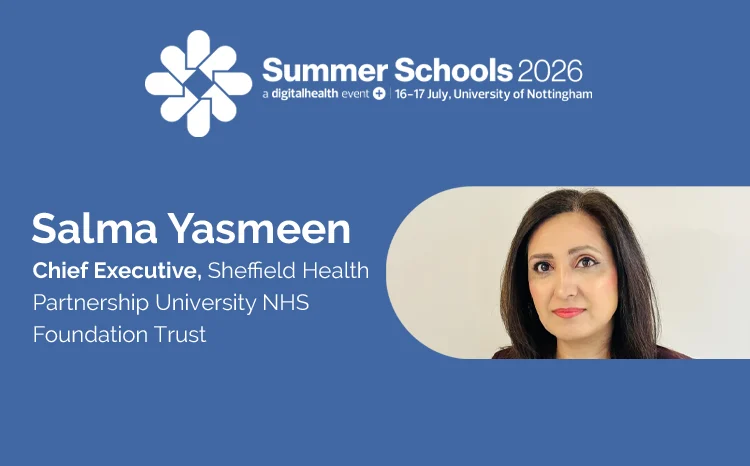
As the UK’s health and care sector continues its ambitious pivot toward a digital-first future, the upcoming Digital Health Summer Schools 2026 has secured a major addition to its speaker lineup. Salma Yasmeen, Chief Executive of the Sheffield Health and Social Care NHS Foundation Trust, has been confirmed as a key panelist for this year’s conference, taking place on 16–17 July at the University of Nottingham.
Her participation marks a pivotal moment for the event, as the NHS reaches the one-year anniversary of its transformative 10-year health plan. As the health service grapples with the complexities of systemic restructuring, Yasmeen’s insights into leadership and digital integration are expected to provide a roadmap for the challenging years ahead.
The Core Objective: Reflecting on the 10-Year Plan
The primary focus of the 2026 conference is to assess the progress of the government’s ambitious "Digital by Default" agenda. Launched with the goal of modernizing the NHS, the 10-year plan remains the central pillar of health policy.
Yasmeen, alongside a panel of other senior industry leaders, will analyze the efficacy of the plan’s three core "shifts"—a framework designed to transition the NHS from a reactive, hospital-centric model to a proactive, integrated, and technology-driven system. The discussion will not merely be a retrospective; it will grapple with the realities of ongoing structural reforms and the integration of digital tools into the frontline of clinical care.
The panel is tasked with answering a fundamental question: How do we translate policy into tangible outcomes that improve patient lives? For attendees, this session offers a rare opportunity to hear directly from those responsible for executing the most complex transformation in the history of the health service.
A Revamped Format for Deep Engagement
Recognizing that the challenges facing digital health leaders are becoming increasingly granular and technical, the organizers of the Summer Schools have overhauled the event format for 2026.
Moving away from the traditional, lecture-heavy conference style, this year’s program emphasizes small-group, interactive sessions. The goal is to foster a culture of knowledge exchange, allowing delegates to move beyond high-level theory and delve into the practicalities of implementation. Whether the topic is interoperability, data governance, or workforce upskilling, the sessions are designed to facilitate deeper networking and collaborative problem-solving.
Key Themes Defining the 2026 Agenda
The conference program is built around five critical pillars that represent the most pressing issues in current health IT discourse:
1. Power, Influence, and Accountability
Digital leadership is no longer a niche technical role; it is a strategic requirement. This theme explores how digital leaders can exert influence within their organizations to drive change, maintain accountability for high-stakes digital investments, and navigate the political landscape of the NHS.
2. From Innovation to Impact: Scaling What Works
The NHS has long been criticized for its "pilot-itis"—a tendency to launch successful localized innovations that fail to scale nationally. This theme will dissect the barriers to scaling and identify the pathways to ensuring that local success stories become systemic standards.
3. Balancing Innovation, Safety, and Ethics in the AI Era
As Artificial Intelligence begins to permeate diagnostic tools and patient management systems, the ethical stakes have never been higher. Attendees will participate in robust debates regarding data privacy, algorithmic bias, and the imperative of clinical safety in an increasingly automated environment.
4. Building Effective NHS-Supplier Relationships
The success of the 10-year plan relies heavily on collaboration between public sector bodies and the private technology sector. This theme focuses on creating transparent, sustainable, and value-driven partnerships that prioritize patient outcomes over vendor lock-in.
5. The 10-Year Health Plan: One Year On
This session serves as the anchor for the entire event, offering an honest, evidence-based assessment of the first twelve months of the national strategy.
Chronology of Planning and Speaker Announcements
The build-up to the 2026 Summer Schools has been marked by a deliberate, phased release of speakers, reflecting the interdisciplinary nature of the event.
- March 2026: The initial speaker wave featured Professor Kathrin Cresswell, a renowned expert in digital innovation in health and care from the University of Edinburgh. Her presence underscored the event’s commitment to academic rigor and evidence-based practice.
- April 2026: The program expanded to include clinical and advisory perspectives, with the announcement of Marie-Anne Ledingham and Tharni Vasavan from the National Institute for Health and Care Excellence (NICE). Their involvement highlights the growing importance of the intersection between clinical guidance and digital technology.
- May 2026: The "First Look" programme was released, providing potential attendees with a comprehensive view of the workshops and keynotes planned for the two-day event.
- June 2026 (Present): The confirmation of Salma Yasmeen signals the final phase of preparations, emphasizing executive leadership and the "on-the-ground" realities of trust-level transformation.
The Role of Digital Leadership in Systemic Transformation
The inclusion of Salma Yasmeen is highly strategic. As a chief executive, she represents the critical link between high-level policy mandates and the day-to-day operations of an NHS trust.
During her tenure, the conversation around digital health has shifted from "digitizing records" to "digital transformation of care delivery." This involves rethinking patient pathways, leveraging data for population health management, and ensuring that the digital workforce—clinicians, administrators, and IT professionals—is equipped to handle the transition.
"Digital leadership is the heartbeat of modern health delivery," noted a spokesperson for the event. "It is about more than technology; it is about the courage to challenge established hierarchies and the capability to foster a digital-first culture across the entire organization."
Supporting Data and Industry Context
The NHS currently faces a dual pressure: a massive backlog in patient care and a desperate need to modernize its aging IT infrastructure. Data from the first year of the 10-year plan suggests that while investment in electronic patient records (EPR) has accelerated, the integration of these systems across Integrated Care Systems (ICSs) remains the greatest challenge.
According to the latest Digital Health Network surveys, 72% of digital health leaders cite "workforce fatigue" and "lack of interoperability" as the two most significant barriers to progress. The Summer Schools 2026 seeks to address these through its collaborative sessions, providing a platform where leaders can share "lessons learned" from their own deployments.
Official Perspectives and Industry Backing
The event is exclusively reserved for members of the Digital Health Networks, ensuring a high-quality peer environment where attendees can speak candidly about their successes and failures. The event is backed by a consortium of industry leaders, including AWS, Better, CereCore, Dell Technologies, AMD, InterSystems, Microsoft, Nervecentre, and Salesforce.
This broad support from the tech industry highlights the importance of the Summer Schools as a venue for fostering vendor-NHS relationships that are built on trust and mutual understanding.
Implications for the Future of NHS Care
The implications of the 2026 Summer Schools extend far beyond the two days in Nottingham. As the NHS prepares for the second year of its 10-year plan, the insights shared by speakers like Salma Yasmeen will likely shape the agendas of local and national boards across England.
For those in attendance, the event is a career-defining opportunity to gain clarity on the direction of national policy and to acquire the practical tools needed to lead their teams through the complexities of the digital age.
Registration and Logistics
The conference is now open for registration. With a standard full two-day ticket valued at £659, attendees are encouraged to take advantage of the current discount code NOTT15, which offers a saving of nearly £100 for registrations finalized before 15 May 2026.
As the health service stands at this crossroads, the Digital Health Summer Schools 2026 promises to be the definitive forum for those who are not just observing the digital revolution, but actively leading it.
For further information on the agenda, speaker bios, and registration, visit the official Digital Health Summer Schools website.