










KNOXVILLE, Tenn. — For three decades, Dr. John Gordon operated at the cutting edge of reproductive medicine, helping thousands of families realize the dream of parenthood. Yet, as his career matured in the affluent suburbs of Washington, D.C., the man who had dedicated his life to the "gift of life" found himself increasingly haunted by the byproduct of his own success.
Gordon, a reproductive endocrinologist of profound faith, began to view the routine mechanics of in vitro fertilization (IVF)—specifically the creation of surplus embryos—not as scientific necessity, but as a moral crisis. Today, having shuttered his former practice to launch Rejoice Fertility in Knoxville, Tennessee, Gordon stands at the center of a growing, contentious national debate: Can the high-tech world of assisted reproduction be reconciled with traditional Christian convictions regarding the sanctity of life?
The Weight of Ethical Doubt: A Chronology of Change
Dr. Gordon’s journey from a conventional fertility specialist to an advocate for "ethical IVF" was neither sudden nor easy. Raised in a Jewish household near Boston, the son and grandson of physicians, Gordon was molded by the rigor of Princeton, Duke, and Stanford. His life took a theological turn in the early 2000s, following a health crisis involving his young son that prompted a deep, personal conversion to Christianity.
For years, Gordon compartmentalized his faith and his laboratory work. However, the advancement of genetic screening and the industry-standard practice of creating multiple embryos—many of which were destined for permanent storage or disposal—began to weigh on his conscience. By 2018, spurred by his wife, Allison, Gordon reached a breaking point.
"I don’t know where you draw the line," Gordon recalled thinking as he considered the implications of choosing the sex of a child or screening for mild impairments. The couple realized that their comfortable life in the D.C. suburbs felt increasingly at odds with their core values. In a move that surprised his peers, the 55-year-old physician abandoned his established career to reinvent his practice in Tennessee, aligning his medical operations with his evolving theology.
The Mechanics of a "Pro-Life" Fertility Clinic
Rejoice Fertility is, by design, an outlier in the medical community. The waiting room features evangelical brochures and a prominent wooden cross; outside the recovery suite, a Bible verse offers comfort to patients. But the most radical departures are found in the lab.
Limiting Creation, Eliminating Waste
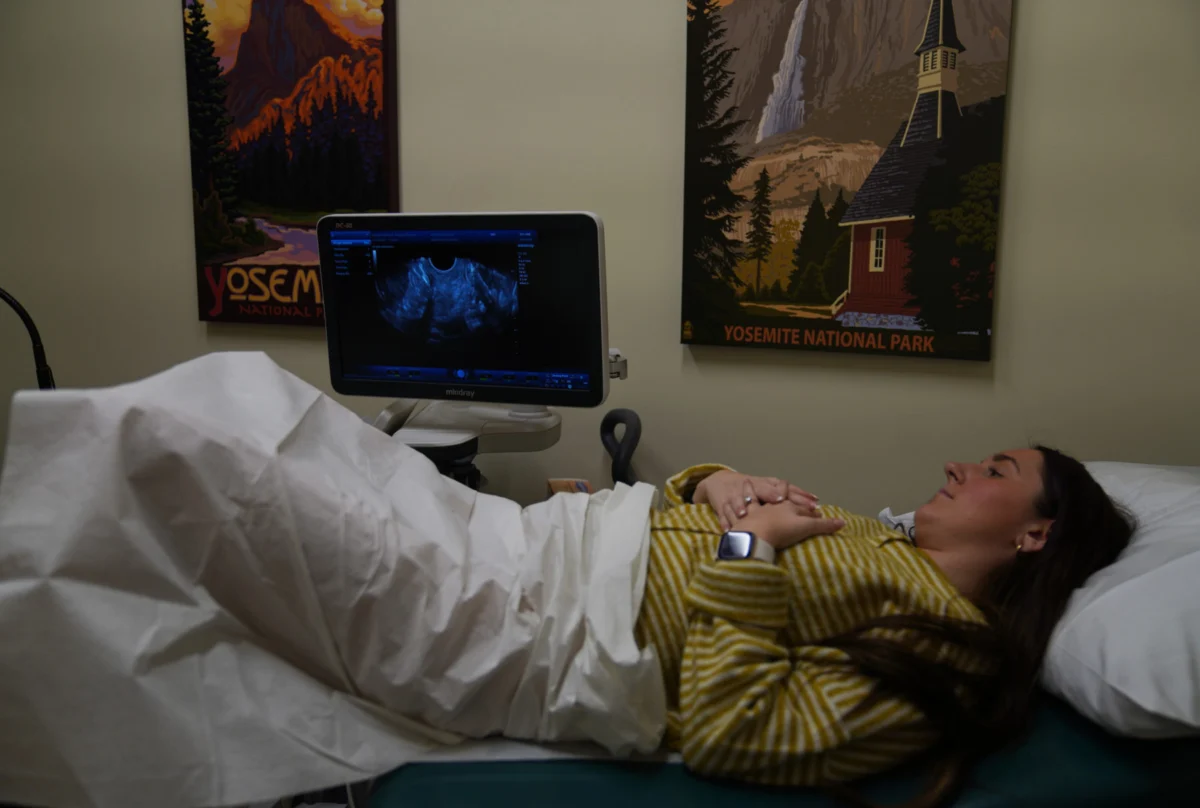
Unlike traditional clinics that prioritize high success rates through the creation of numerous embryos—many of which are frozen indefinitely—Gordon’s approach is deliberately restrained. Rejoice tailors treatment plans to the couple’s specific family goals, often utilizing lower-intensity stimulation protocols that result in fewer eggs and, consequently, fewer embryos.
"Sometimes the ugliest embryos make the prettiest babies," says Sarah Coe Atkinson, the clinic’s senior embryologist. Under her supervision, the lab operates with a strict "no-discard" policy. Embryos are not genetically tested for elective traits, nor are they donated to experimental science. In cases where patients possess surplus embryos, Gordon acts as a bridge to "embryo adoption" agencies, viewing the cryopreserved cells not as biological material, but as human life in waiting.
The "Embryo Rescue" Initiative
The clinic recently launched Rejoice Embryo Rescue, a program Gordon likens to an orphanage. The facility serves as a repository for donated embryos, coordinating with Christian adoption agencies to match them with families. The results are profound: in 2025, the clinic successfully facilitated the birth of a child from an embryo that had been frozen for 31 years, marking a potential record in the field of reproductive medicine.
Supporting Data: The Scope of the Frozen Dilemma
The scope of the ethical quandary Gordon is attempting to address is vast. Medical experts estimate that approximately 1.5 million frozen embryos are currently stored in the United States, a figure that continues to climb as IVF becomes more accessible.
For many patients, this reality creates profound psychological distress. Emily Martin, a patient who previously utilized a conventional clinic, describes the "heaviness" of knowing her unused embryos remain in a state of suspended animation. "I would wake up in the middle of the night just like, ‘Oh, what have we done?’" she said.
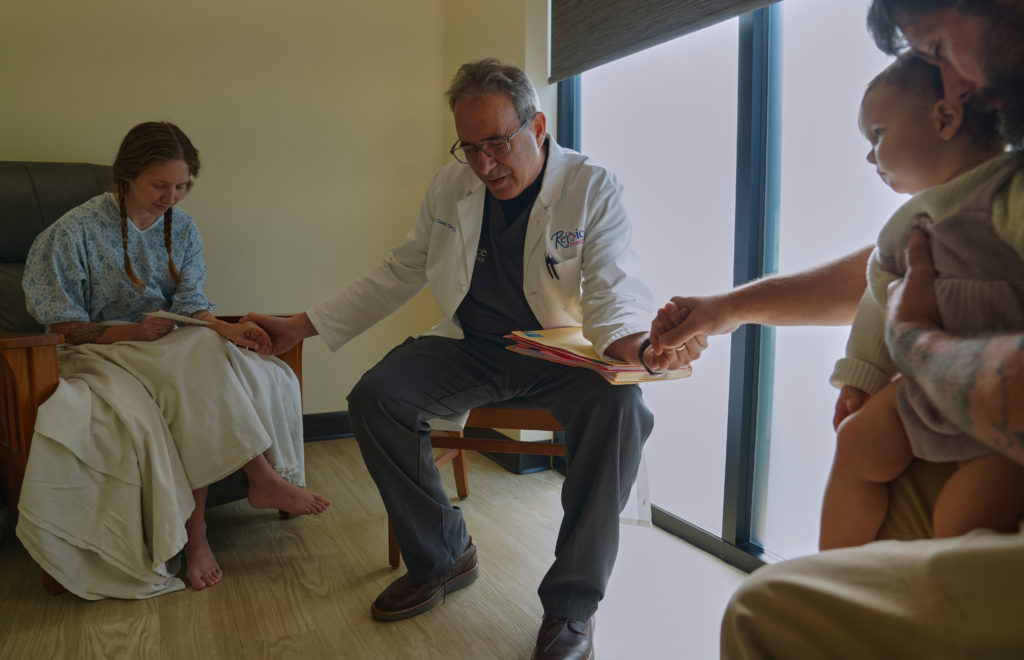
For patients like the Lichfields and the D’Agostinos, Rejoice offers a sanctuary. Domenic D’Agostino, who traveled nearly two hours to find a clinic that aligned with his religious opposition to discarding embryos, noted, "He focused in on the sovereignty of God in it and submitting to God’s will in this process."
Official Responses and the National Landscape
The debate surrounding IVF has moved from the private confines of doctor-patient consultations to the halls of the Supreme Court and state legislatures. Following the reversal of Roe v. Wade, the legal status of the embryo has become a flashpoint. The Alabama Supreme Court’s 2024 ruling, which designated embryos as children under state law, sent shockwaves through the fertility industry, forcing clinics to reconsider their legal liability.
Political Polarization
The political response has been fractured. While President Donald Trump has publicly voiced support for expanding access to IVF, the conservative Christian base—a vital component of his coalition—remains deeply divided.
In 2024, the Southern Baptist Convention (SBC), the largest Protestant denomination in the U.S., passed a resolution calling for restrictions on IVF practices that result in the destruction of "embryonic human life." This stance places the SBC in opposition to many mainstream reproductive organizations, which argue that such restrictions could render the most effective fertility treatments inaccessible.
The Ethicist’s View
Christian ethicist Matthew Lee Anderson of Baylor University, who generally opposes IVF, acknowledges that Gordon’s model represents a necessary shift for those within the faith. "He’s moving in the right trajectory," Anderson says. "It’s impressive that he’s taken the steps that he has to change how he is doing business, and I hope for more."
Implications: The Future of Faith-Based Medicine
The shift in Dr. Gordon’s practice is not without its costs. He has faced legal disputes from former business partners and criticism from anti-abortion activists who argue that any IVF, regardless of the laboratory protocols, is inherently unethical.
Despite these pressures, Gordon remains steadfast. He views his work as a practical application of his faith—a way to provide the miracle of life without compromising the moral principles he holds dear.
The success of Rejoice Fertility raises difficult questions for the future of the medical industry. As science continues to push the boundaries of what is possible, will the demand for "ethically sourced" reproductive care grow? For now, the lab at Rejoice continues its work. When a patient’s embryo is thawed—often accompanied by a prayer—and successfully transferred, it serves as a tangible victory for a clinic that seeks to bridge the gap between high-tech medicine and ancient belief.
As the nation grapples with the definition of life and the ethics of technology, Dr. Gordon’s clinic serves as a microcosm of the broader struggle. Whether he is a pioneer of a new, more humane way to practice medicine or an outlier in a field defined by efficiency, his presence in Knoxville highlights the enduring, often painful, intersection of science and the soul.