











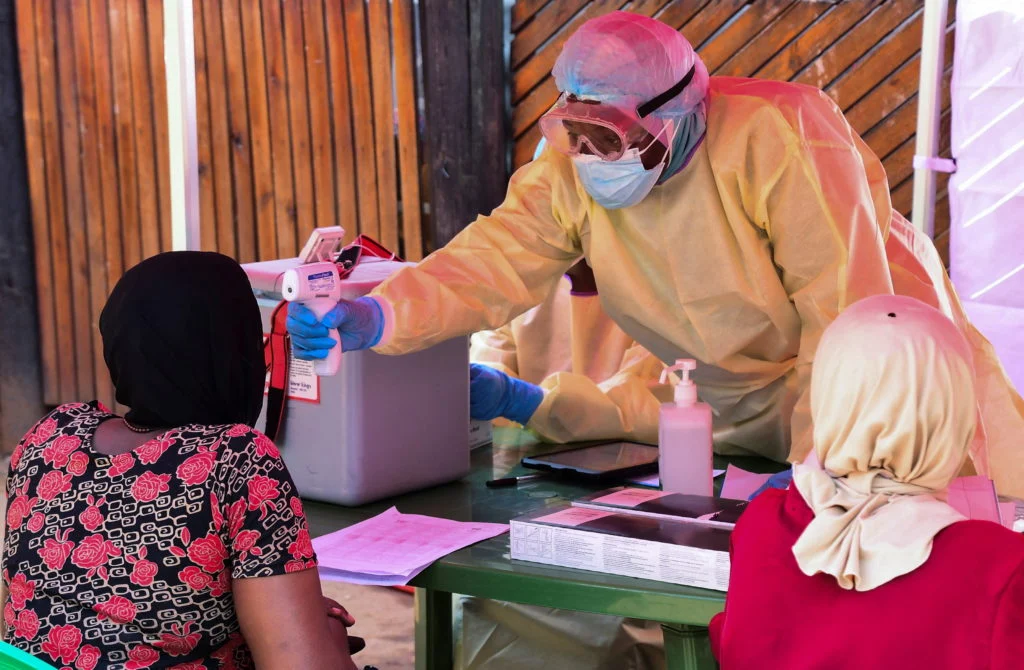
KINSHASA, Congo — The Democratic Republic of Congo (DRC) is once again confronting the specter of one of the world’s most lethal pathogens. Health authorities confirmed on Friday that a new Ebola outbreak has emerged in the remote Ituri province, triggering a rapid mobilization of international health agencies as the virus has already claimed 65 lives.
The Africa Centres for Disease Control and Prevention (Africa CDC) reported that 246 suspected cases have been identified, primarily concentrated in the Mongwalu and Rwampara health zones. While laboratory analysis has confirmed four of the deaths were caused by the virus, the sheer volume of suspected cases and fatalities has sent shockwaves through the region, particularly due to the proximity of the outbreak to the porous borders of Uganda and South Sudan.
The Chronology of an Emerging Emergency
The detection of this outbreak comes just five months after the conclusion of the DRC’s previous Ebola crisis, which resulted in 43 deaths. The timeline of the current emergency began in the eastern reaches of the country, where medical teams struggled to isolate the source of a mysterious, rapidly spreading illness.
Initial reports from local health clinics were met with skepticism, but as mortality rates climbed, the World Health Organization (WHO) dispatched a specialized team last week to conduct field investigations and sample collection. While early tests were inconclusive, a breakthrough analysis on Thursday confirmed the presence of the Ebola virus, officially designating the event as a public health emergency.
The situation took an international turn on Friday when Ugandan officials reported a posthumous positive test for a Congolese man who had sought treatment at a hospital in Kampala. The patient, who died three days after admission, was confirmed to have been carrying the Bundibugyo virus—a variant endemic to Uganda. His remains were repatriated to Congo, and the Ugandan government has since initiated rigorous contact tracing and quarantine protocols to prevent the virus from gaining a foothold on its soil.
Dissecting the Viral Threat
One of the primary challenges facing medical teams is the identification of the specific viral strain driving this outbreak. Ebola is a family of viruses, with the Ebola Zaire strain having historically been the most prevalent and deadly in Congo. However, preliminary sequencing suggests this outbreak may be caused by a different variant.
The WHO notes that three specific members of the Ebola virus genus—Ebola virus, Sudan virus, and Bundibugyo virus—are responsible for the majority of large-scale outbreaks. This distinction is critical for medical intervention: the Ervebo vaccine, which is currently stockpiled in the DRC, is highly effective against the Zaire strain but offers little to no protection against the Sudan or Bundibugyo variants.
This biological uncertainty complicates the response. Scientists are currently working around the clock to sequence the genome of the virus, hoping to determine if existing therapeutics will be sufficient to curb the current wave of infections.
Geographic and Logistical Hurdles
The geography of the affected region, Ituri province, poses a formidable challenge to public health officials. Located over 1,000 kilometers (620 miles) from the capital, Kinshasa, Ituri is characterized by rugged, mountainous terrain and a severely degraded road network.
The Africa CDC has expressed "grave concern" regarding the risk of rapid transmission. Several factors exacerbate the threat:
- High Mobility: The Mongwalu region is a hub for artisanal mining, leading to constant population flux.
- Insecurity: The eastern DRC has been a theater for armed conflict for decades. The presence of various militia groups complicates the delivery of vaccines and the movement of medical supplies.
- Surveillance Gaps: Remote villages often lack the infrastructure for robust contact tracing, creating "blind spots" where the virus can spread undetected.
Furthermore, the proximity of the outbreak to the international borders of Uganda and South Sudan has necessitated a multi-national response. An urgent coordination meeting was convened on Friday, involving representatives from the affected countries, the United Nations, and regional health agencies, to synchronize cross-border screening and containment efforts.
Official Responses and International Support
The global community has reacted with a sense of urgency, drawing lessons from previous, larger-scale outbreaks. Dr. Tedros Adhanom Ghebreyesus, the director-general of the WHO, emphasized that while the situation is dire, the DRC possesses a "strong track record" in Ebola response and control. The WHO has released $500,000 in emergency funding to bolster immediate containment operations.
The United States has also signaled its readiness to intervene. Jay Bhattacharya, acting head of the U.S. Centers for Disease Control and Prevention (CDC), confirmed that American officials are in active communication with their counterparts in Kinshasa and Kampala. "We are going to provide whatever they need and that we are capable of providing them," Bhattacharya stated, underscoring the necessity of international solidarity in preventing a regional pandemic.
Locally, the response is being led by a cadre of experienced professionals. Dr. Gabriel Nsakala, a professor of public health with deep experience in Congolese outbreak response, noted that the infrastructure and human capital built during the 2018–2020 epidemic remain partially intact. "In terms of training, people already know what they can do," Nsakala said. "The challenge now is the speed of logistics. Expertise and equipment must be deployed to the front lines immediately."
Implications for Public Health and Stability
The 17th outbreak since the disease’s discovery in 1976 serves as a sobering reminder of the persistent threat posed by zoonotic diseases. The 2018–2020 outbreak in eastern Congo, which claimed more than 1,000 lives, remains a benchmark for the complexity of fighting Ebola in a conflict zone. That crisis highlighted the difficulty of balancing clinical intervention with community trust, particularly when misinformation or distrust of outsiders hinders vaccination campaigns.
The broader implications of this outbreak are twofold:
- Economic Disruption: Continued outbreaks in the eastern provinces stifle the regional economy, particularly in the mining and agricultural sectors, as movement restrictions and quarantine measures become necessary.
- Health System Strain: The focus on Ebola inevitably pulls resources and personnel away from other critical health initiatives, such as malaria control, maternal health, and routine vaccination programs.
The current crisis also reignites the debate over vaccine distribution. If the current strain is indeed a variant against which the Ervebo vaccine is ineffective, the international community will face a race against time to produce, transport, and administer alternative countermeasures.
Conclusion: A Test of Resilience
As the sun sets over the rugged hills of Ituri, the efforts to contain the virus continue. Medical tents are being erected, contact tracing teams are venturing into remote settlements, and border checkpoints are being fortified with screening equipment.
The people of the Democratic Republic of Congo have shown remarkable resilience in the face of repeated public health threats. However, resilience alone cannot stop a virus. Success in the coming weeks will depend on the speed of the global scientific response, the efficacy of regional diplomatic cooperation between the DRC, Uganda, and South Sudan, and the ability of aid organizations to navigate the complex security landscape of eastern Congo.
For now, the world watches with bated breath, hoping that the lessons learned from the tragic loss of over 11,000 lives during the 2014–2016 West African epidemic—and the grueling battles of recent years—will prove sufficient to prevent this new outbreak from evolving into a wider catastrophe. The priority remains clear: identify, isolate, and vaccinate. The lives of hundreds, and potentially thousands, depend on it.