











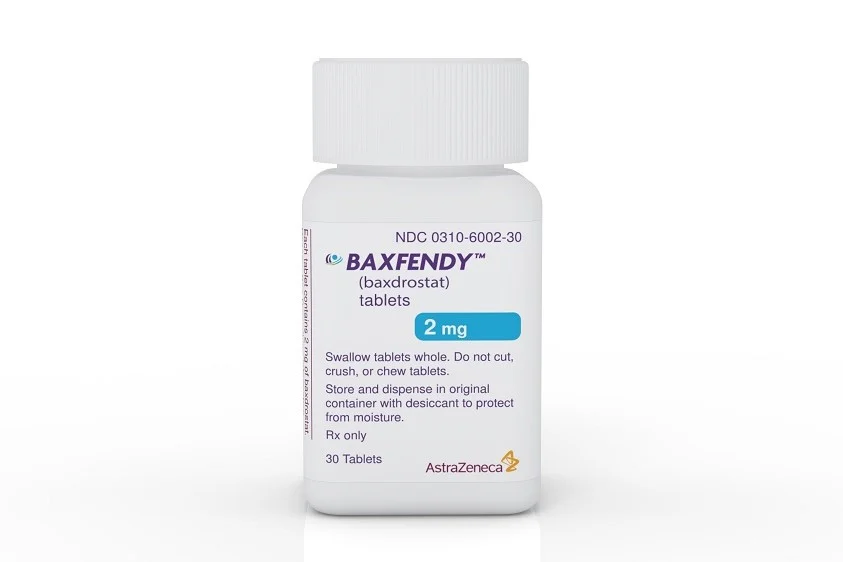
For millions of adults worldwide, a diagnosis of hypertension is the beginning of a lifelong, often frustrating struggle to keep blood pressure within a healthy range. Despite the existence of a robust arsenal of antihypertensive drugs—ranging from ACE inhibitors to beta-blockers—many patients find their blood pressure remains stubbornly high. This clinical "ceiling" has long been a source of frustration for both physicians and patients. However, a significant medical breakthrough has arrived: the FDA has officially approved AstraZeneca’s Baxfendy (baxdrostat), the first-in-class aldosterone synthase inhibitor, offering a novel mechanism of action for patients whose conditions have remained resistant to conventional therapies.
Main Facts: A Novel Mechanism for a Global Problem
On Monday, the FDA granted approval for Baxfendy, a once-daily oral medication designed to treat adult patients with hypertension that is not adequately controlled by existing therapies. By inhibiting aldosterone synthase—the enzyme responsible for the production of the hormone aldosterone—Baxfendy addresses a biological root cause of blood pressure elevation that many standard drugs fail to touch.
Aldosterone is a potent hormone produced by the adrenal glands that helps the kidneys retain sodium and water. While this process is vital for fluid balance, an excess of aldosterone leads to increased blood volume and sodium retention, which directly forces blood pressure upward. Unlike traditional diuretics or vasodilators that treat the symptoms of high pressure, Baxfendy works upstream to stop the production of the hormone driving the pathology.
AstraZeneca intends to position this drug as an add-on therapy, meaning it is intended to be used in conjunction with other antihypertensive medications, providing a critical new tool for the estimated segment of the hypertensive population that remains "treatment-resistant."
Chronology: From Clinical Concept to Commercial Reality
The journey of Baxfendy to the pharmacy shelf is a testament to the rapid evolution of cardiovascular drug development.
- 2023: AstraZeneca signaled its commitment to strengthening its Cardiovascular, Renal, and Metabolism (CVRM) portfolio by acquiring CinCor Pharma for $1.3 billion. This acquisition was primarily driven by the potential of baxdrostat, which CinCor had originally licensed from Roche.
- August 2025: The New England Journal of Medicine published the results of the pivotal Phase 3 clinical trials. The data confirmed that the drug met its primary endpoints, showing statistically significant reductions in blood pressure compared to a placebo.
- Early 2026: As AstraZeneca faced the looming "patent cliff" for its blockbuster drug Farxiga, the company ramped up efforts to secure a regulatory win for its new, promising asset.
- May 2026: The FDA officially approved Baxfendy, marking the entry of the first aldosterone synthase inhibitor into the U.S. market.
Supporting Data: Clinical Efficacy and Safety Profiles
The FDA’s decision was underpinned by robust clinical data. In the Phase 3 trials, patients were administered 1 mg or 2 mg doses of the drug. After 12 weeks of treatment, participants in both dosage groups showed a clinically significant reduction in blood pressure compared to those receiving a placebo.
Managing the Risks
As with any potent medication, safety remains a primary concern. The clinical trial data highlighted hyperkalemia—a condition characterized by abnormally high levels of potassium in the blood—as the most common adverse reaction. Because the drug works by inhibiting the hormone that regulates sodium and potassium, this side effect is a known, physiological trade-off.
To mitigate this, the FDA’s label requirements are stringent:
- Baseline Assessment: Clinicians must assess a patient’s serum potassium levels before initiating treatment.
- Periodic Monitoring: Ongoing monitoring is required throughout the duration of the therapy to ensure potassium remains within a safe range.
- Risk-Based Dosing: The label explicitly recommends that patients identified as being at higher risk for hyperkalemia begin with the lower 1 mg dose.
Official Responses: The Clinical Perspective
The medical community has greeted the approval with a mixture of optimism and relief. Dr. Bryan Williams, a primary investigator for the clinical trials and the chair of medicine at University College London, emphasized the significance of the event during the company’s announcement.
"Clinicians have been waiting for a new hypertension medicine for many years," Dr. Williams stated. "Its novel way of lowering blood pressure has the potential to transform clinical practice by targeting a root cause of persistently uncontrolled hypertension. In addition, the nearly double-digit placebo-adjusted systolic blood pressure reduction achieved with Baxfendy is exciting and clinically meaningful for both clinicians and patients."
The enthusiasm stems from the fact that for many patients, "controlled" blood pressure is an elusive goal. By adding a drug that addresses the aldosterone pathway, physicians now have a new option to move the needle for patients who have exhausted traditional treatment options.
Implications: Strategic Shifts and Market Dynamics
The approval of Baxfendy is not merely a medical milestone; it is a critical business strategy for AstraZeneca.
The CVRM Portfolio and the "Patent Cliff"
AstraZeneca’s Cardiovascular, Renal, and Metabolism (CVRM) division is the second-largest revenue driver for the company, behind oncology. Its current star performer, Farxiga, generated $7.6 billion of the company’s $12.4 billion in CVRM revenue in 2025. However, with patent expirations for Farxiga beginning in 2026, the company faces a significant revenue gap.
Baxfendy is intended to be the successor that keeps the CVRM division growing. AstraZeneca has set lofty internal goals for the drug, projecting $5 billion in peak sales for hypertension alone, with a potential ceiling of $10 billion if the drug receives additional approvals for other indications, such as primary aldosteronism or heart failure prevention.
The Pipeline of Potential
AstraZeneca is not resting on the current approval. The company is currently running trials to evaluate:
- Monotherapy: Using Baxfendy as a standalone treatment for primary aldosteronism.
- Combination Therapy: Pairing Baxfendy with Farxiga to provide a "dual-hit" approach to chronic kidney disease and hypertension.
- Prevention: Exploring the drug’s utility in preventing heart failure, a common and deadly complication of long-term high blood pressure.
The Competitive Landscape
AstraZeneca will not have the market to itself for long. Mineralys Therapeutics is currently developing its own aldosterone synthase inhibitor, lorundrostat. The competition is intense; Mineralys has a target date of December 22, 2026, for a potential FDA decision on their candidate. Lorundrostat is also undergoing mid-stage testing for obstructive sleep apnea-related hypertension, suggesting that the race to dominate this new class of drugs is only just beginning.
Conclusion: A New Era for Cardiovascular Health
The approval of Baxfendy marks a turning point in the management of hypertension. By successfully bringing an aldosterone synthase inhibitor to market, AstraZeneca has provided a tangible solution for patients who have historically been left behind by standard pharmaceutical interventions.
While the challenges of monitoring potassium levels and managing a competitive market landscape remain, the medical benefit of having a new, effective, and once-daily treatment for high blood pressure cannot be overstated. As the company looks to expand the drug’s label to other indications, Baxfendy is poised to become a foundational element of cardiovascular care for years to come. For patients struggling with the silent, dangerous creep of uncontrolled blood pressure, this approval represents more than just a new pill—it represents the hope for a longer, healthier life.