











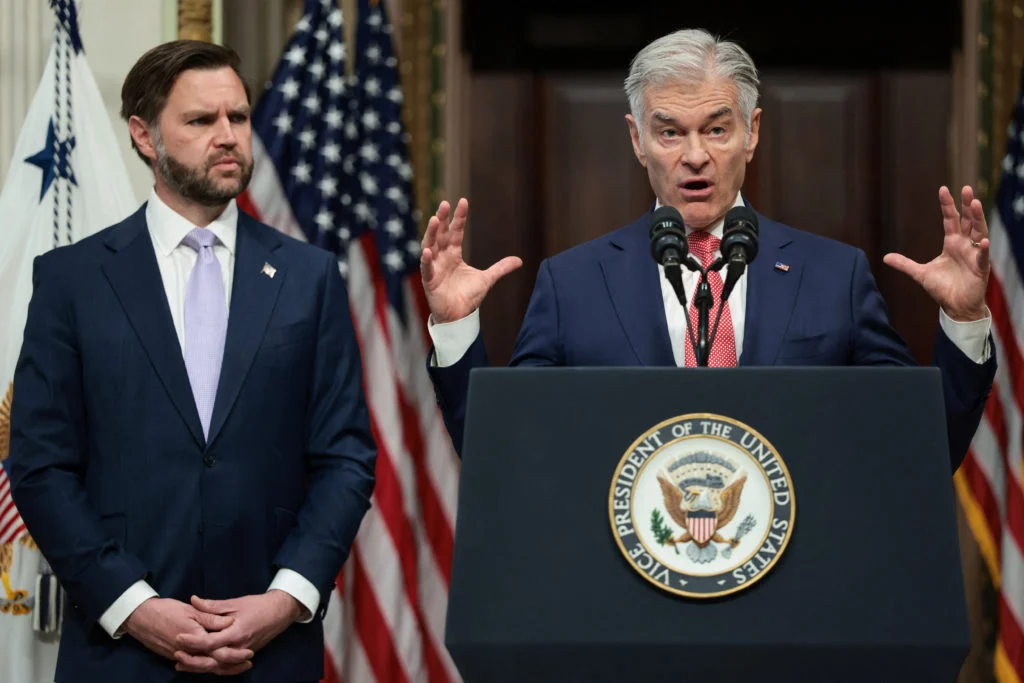
WASHINGTON — In a move that underscores a central pillar of its domestic policy agenda, the Trump administration on Wednesday intensified its multi-agency offensive against systemic fraud within federal health programs. The initiative, led by Vice President JD Vance’s anti-fraud task force, marks a significant escalation in the federal government’s efforts to purge the Medicare and Medicaid systems of what officials describe as "predatory bad actors."
Central to this latest development is a nationwide, six-month moratorium on all new Medicare enrollments for hospice and home health care providers. Simultaneously, the Department of Health and Human Services (HHS) has issued stern warnings to state attorneys general, signaling that failure to aggressively pursue Medicaid fraud could result in the withholding of federal funds.
The Scope of the Crackdown: A Strategic Shift
The Centers for Medicare and Medicaid Services (CMS), under the leadership of Administrator Dr. Mehmet Oz, characterized the move as a necessary firewall. "We’ve seen systemic and deeply troubling fraud in the hospice and home health space, with bad actors exploiting some of our most vulnerable Medicare patients and stealing money from the American taxpayer," Dr. Oz said in a statement. "Today we’re shutting the door on fraud—preventing new bad actors from entering Medicare while we aggressively identify, investigate, and remove those already exploiting the system."
Under the terms of the six-month pause, current providers will be allowed to continue operations, but they will face increased scrutiny. CMS plans to deploy advanced data analytics to audit billing patterns, accelerate the removal of fraudulent entities, and intensify targeted investigations across the sector.
Chronology of Escalation
The administration’s anti-fraud campaign has been building momentum for months, serving as a key messaging point for Vice President Vance as the November elections approach.
- Early 2024: Dr. Oz began publicly calling for corrective actions in various states, notably targeting Maine—a request that Maine Governor Janet Mills labeled a "political attack."
- Spring 2024: The administration initiated investigations into at least five states, alleging systemic failures in oversight.
- April 2024: CMS faced a significant setback when it admitted to the Associated Press that it had utilized erroneous figures to justify a fraud probe in New York, sparking bipartisan criticism regarding the administration’s "attack first, confirm later" methodology.
- Recent Months: CMS suspended payments to hundreds of hospice and home care agencies in Los Angeles and imposed a six-month moratorium on suppliers of durable medical equipment and orthotics.
- Current Week: The administration formalizes the nationwide hospice and home health moratorium and pressures state AGs to ramp up their own local investigations.
Supporting Data and Historical Context
The administration’s aggressive posture is not without precedent, though the scale of the current operation is notably broader than previous attempts. Tricia Neumann, senior vice president and executive director for the program on Medicare policy at the health care research nonprofit KFF, noted that temporary moratoria have been utilized by past administrations, including that of Bill Clinton, to stabilize sectors plagued by oversight gaps.
"A brief moratorium gives the administration time to crack down on true fraud and prevent new fraudulent entities from popping up," Neumann noted. However, the data surrounding these programs remains complex. While the government claims to be preserving resources for the "most in need," critics point to the massive financial strain caused by the administration’s broader policy shifts, such as new Medicaid work requirements. These requirements are projected by many health policy experts to cause millions of enrollees to lose coverage, potentially leading to increased hospital strain as patients forgo preventative care.
Official Responses and Political Friction
The administration’s tactics have drawn sharp divisions. On one hand, supporters see a necessary, long-overdue cleaning of the federal ledger. Vice President Vance, eyeing a 2028 presidential bid, has utilized the task force to frame the administration as a champion of fiscal responsibility. By focusing on "clawing back" taxpayer dollars, Vance is appealing to a base concerned about the rising costs of living and government inefficiency.
Conversely, state officials and healthcare providers have raised alarms. There is a palpable fear among legitimate, small-scale healthcare providers that they may be caught in the dragnet. "The catchall efforts could needlessly punish law-abiding providers that are trying to serve patients," one industry representative stated.
The legal battle over these funds is already underway. Minnesota, for instance, has sued to block the administration from withholding $243 million in Medicaid funds, arguing that the federal government is overstepping its legal authority and harming state-level public health infrastructure.
Implications: The Future of Health Oversight
The broader implications of this initiative touch on the delicate balance between oversight and access. By requiring all 50 states to revalidate their Medicaid provider lists, the administration is effectively forcing a massive administrative overhaul at the state level.
However, the administration’s credibility has been tested by its past errors. The admission of faulty data regarding New York has emboldened critics who argue that the task force is prioritizing optics over evidence-based governance. For the millions of Americans who rely on Medicare and Medicaid, the next six months will be a period of significant uncertainty.
While the moratorium aims to "shut the door" on fraud, the potential for collateral damage—including the closure of legitimate rural health providers and the disruption of care for the elderly—remains a significant point of concern. As the administration prepares for upcoming primary races and the general election, the "fraud-fighting" narrative will likely remain a central, if highly contentious, component of its political identity.
Balancing Act: Patient Access vs. Fiscal Integrity
The fundamental tension in this policy is whether the administration can effectively target criminal enterprises without degrading the quality of care for vulnerable populations. The hospice and home health sectors, which rely heavily on Medicare reimbursement, are particularly sensitive to payment delays and administrative freezes.
As CMS moves to "intensify targeted investigations," the success of the initiative will likely be measured by the dollar amount of recovered funds versus the number of legitimate providers forced out of business. For the Trump administration, the goal is clear: to present a record of aggressive fiscal stewardship. For the healthcare industry, the concern is that this "scorched earth" approach to oversight may ultimately leave the patient as the primary victim.
The upcoming weeks will likely see more states joining Minnesota in legal challenges, as governors and state health departments grapple with federal mandates that threaten to upend established healthcare delivery systems. The administration, meanwhile, shows no signs of slowing down, with Vance expected to continue his campaign tour, highlighting the task force’s findings as a centerpiece of his policy platform.
Ultimately, the administration’s effort to sanitize the federal health budget is a high-stakes gamble. If the crackdown successfully roots out deep-seated fraud, it could serve as a model for future administrative efficiency. If, however, it continues to be plagued by faulty data and the alienation of legitimate providers, it may be remembered as a case study in the dangers of politicizing the essential functions of federal oversight.