








By Sree Roy
For sleep medicine professionals, the integrity of a sleep study hinges on the quality of the data captured. At the center of this diagnostic process is the EEG electrode—a seemingly simple component that carries the weight of clinical accuracy. A recent industry-wide survey conducted by Sleep Review sheds new light on the priorities of sleep lab managers and directors, revealing a deep-seated focus on durability, the ongoing struggle with signal interference, and the evolving landscape of diagnostic technology.
As sleep centers strive to balance patient comfort with high-fidelity signal acquisition, the findings from this survey provide a comprehensive roadmap of what the industry values, where it struggles, and where it is headed.
The Pillars of Selection: What Sleep Labs Value Most
When outfitting a sleep center, the choice of EEG electrode leadwires is rarely a matter of aesthetics; it is a calculation of performance, longevity, and clinical efficiency. The survey results are unequivocal: durability is the non-negotiable gold standard.

Durability as the Primary Benchmark
In the high-pressure environment of a sleep lab, where technicians manage multiple patients and navigate complex equipment setups, hardware failure is a significant liability. Every single respondent in the Sleep Review survey identified "durability" as one of their top three characteristics when selecting leadwires. This unanimous consensus suggests that manufacturers who prioritize reinforced materials and break-resistant wiring are winning the loyalty of clinical managers.
Length, Tangling, and Precision
Beyond mere resilience, the physical characteristics of the leadwires play a critical role in the nocturnal environment. 60% of survey participants highlighted "length options" as a critical factor. This is a direct response to the reality of patient sleep behavior—specifically, the need for adequate slack to accommodate movement during the night without dislodging the electrode or creating undue tension on the headbox.
Furthermore, the survey underscored the operational challenges of managing a mass of wires. Roughly 30% of respondents specifically valued features that reduce tangling, enhance connector reliability, and mitigate CT (computed tomography) artifacts. These attributes are not merely for convenience; they are vital for reducing the "setup time" per patient and minimizing the risk of a technician having to enter a patient’s room mid-study to troubleshoot a loose lead.
The Standardized Application: The Ten20 Phenomenon
While electrode design is critical, the "adhesive" component of the equation is equally vital. The survey revealed a striking industry uniformity regarding electrode paste. 100% of respondents indicated that Ten20 paste is their most frequently used medium for securing leads, outpacing alternatives like Elefix. This preference suggests that, in the eyes of the practitioners, the reliability of the paste in maintaining impedance levels throughout a multi-hour study is the most significant factor in achieving a successful, high-quality recording.

Navigating the Daily Grind: Common Troubleshooting Challenges
Despite the best equipment and the most reliable pastes, sleep labs remain plagued by signal disruptions. The survey data paints a picture of a field that is constantly battling the physics of human motion and electrical interference.
The Usual Suspects: Detachment and Tangling
When asked to identify the most frequent obstacles to a seamless overnight study, the survey revealed a hierarchy of frustration:
- Electrode Detachment (60%): The most common issue, likely exacerbated by patient movement, sweat, or improper initial application.
- Wire Tangling (50%): A persistent operational bottleneck that complicates both the setup and the "unhooking" process in the morning.
- Artifacts and Adhesion (20–30%): A significant subset of labs continues to deal with excessive signal artifacts and poor adhesion, which can lead to unusable data or the need for a repeat study.
Notably, 20% of respondents reported a "clean" operational environment, indicating that for one in five labs, the combination of current protocols and equipment choices has effectively mitigated these common pitfalls.
The Frequency of Intervention
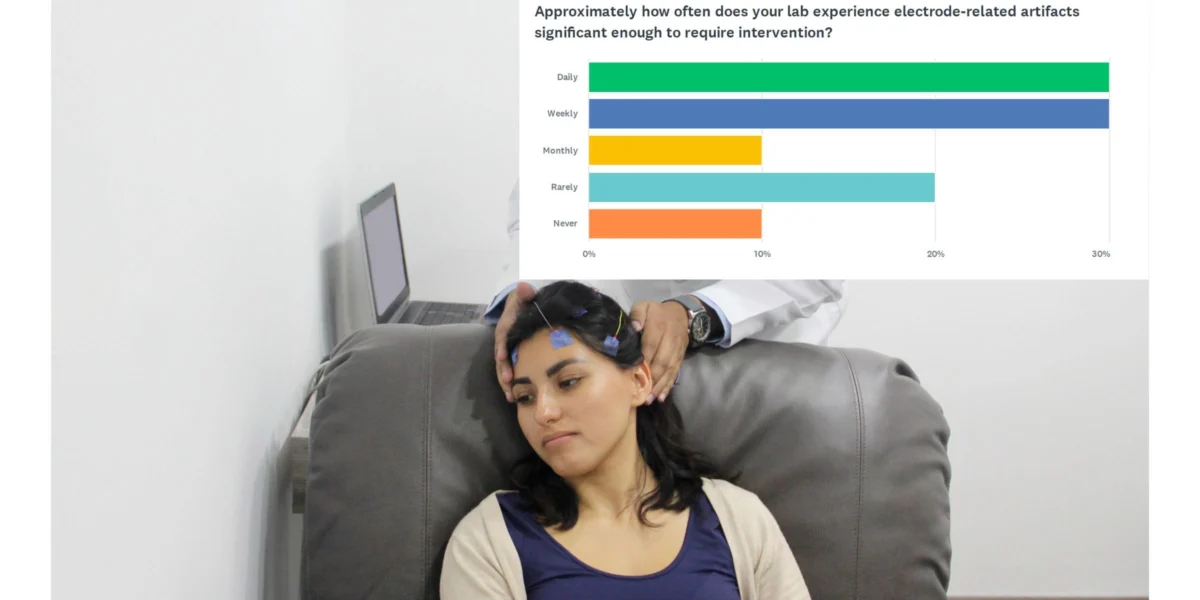
The impact of these issues on workflow is significant. When asked how often electrode-related artifacts become severe enough to require manual intervention, the responses were evenly split. A combined 60% of labs report needing to intervene on a daily or weekly basis. This high frequency of disruption highlights the ongoing "labor tax" placed on sleep technologists, who must often choose between waking a patient to fix a lead or settling for suboptimal data.

The Shift Toward Efficiency: Disposables vs. Reusables
A recurring theme in the survey is the industry’s search for efficiency. The debate between reusable and disposable electrodes has evolved into a strategic decision regarding operational overhead.
For 40% of survey respondents, the transition to single-use (disposable) electrodes has resulted in a significant improvement in workflow. The primary driver here is the mitigation of the "morning cleanup" burden—the time-consuming process of cleaning, disinfecting, and drying reusables. However, the industry remains divided, with another 40% continuing to rely primarily on reusable equipment. This suggests that for many, the cost-effectiveness and environmental considerations of reusables still outweigh the time-saving benefits of the disposable model.
Emerging EEG Technologies: The Future of the Lab
The final segment of the survey looked toward the horizon, asking supervisors where they are placing their bets for the future. The field is clearly hungry for innovation that can decouple patient comfort from signal quality.
The Rise of Wireless
Wireless electrodes are currently the most anticipated technology, with 43% of surveyed labs expressing interest, active trials, or ongoing evaluations. The removal of the "tether" is seen as the holy grail for sleep studies, as it would effectively eliminate the wire-tangling issues that plague half of the surveyed facilities.

Hydrogel and Beyond
Hydrogel-based electrodes are also gaining traction, with 29% of respondents showing interest in these materials, likely due to their ease of application and reduced skin irritation. Additionally, there is a clear appetite for "rapid-application" systems—pre-configured arrays or AI-assisted placement tools—which 14% of labs are currently exploring. These systems aim to standardize the electrode placement process, reducing human error and ensuring consistent data across all sleep studies.
Interestingly, the survey showed zero interest in in-ear EEG electrodes, suggesting that while the industry is open to innovation, it remains tethered to traditional, scalp-based diagnostic methodologies that have stood the test of time.
Implications for the Future of Sleep Medicine
The data provided by this survey serves as a clarion call to manufacturers and clinical directors alike. The "perfect" sleep study is currently hindered by the mechanics of the setup—specifically the wires, the adhesion, and the time required to manage them.
Clinical Implications
For clinical directors, the message is clear: investing in higher-durability, anti-tangle, and potentially wireless solutions is not just a capital expenditure—it is a labor-saving strategy. If 60% of labs are dealing with electrode detachment and daily or weekly artifacts, the cost of these disruptions in terms of staff time and potential repeat studies is likely far higher than the cost of premium, high-reliability equipment.

The Role of Automation
The interest in AI-assisted placement and rapid-application arrays signals a broader trend in healthcare: the automation of manual tasks. As sleep labs face staffing shortages and increasing patient volumes, any technology that can reduce the "manual labor" of a sleep study will likely see rapid adoption.
Conclusion: A Balancing Act
The modern sleep lab is in a transitional phase. While the core tenets of polysomnography remain consistent, the tools used to achieve them are undergoing a shift. Sleep lab supervisors are no longer content with "good enough"; they are demanding equipment that works with the patient, not against them. Whether through the adoption of wireless technologies, the shift to disposables, or the refinement of standard operating procedures with proven pastes like Ten20, the goal is singular: to capture the most accurate data possible while minimizing the intrusion on the patient’s sleep.
As we look toward the next decade of sleep diagnostics, the labs that thrive will be those that successfully marry technological innovation with a deep understanding of their own operational challenges. The survey results are a testament to the fact that while the problems (detachment, tangling, artifacts) are timeless, the solutions are finally, and rapidly, evolving.