









In a landmark preclinical study that could redefine the landscape of oncology, researchers from Weill Cornell Medicine and the Cornell Duffield College of Engineering have unveiled a novel therapeutic approach that utilizes ultrasmall silica nanoparticles to eradicate aggressive prostate tumors. By simultaneously triggering internal cellular destruction and "reprogramming" the body’s immune response, these engineered particles have achieved complete tumor remissions in mouse models, offering a beacon of hope for patients with limited treatment options.
The study, published in the June 15 issue of the journal Cancer Research, highlights the unique potential of "Cornell Prime dots" (C’ dots)—ultrasmall, fluorescent core-shell silica nanoparticles—to serve as a multifunctional weapon against cancer. Unlike traditional chemotherapy, which often carries significant systemic toxicity, this targeted strategy appears to spare healthy tissue while turning "cold," immune-resistant tumors into "hot," immune-active environments ripe for destruction.
The Genesis of a Nano-Revolution: A Chronology of Discovery
The journey toward this discovery began years ago, not in a cancer ward, but in the realm of advanced medical imaging. Initially designed by the laboratory of Dr. Ulrich Wiesner, a professor of Materials Science and Engineering at Cornell, C’ dots were engineered to improve the precision of image-guided surgery. Because of their ultrasmall size—smaller than the threshold for kidney filtration—they were found to be exceptionally safe for human use, having already progressed to late-stage clinical trials for various diagnostic applications.
Phase 1: From Imaging to Intervention
As Dr. Wiesner and his collaborator, Dr. Michelle Bradbury—a neuroradiologist and director of the Molecular Imaging Innovations Institute at Weill Cornell Medicine—continued their long-standing partnership, they observed an unexpected phenomenon. The particles, while intended to light up tumors for surgical visualization, were exhibiting an inherent, selective toxicity toward malignant cells.
Phase 2: Mechanistic Elucidation
Building on these observations, the team hypothesized that the particles could be functionalized to actively combat disease. By attaching a targeting molecule that recognizes PSMA (Prostate-Specific Membrane Antigen)—a protein heavily expressed on the surface of prostate cancer cells—the researchers ensured the nanoparticles would home in on tumors with surgical precision.
Phase 3: The Synergy Study
The most recent phase of the research involved testing the particles in mice harboring aggressive prostate cancer. The researchers moved beyond simple observation, combining the nanoparticle therapy with existing immunotherapies and macrophage-targeting treatments to observe how the particles interacted with the broader tumor microenvironment. The results, showing complete remissions in a significant subset of subjects, represent the culmination of years of iterative material science and biological validation.
The Science of Destruction: Mechanisms of Action
What makes the C’ dots truly remarkable is their ability to attack cancer on multiple fronts simultaneously. The researchers identified two primary mechanisms that render these particles a "double-edged sword" for tumor cells.
1. Ferroptosis: The Oxidation Trigger
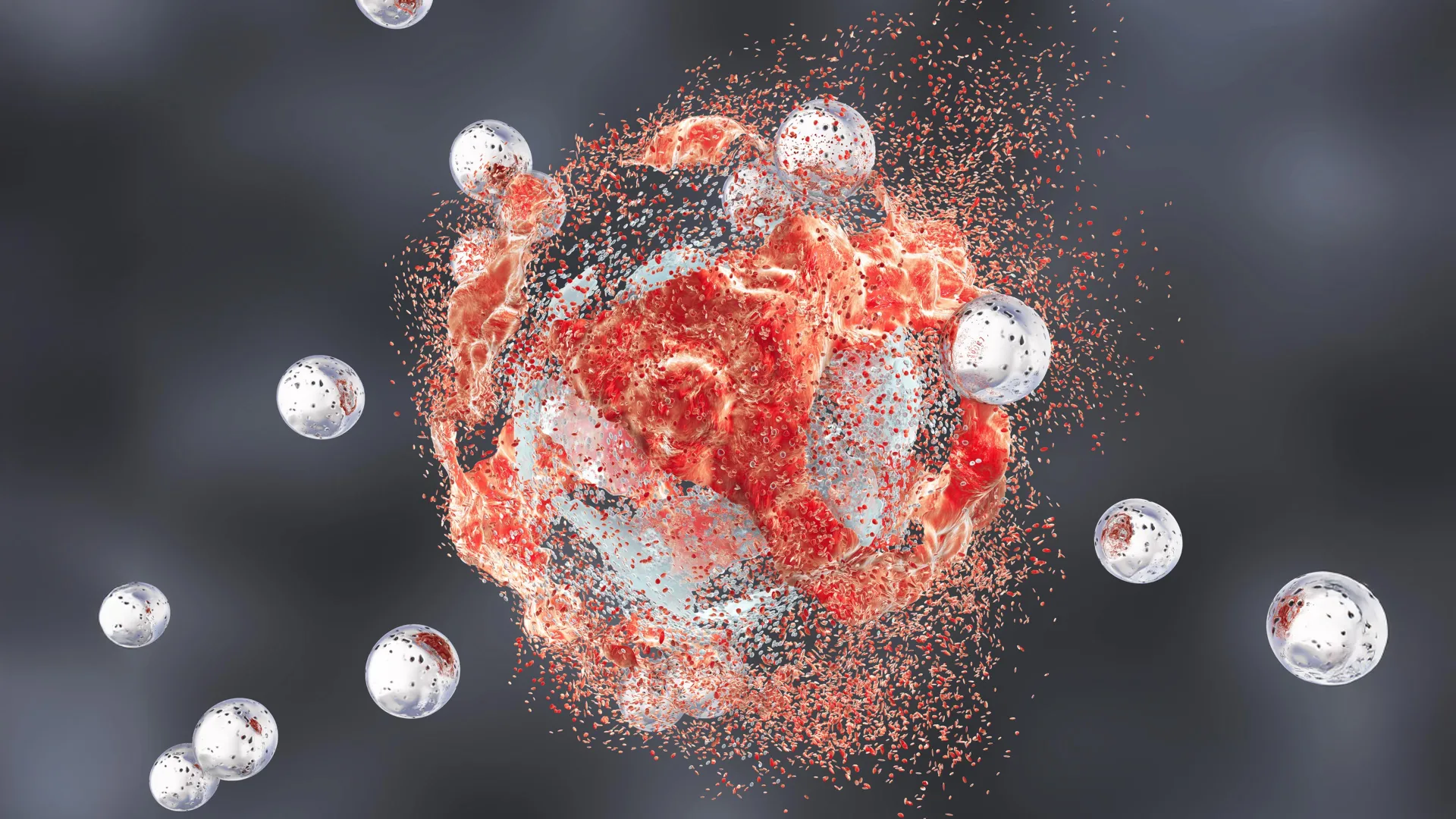
One of the most intriguing findings is the induction of "ferroptosis"—a form of programmed cell death characterized by the iron-dependent accumulation of lipid peroxides. Within the tumor environment, the nanoparticles appear to sequester positively charged iron ions from the bloodstream. Once delivered into the tumor cell, these ions catalyze an intense oxidative reaction. This "oxidative storm" shreds the fatty molecules that constitute the cell membrane, causing the cancer cell to break down and effectively commit suicide.
2. Immune Remodeling: Turning "Cold" to "Hot"
Prostate tumors are notoriously adept at evading the immune system, often existing in a "cold" state where T cells and other immune defenders are excluded or inactivated. The C’ dots act as a catalyst for environmental change. By disrupting the metabolic processes that support tumor growth and altering the signaling pathways within the microenvironment, the particles recruit and activate T cells and macrophages. This transformation makes the tumor vulnerable not only to the nanoparticles themselves but also to the body’s natural immune surveillance and supplementary immunotherapy drugs.
Supporting Data: Survival Outcomes and Efficacy
The efficacy of the C’ dot approach was most starkly illustrated in survival studies involving mice with highly aggressive, metastatic-prone prostate cancer. The data presented a clear hierarchy of treatment success:
- Monotherapy: Using C’ dots or immunotherapy alone provided a modest, incremental improvement in survival compared to untreated control groups.
- Combination Therapy: The integration of C’ dots with immune checkpoint blockade therapy was a turning point. In this cohort, four out of ten mice experienced complete or nearly complete remission, with indefinite survival observed during the study period.
- Triple Therapy: The addition of a CSF-1R blockade—a treatment that specifically targets tumor-associated macrophages—further improved outcomes, resulting in complete remissions in five out of ten mice.
"We think there’s nothing else out there that has such a strong and durable tumor growth-suppressing effect," noted Dr. Bradbury. The absence of toxicity in the spleen, liver, or other organs further bolsters the argument that this treatment is both potent and remarkably selective.
Official Responses and Perspectives
The scientific community has reacted with cautious optimism, viewing this as a potential paradigm shift in the treatment of solid tumors.
Dr. Ulrich Wiesner expressed his fascination with the inherent compatibility of silica with biological systems. "It seems unreal—how is it possible that rather than a single pathway, we see all these effects happening simultaneously and only in tumors and not in healthy tissues?" he asked. He suggested that the ubiquity of silica in the natural environment—found in everything from leafy greens to cereal grains—may have facilitated an evolutionary tolerance that allows these nanoparticles to interact with human biology in such a beneficial, non-toxic manner.
Dr. Jedd Wolchok, Director of the Sandra and Edward Meyer Cancer Center at Weill Cornell Medicine, emphasized the significance of the "immune remodeling" aspect of the study. "One of the most intriguing aspects of this work is the convergence of direct tumor cell killing with broad immune remodeling," Dr. Wolchok stated. "By creating conditions that support a more effective antitumor immune response, these particles may help unlock the full potential of immunotherapy in prostate cancer, where durable responses have historically been difficult to achieve."
Implications for the Future: Toward Human Clinical Trials
The success of the preclinical trials provides a robust foundation for moving toward the ultimate goal: human clinical trials. However, the path forward requires rigorous safety and scalability assessments.
The Challenges Ahead
While the mouse models showed no signs of toxicity, human physiology is significantly more complex. The researchers are currently focused on:
- Refining Manufacturing: Ensuring the consistent production of C’ dots at a clinical grade.
- Dosage Optimization: Determining the therapeutic window that maximizes anti-tumor activity while maintaining the impeccable safety profile observed in early testing.
- Broadening Scope: While prostate cancer is the current focus, the researchers believe the fundamental mechanisms of ferroptosis and immune activation could be applied to a variety of solid tumors, including breast, lung, and pancreatic cancers.
A New Paradigm
If successful in humans, the C’ dot platform would represent a new class of cancer therapy—one that moves away from the "one drug, one pathway" model toward a holistic approach that targets the cancer cell’s vulnerabilities while harnessing the body’s own defense mechanisms.
As the team prepares for the next phase of research, the collaboration between the labs of Dr. Bradbury and Dr. Wiesner stands as a testament to the power of interdisciplinary science. The project, which received essential support from the Parker Institute for Cancer Immunotherapy, the Department of Defense, and the National Cancer Institute, underscores the necessity of merging materials science with molecular oncology to solve the most intractable problems in medicine.
"This study reflects years of collaborative effort across multiple laboratories," Dr. Bradbury concluded, acknowledging the foundational work of co-first authors Dr. Nabil Siddiqui, Dr. Li Zhang, and Dr. Gabriel DeLeon, alongside graduate students Nada Naguib and Rachel Lee. "We are only beginning to glimpse the potential of these particles to influence inflammatory, immune, and metabolic pathways simultaneously. The goal is clear: to bring this, eventually, to the patients who need it most."