










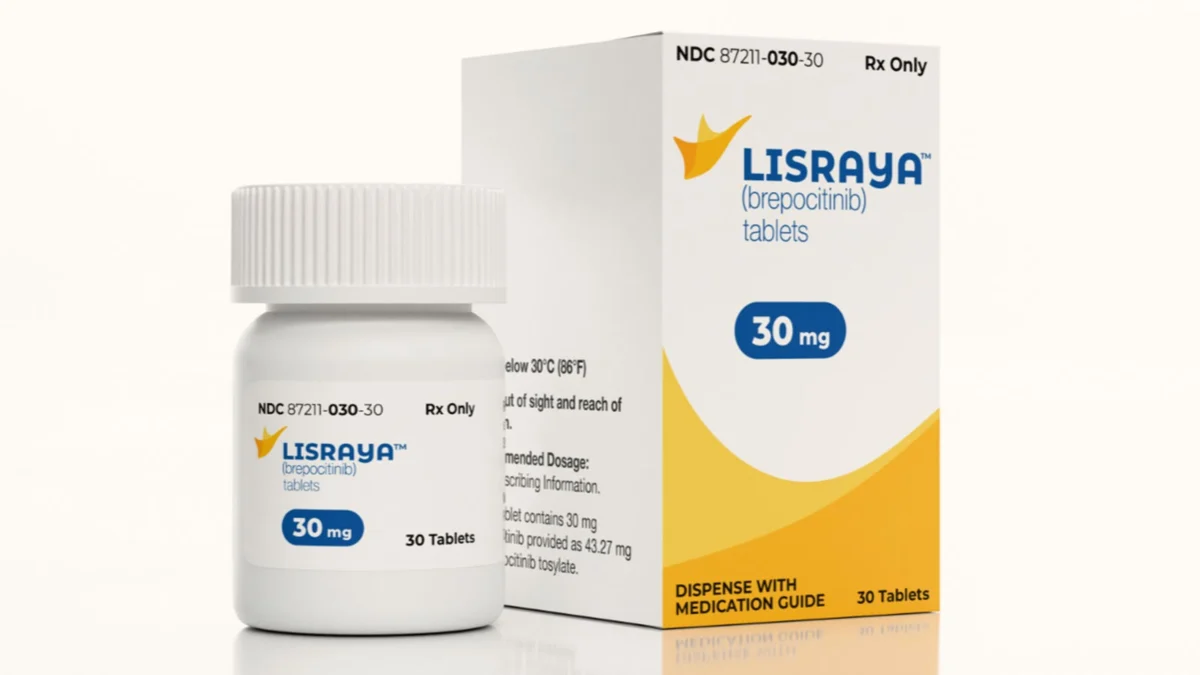
August 27, 2026 — In a landmark decision for the rheumatology and dermatology communities, the U.S. Food and Drug Administration (FDA) has officially granted approval for brepocitinib (brand name: Lisraya), marking the first-ever oral therapeutic option specifically indicated for the treatment of dermatomyositis in adults.
This approval represents a watershed moment for patients suffering from this rare, chronic autoimmune disorder, which is characterized by systemic inflammation, progressive muscle weakness, and debilitating, often disfiguring skin manifestations. For decades, the therapeutic landscape for dermatomyositis has been stagnant, leaving patients to rely on repurposed treatments—such as chronic high-dose steroids and non-specific immunomodulators—that frequently fall short of providing adequate control while carrying heavy side-effect burdens.
The Disease Burden: Understanding Dermatomyositis
Dermatomyositis is a complex condition that sits at the intersection of rheumatology and dermatology. Beyond the visible skin rashes that can cause significant social and psychological distress, the disease triggers profound physical disability due to muscle inflammation (myositis). Patients often describe a total loss of independence, with daily activities becoming arduous or impossible as muscle strength wanes.
"Dermatomyositis affects nearly every aspect of a patient’s life," explains Dr. Ruth Ann Vleugels, MD, MPH, of Mass General Brigham and Harvard Medical School. "It causes physical disability, disfiguring skin disease, pain, itch, and a profound loss of independence and sense of self."
Historically, clinicians have been forced to navigate a narrow path of "off-label" treatments. The reliance on long-term systemic corticosteroids, while sometimes effective for acute flares, carries well-documented risks, including metabolic syndrome, bone density loss, and infection. The approval of an targeted oral agent provides a long-awaited shift toward precision medicine.
A Targeted Approach: The Mechanism of Brepocitinib
Brepocitinib belongs to a sophisticated class of drugs known as dual TYK2/JAK1 inhibitors. By modulating the Janus kinase (JAK) pathway—specifically targeting tyrosine kinase 2 (TYK2) and Janus kinase 1 (JAK1)—the drug interrupts the signaling cascades that drive the inflammatory response in dermatomyositis.
By inhibiting these specific enzymes, brepocitinib effectively damps down the immune-mediated destruction of skin and muscle tissue. Unlike broad-spectrum immunosuppressants that suppress the entire immune system, this targeted approach aims to address the underlying pathophysiology of the disease, potentially offering a more favorable balance between efficacy and safety.
Chronology: The Road to Approval and the VALOR Trial
The path to this FDA approval was paved by the rigorous VALOR phase III trial, a multicenter, placebo-controlled study that sought to challenge the standard of care. The trial enrolled 241 patients, all of whom presented with longstanding, treatment-resistant dermatomyositis, representing a population that had previously exhausted most conventional options.
Phase III Clinical Trial Milestones:
- Study Design: A 52-week, randomized, placebo-controlled study assessing both efficacy and safety.
- Primary Endpoint: The Total Improvement Score (TIS) at 52 weeks. The TIS is a validated clinical metric that aggregates improvements across six core domains of the disease, including patient-reported outcomes, physician global assessments, and muscle strength testing.
- Primary Analysis Findings: The data was compelling. Patients receiving the higher dose of brepocitinib achieved a mean TIS of 46.5, compared to 37.5 for the lower dose group and 31.2 for those on a placebo. The statistical significance of these results (P<0.001) underscored the robustness of the drug’s performance.
- Steroid-Sparing Potential: One of the most critical secondary outcomes was the ability to reduce corticosteroid reliance. The trial revealed that 45% of patients treated with brepocitinib were able to discontinue steroids entirely, while 62% either discontinued or successfully tapered to a minimal dose. In stark contrast, only 38% and 29% of the placebo group achieved these respective outcomes, highlighting the drug’s potential as a "steroid-sparing" agent.
Official Responses and Regulatory Perspective
The FDA’s decision to approve Lisraya was met with enthusiasm by the medical community. Dr. Nikolay Nikolov, MD, of the FDA’s Center for Drug Evaluation and Research, emphasized the critical nature of this development.
"For too long, patients with dermatomyositis have faced a significant unmet need for effective treatments, often relying on therapies meant for other diseases," Dr. Nikolov stated in the agency’s official press release. "Today’s approval is a meaningful step forward, giving patients and their healthcare providers an approved oral therapy proven to help manage this rare and debilitating disease."
The manufacturer, Priovant Therapeutics, has confirmed that the drug will be made available in the U.S. market immediately. This rapid rollout is intended to address the urgent clinical demand for a therapy that can stabilize disease activity and improve the quality of life for those who have lived for years without a targeted treatment plan.
Implications for Future Clinical Practice
The introduction of an oral TYK2/JAK1 inhibitor into the dermatomyositis treatment paradigm necessitates a shift in how rheumatologists and dermatologists approach the management of the disease.
1. Shift Toward Targeted Therapy
The era of relying solely on "dirty" drugs—medications with broad, non-specific impacts on the immune system—may be coming to an end. With brepocitinib, clinicians now have a tool that specifically interferes with the cytokine pathways believed to be responsible for the cutaneous and muscular manifestations of the disease.
2. Patient-Centric Outcomes
The VALOR trial results were not limited to laboratory markers. The data showed consistent improvement across multiple patient-reported outcomes. This is vital, as the "patient experience" of dermatomyositis—the itch, the chronic fatigue, and the visible skin changes—is often poorly captured by traditional blood tests. Future treatment success will likely be measured by a patient’s ability to return to work, exercise, and participate in social activities.
3. Safety Profile and Monitoring
While the safety profile reported in the VALOR trial was consistent across treatment groups (with 86-91% of participants experiencing at least one adverse event), the common adverse events included upper respiratory tract infections, COVID-19, urinary tract infections, nausea, diarrhea, and headaches.
As with any JAK-related therapy, ongoing post-marketing surveillance will be essential. Clinicians will need to monitor patients for signs of infection and other potential long-term risks associated with pathway inhibition. However, the similarity in adverse event rates between the placebo and treatment groups in the phase III trial provides early confidence in the drug’s tolerability.
Conclusion: A Turning Point
The approval of brepocitinib (Lisraya) represents more than just a new entry in a pharmaceutical catalog; it is a profound change in the therapeutic philosophy surrounding rare autoimmune diseases. By moving away from non-specific, high-toxicity treatments and toward targeted, evidence-based oral therapy, the medical community is finally offering those with dermatomyositis a chance at a more stable, independent, and symptom-free future.
As the drug enters the clinical workflow, the focus will now shift to real-world evidence and the long-term impact of maintaining remission without the need for high-dose corticosteroids. For the patient who has lived with the uncertainty and pain of dermatomyositis for years, the availability of Lisraya is, quite literally, a new lease on life.