





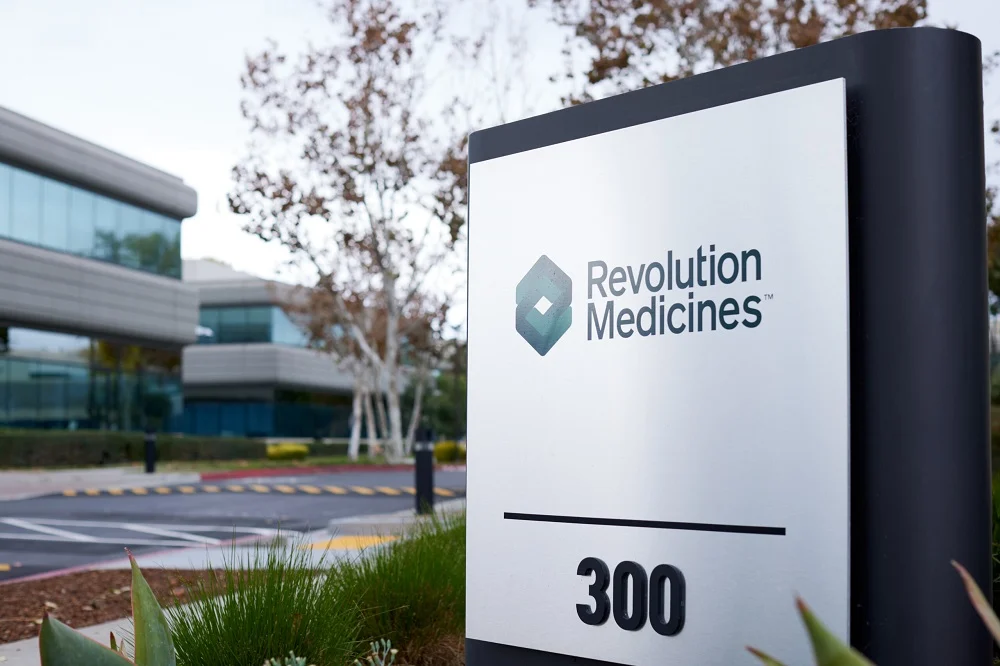
In a landmark decision that promises to reshape the landscape of oncology, the U.S. Food and Drug Administration (FDA) has granted approval for Rasonque (daraxonrasib), the first-in-class targeted therapy designed to combat metastatic pancreatic adenocarcinoma. Developed by Redwood City, California-based Revolution Medicines (RevMed), the once-daily oral medication marks a historic departure from traditional, broad-spectrum chemotherapy. By specifically inhibiting mutated RAS proteins—long considered “undruggable”—Rasonque offers a renewed sense of hope for patients diagnosed with one of the most aggressive and historically intractable malignancies in medicine.
The Science of the "On" Switch
To understand the significance of Rasonque, one must first understand the nature of the enemy. The RAS protein family functions as a biological "on/off" switch within cells, regulating critical processes such as cellular growth, division, and differentiation. In a healthy cell, these proteins cycle between an inactive state and an active state. However, in many cancers, these proteins become trapped in a permanently "on" position, continuously signaling the cell to divide uncontrollably.
For decades, the pharmaceutical industry viewed the RAS protein as an elusive target. While earlier breakthroughs by companies like Amgen and Bristol Myers Squibb successfully introduced inhibitors targeting a specific mutation known as KRAS G12C, these drugs were limited in scope. They functioned by locking the protein in its inactive "off" state.
Revolution Medicines took a radically different approach. Rather than focusing on the inactive state, RevMed’s Rasonque was engineered to bind to and block multiple forms of RAS proteins while they are in the active "on" state. This broad-spectrum targeting of the "on" switch allows the drug to address a wider array of oncogenic drivers, providing a precision-medicine solution for a disease that has historically defied standard treatment protocols.
Chronology of a Breakthrough
The journey to the approval of Rasonque is a testament to the accelerated pace of modern drug development, fueled by innovative regulatory pathways.
- Pre-Clinical Development: Under its development code RCM-6236, the drug underwent rigorous testing, proving its efficacy in animal models of pancreatic adenocarcinoma.
- Late 2025: Revolution Medicines was awarded a Commissioner’s National Priority Voucher (CNPV). This pilot program, designed for treatments addressing urgent, high-unmet-need conditions, paved the way for a drastically shortened review timeline.
- April 2026: RevMed announced preliminary Phase 3 data, showing that Rasonque significantly outperformed the standard of care.
- May 2026: Detailed results were presented at the American Society of Clinical Oncology (ASCO) annual meeting, accompanied by a publication in the New England Journal of Medicine. The data were so compelling that the lead investigator received a standing ovation from the assembly.
- July 2026: The FDA officially accepted the New Drug Application (NDA) for review.
- August 2026: Following a rapid review period, the FDA granted final approval for Rasonque, authorizing its use in adults with metastatic pancreatic adenocarcinoma who have failed at least one prior systemic therapy and are not candidates for multi-agent systemic chemotherapy.
Supporting Data: The Power of the Phase 3 Trial
The regulatory submission for Rasonque was predicated on a robust, open-label Phase 3 clinical trial involving 500 adult participants. The study was designed to measure two critical benchmarks: overall survival (OS) and progression-free survival (PFS).
The results were statistically and clinically significant. In the study drug arm, patients experienced a median overall survival of 13.2 months, compared to just 6.7 months in the cohort receiving standard-of-care chemotherapy. This represented a near-doubling of survival time—a milestone rarely achieved in the context of late-stage, metastatic pancreatic cancer.
Progression-free survival metrics were equally encouraging. Patients treated with Rasonque saw a median PFS of 7.2 months, compared to 3.6 months for those on conventional chemotherapy. While the treatment does come with side effects—most notably rash, diarrhea, mucositis (inflammation of the mouth), nausea, fatigue, and vomiting—the safety profile was deemed manageable compared to the devastating progression of the underlying disease.
Official Responses and Regulatory Sentiment
The regulatory approval of Rasonque was met with strong support from health officials, who framed the decision as a fulfillment of the agency’s core mission. Acting FDA Commissioner Kyle Diamantas emphasized the urgency of the moment, stating, "Today’s approval provides a critical new option for patients facing an extraordinarily difficult and historically hard-to-treat cancer. It is our fundamental duty to deliver more cures and meaningful treatments to patients as quickly as possible."
The decision to utilize the Commissioner’s National Priority Voucher underscored the FDA’s recognition of the unique threat posed by pancreatic adenocarcinoma. With approximately 67,500 new cases diagnosed in the United States annually, and 90% to 95% of those cases being the aggressive adenocarcinoma type, the need for innovation was acute. The success of Rasonque serves as a case study for how public-private partnerships can expedite the delivery of life-saving therapeutics.
The Wider Implications for Oncology
The approval of Rasonque is not merely the arrival of one new drug; it is the arrival of a new therapeutic modality. By successfully targeting the "on" state of the RAS protein, Revolution Medicines has cracked a code that has frustrated researchers for thirty years.
Expanding the Horizon
The clinical trials for Rasonque are far from over. Revolution Medicines is currently investing in several high-impact studies to determine if the drug can be moved earlier into the patient’s treatment journey. These include:
- First-line therapy: Testing Rasonque in patients newly diagnosed with metastatic disease.
- Adjuvant therapy: Evaluating the drug’s potential to prevent recurrence in patients who have undergone surgical tumor removal.
- Combination studies: Phase 1/2 trials are exploring the use of Rasonque in tandem with other therapies to treat a broader range of solid tumors, including metastatic non-small cell lung cancer.
Economic and Global Impact
As of the end of the second quarter of 2026, Revolution Medicines reported a robust cash position of $3.9 billion. This liquidity is critical as the company pivots toward a global commercial launch. While the price of the drug has not yet been disclosed, the company is actively coordinating with the European Medicines Agency (EMA) to ensure that the drug reaches international markets under an expedited phased review process.
The success of Rasonque also sets a precedent for the pharmaceutical industry’s investment strategies. With a proven mechanism for attacking the "on" state of RAS, we may see a wave of secondary and tertiary drug development aimed at refining this approach and reducing side effects, ultimately moving toward a future where pancreatic cancer is a manageable chronic condition rather than a terminal diagnosis.
Conclusion: A New Era
The medical community is rightfully optimistic about the future of RAS-targeted therapies. For patients who previously had few options beyond palliative chemotherapy, Rasonque represents a bridge to more time, more memories, and more research breakthroughs. While the fight against pancreatic cancer is far from over, the arrival of Rasonque proves that the "undruggable" is finally within our reach. Through the marriage of cutting-edge molecular biology and streamlined regulatory oversight, the industry has demonstrated that even the most formidable malignancies can be challenged, and eventually, overcome.