










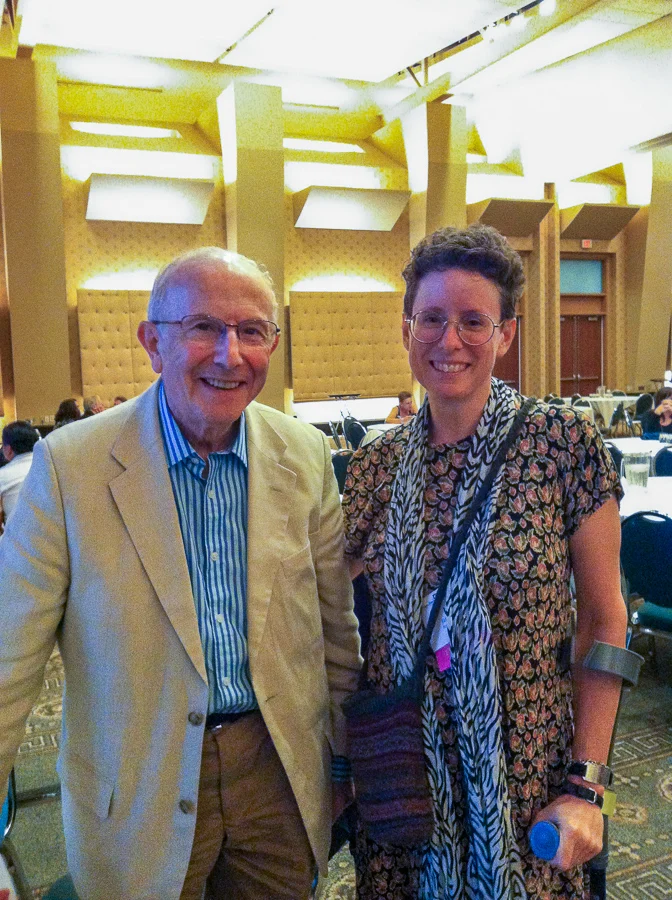
On March 29, 2026, the global medical community and the Ehlers-Danlos Syndrome (EDS) patient population suffered a profound loss with the passing of Professor Rodney Grahame. A titan of rheumatology and a tireless advocate for those living with connective tissue disorders, Dr. Grahame’s career spanned over half a century. He is remembered not only for his clinical brilliance but for his role as a compassionate pioneer who brought a neglected group of conditions into the light of modern medicine.
A Life Dedicated to the Overlooked
For decades, patients suffering from hypermobility-related conditions were frequently dismissed, misdiagnosed, or told their symptoms were psychosomatic. Dr. Rodney Grahame changed that narrative. As a rheumatologist in the United Kingdom, he was one of the first clinicians to treat joint hypermobility not merely as a benign party trick, but as a complex, systemic condition capable of causing debilitating chronic pain, frequent injury, and multi-organ dysfunction.
His impact was deeply personal for many. Jan Groh, a prominent advocate and media manager for Chronic Pain Partners, recalls her own journey: "I was first tipped off to the world of hypermobility at age 40 by my massage therapist… Upon Googling the word hypermobility, I stumbled on an article by Dr. Grahame. This introduced me to symptomatic Hypermobility Syndrome… the possibility that I wasn’t ‘just bendy.’" That encounter, replicated by thousands of patients worldwide, served as the catalyst for diagnostic clarity and improved quality of life for a generation of patients.
Chronology of a Medical Trailblazer
Professor Grahame’s contributions to medicine are characterized by a trajectory of increasing recognition and advocacy.
- 1971: Early research publications signal his interest in musculoskeletal conditions, setting the stage for his focus on joint pathology.
- 1983: He co-authors the seminal text Hypermobility of Joints alongside Drs. Peter Beighton and Howard Bird. This work became a foundational pillar for clinicians attempting to categorize hypermobility.
- 1998: Dr. Grahame is appointed Commander of the Order of the British Empire (CBE) in recognition of his significant services to disabled people.
- 2008: He collaborates on pivotal research identifying the genetic basis of hypermobility syndromes, bridging the gap between clinical observation and molecular science.
- 2010: He publishes Hypermobility, Fibromyalgia and Chronic Pain, further expanding the medical understanding of the intersection between these complex conditions.
- 2012: The updated edition of Hypermobility of Joints is released, cementing his legacy as a key reference for medical professionals.
- 2014: In a defining moment at the Ehlers-Danlos National Foundation (EDNF) Conference, he delivers his most famous assessment: "No other condition in the history of modern medicine has been neglected in such a way as Ehlers-Danlos syndrome."
- 2017: His decades of advocacy culminate in the formal recognition of Hypermobility Spectrum Disorders (HSD) and the refined diagnostic criteria for hypermobile EDS (hEDS).
- 2018: The Ehlers-Danlos Society releases a tribute video honoring his 50th anniversary as a doctor within the National Health Service (NHS).
- 2026: Dr. Grahame passes away, leaving behind a global infrastructure of support and a shifted medical paradigm.
Scientific Contributions and Clinical Impact
Dr. Grahame’s work was defined by a rigorous scientific methodology combined with a bedside manner that prioritized the patient’s voice. He was instrumental in shifting the nomenclature of the field, helping the medical community transition from broad, often inaccurate labels like "Joint Hypermobility Syndrome" to more precise, genetically and symptomatically informed classifications.
His research was not confined to journals; it was practical. By working closely with organizations like the Hypermobility Syndromes Association (HMSA) and the Ehlers-Danlos Society, he ensured that his clinical findings translated into better care standards. He understood that the lack of awareness among general practitioners was the greatest barrier to care. Consequently, he spent his later years focusing on medical education, aiming to arm primary care physicians with the tools necessary to spot the subtle signs of connective tissue disorders early.
Official Responses and Professional Legacy
The medical community has responded to his passing with an outpouring of gratitude. Organizations such as the Ehlers-Danlos Society have long cited Dr. Grahame as the "grandfather" of the field. His colleagues remember him not only as a brilliant diagnostician but as a man of deep integrity who refused to look away when medicine became difficult.
"Dr. Grahame was a deeply compassionate clinician," notes Jan Groh. "He was sympathetic to patients and supportive of fellow doctors at a time when information was scarce. Over his career, he provided much-needed medical validation to those who often endured long and painful diagnostic journeys."
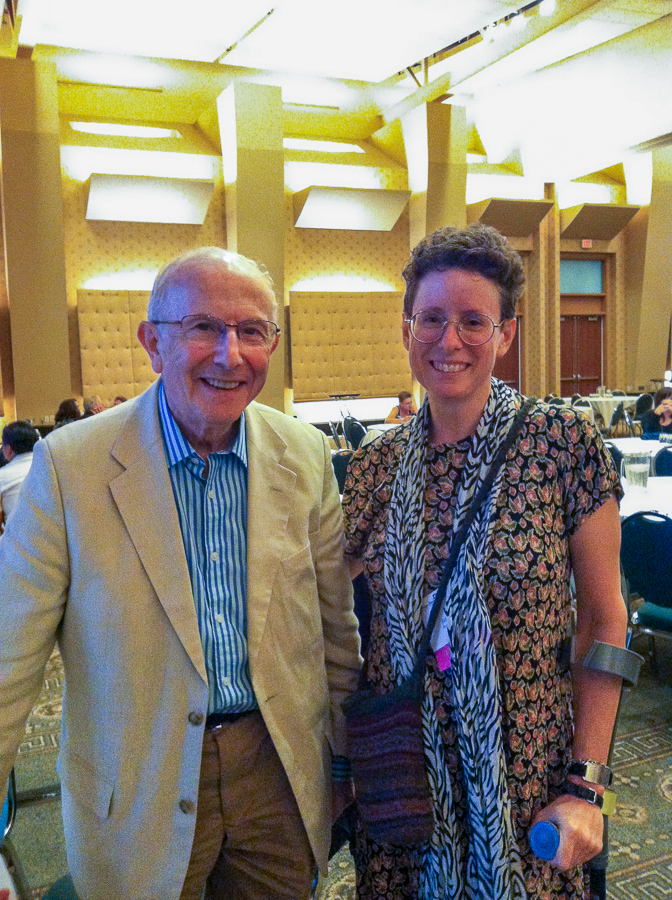
His influence is woven into the fabric of modern rheumatology. By advocating for the validation of chronic pain in hypermobile patients, he forced the medical establishment to acknowledge that a "bendy" joint could be the source of systemic disability. This shift in perspective was not just a academic victory; it was a human rights victory for thousands of patients who had previously been left without a medical home.
Implications for the Future of EDS Care
The death of Professor Grahame marks the end of an era, but his influence serves as a blueprint for the future. The "Grahame approach"—which combines meticulous clinical observation with a profound respect for the patient’s lived experience—is now the gold standard for EDS specialists.
However, the field remains at a crossroads. As the community mourns, they are also challenged to continue the work he started. The under-recognition of EDS and HSD persists in many healthcare systems. The mission, as defined by Dr. Grahame, remains clear: to end the cycle of medical neglect, to standardize diagnostic protocols, and to ensure that the genetic and symptomatic realities of these conditions are taught in medical schools across the globe.
A Legacy of Advocacy
Perhaps his greatest achievement was the validation of the "patient expert." He empowered individuals to advocate for their own health, trusting that a patient’s report of their symptoms was the most important diagnostic tool a doctor possessed.
In his 2014 address, he highlighted a truth that continues to drive the EDS community today: that the history of medicine has been characterized by the abandonment of those with "invisible" chronic illnesses. By speaking these words, he did not just criticize the past; he catalyzed a movement toward a more inclusive, evidence-based future.
Conclusion
Dr. Rodney Grahame’s legacy is not just found in the textbooks he wrote or the conferences he headlined; it is found in the lives of the countless patients who, thanks to his work, finally received a diagnosis, a treatment plan, and, most importantly, the validation that their pain was real.
As the community moves forward without his physical presence, his intellectual and moral guidance remains. He taught us that medical progress is not just about new drugs or genetic markers—it is about the courage to see the patient as a whole person. We are, and will forever be, in his debt.
For those wishing to learn more about the foundations laid by Dr. Grahame, the Ehlers-Danlos Society and local hypermobility organizations continue to provide resources, including the GP Toolkit, which reflects the pedagogical standards Dr. Grahame championed throughout his life.